Dryopetalon runcinatum
A. Gray
Mostaza, Ma'aca
iNaturalist· cc-by
(c) Annika Lindqvist, some rights reserved (CC BY), uploaded by Annika Lindqvist
iNaturalist· cc-by-nc
(c) Tony Palmer, some rights reserved (CC BY-NC), uploaded by Tony Palmer
iNaturalist· cc-by-nc
(c) Tony Palmer, some rights reserved (CC BY-NC), uploaded by Tony Palmer
Description
A cabbage family herb. It is an annual plant that grows in winter in the tropics. The flowers are pink or white. The petals have shallow lobes.
This description is brief — help expand it
Edible Uses
The leaves are cooked and eaten as a green vegetable. The seeds are mixed with water or milk and sugar and eaten as a porridge.
Traditional Uses
The leaves are cooked and eaten as a green. The seeds are mixed with water or milk and sugar and eaten as a porridge.
This uses section is brief — help expand it
Distribution
It is a tropical plant. It grows between 75-1,800 m above sea level.
Where It Grows
Central America, Mexico, North America,
Synonyms
Also Known As
Guacharay
References (3)
- Altschul, S.V.R., 1973, Drugs and Foods from Little-known Plants. Notes in Harvard University Herbaria. Harvard Univ. Press. Massachusetts. no. 1338
- Martin, P. S. et al, (Eds.), 1998, Gentry's Rio Mayo Plants. The Tropical Deciduous Forest & Environs of Northwest Mexico. University of Arizona Press. p 270
- Yetman, D., 2002, The Guarijios of the Sierra Madre: Hidden People of Northwestern Mexico. University of New Mexico Press. p 184
More from Brassicaceae
Brassica juncea napiformis - (Pailleux.&Boiss.)Kitam.
Root Mustard
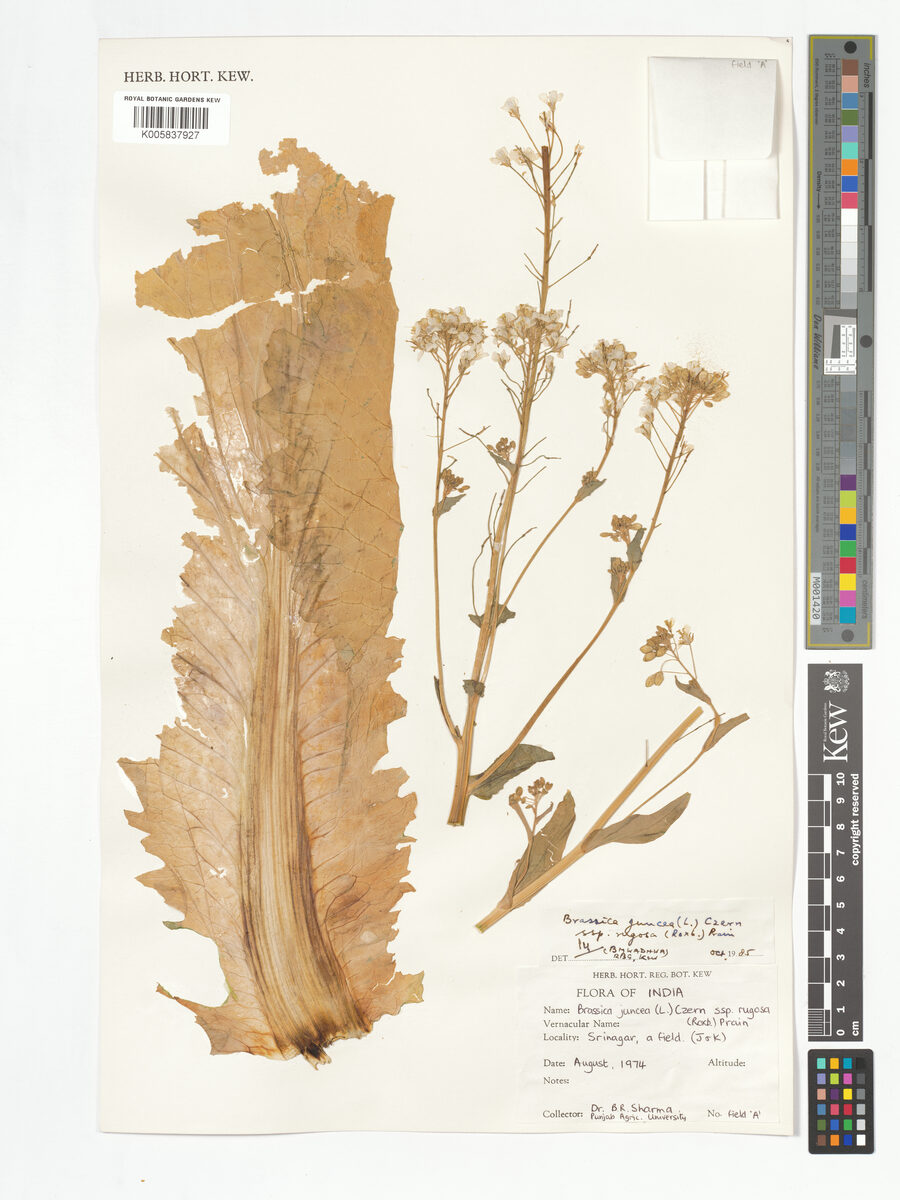
Brassica juncea rugosa - (Roxb.)N.Tsen.&S.N.Lee.
Head Mustard
Brassica juncea strumata
Large Petiole Mustard
Brassica juncea tsatsai multiceps
Green In The Snow
Brassica juncea tsatsai tumida
Swollen-Stem Mustard
Brassica juncea tumida
Swollen-Stem Mustard