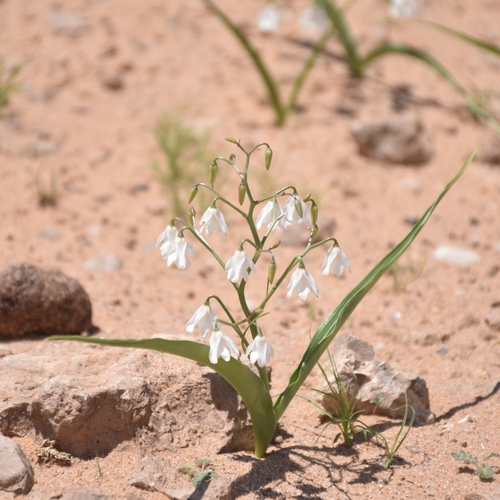
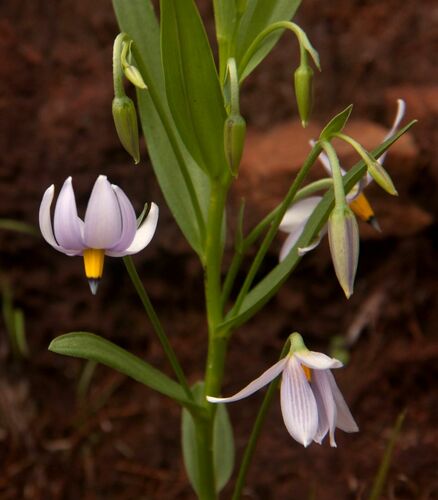
Conanthera bifolia
Ruiz. & Pav.
Illmu
iNaturalist· cc-by-nc
(c) Gabriela Cartes, some rights reserved (CC BY-NC), uploaded by Gabriela Cartes
iNaturalist· cc-by-nc
(c) Esteban Sepúlveda, some rights reserved (CC BY-NC)
iNaturalist· cc-by-nc
(c) Noah Navarro Vargas, some rights reserved (CC BY-NC)
Summary
Source: WikipediaConanthera bifolia is a species of flowering plant in the family Tecophilaeaceae. As all other members of the genus Conanthera, the species is endemic to Chile. It is distributed from the Valparaíso to Araucanía regions.
Description
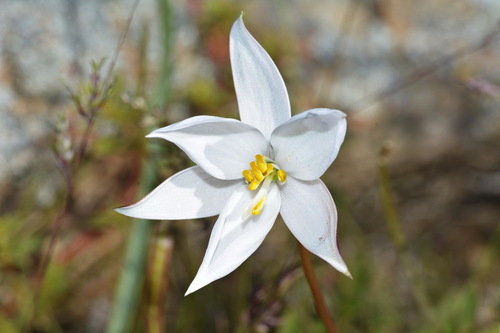
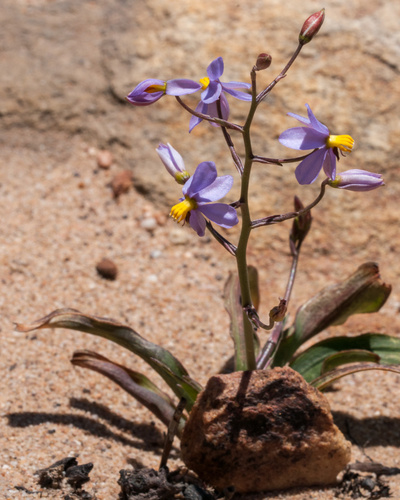
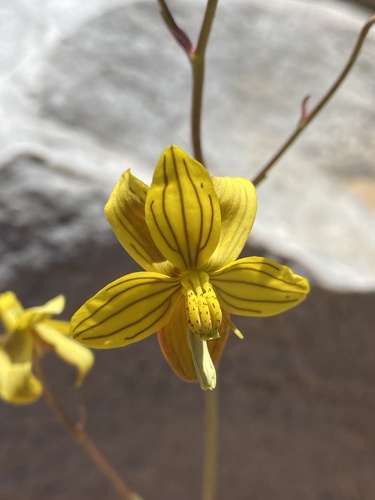
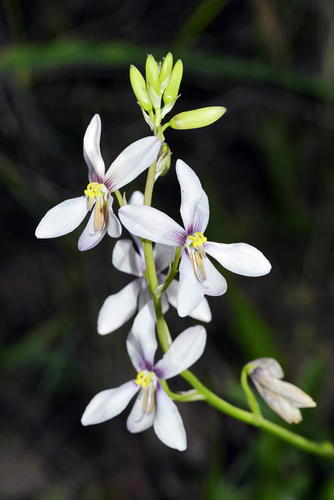
A herb. It grows 40 cm high. The flowers hang along a stalk. They are purple with a dark yellow centre.
This description is brief — help expand it
Edible Uses
The roots are edible when cooked and have a very pleasant taste. They can be boiled or roasted as a vegetable, or added to soups.
Traditional Uses
The bulbs are boiled or roasted and eaten.
This uses section is brief — help expand it
Medicinal Uses
None known
Distribution
In Chile it grows from sea level to 2,000 m altitude. It can grow in drier areas with a winter rainfall of 400-800 mm. It also grows in humid areas with constant rain. It can tolerate some shade. It suits hardiness zone 8. It can tolerate slight frosts and occasional snow.
Where It Grows
Chile*, Peru, South America,
Cultivation
Prefers a very well drained sandy peat and a warm sheltered position. This species is not very hardy and is difficult to keep in British gardens, it requires protection from severe frosts and rain in the winter. A pane of glass supported over the plant is often sufficient. Best results are obtained from growing the plant in a frame. The bulbs can also be lifted in early autumn and stored in a cool dry but frost-free place over winter and then planted out in early spring.
Propagation
Sow seed in early spring in a warm greenhouse, sowing thinly so young plants can develop undisturbed in the pot for their first year. Give occasional liquid feeds during the growing season to prevent nutrient deficiency. When plants go dormant, pot up the small bulbs, placing two or three per pot, and grow on for at least two more years in the greenhouse before planting out during dormancy. Can also be propagated by division of offsets.
Other Uses
None known
Notes
There are 5 Conanthera species in tropical America.
Synonyms
Also Known As
Pajarito del campo, Flor de la viuda
References (7)
- Fl. Peruv. 3: 68. T. 301. 1802
- Hedrick, U.P., 1919, (Ed.), Sturtevant's edible plants of the world. p 214
- Kermath, B. M., et al, 2014, Food Plants in the Americas: A survey of the domesticated, cultivated and wild plants used for Human food in North, Central and South America and the Caribbean. On line draft. p 256
- Leon-Lobos, P., et al, 2022, Patterns of Traditional and Modern Uses of Wild Edible Native Plants of Chile: Challenges and Future Perspectives. Plants (Basel) v 11 (6) Table S1
- Plants for a Future database, The Field, Penpol, Lostwithiel, Cornwall, PL22 0NG, UK. http://www.scs.leeds.ac.uk/pfaf/
Show all 7 references Hide references
- Smith, N., Mori, S.A., et al, 2004, Flowering Plants of the Neotropics. Princeton. p 484
- www.chileflora.com