Cyanella hyacinthoides
Royen ex L.
Lady's hand
iNaturalist· cc-by-sa
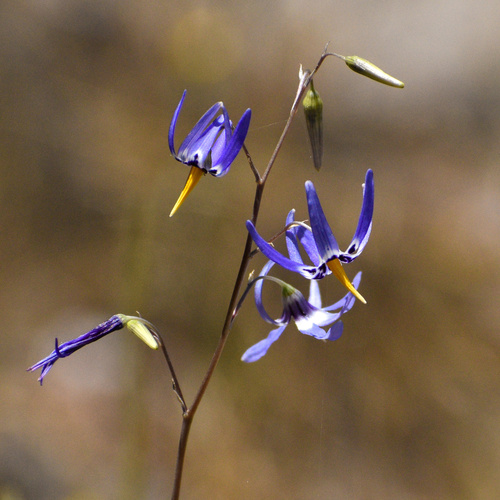
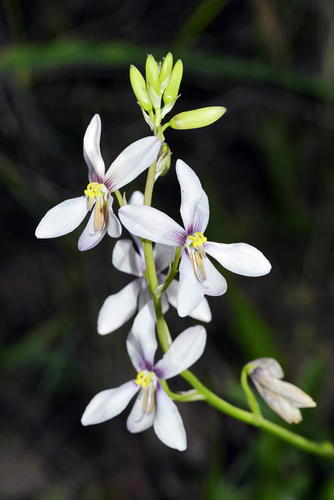
(c) magriet b, some rights reserved (CC BY-SA), uploaded by magriet b
iNaturalist· cc-by-nc
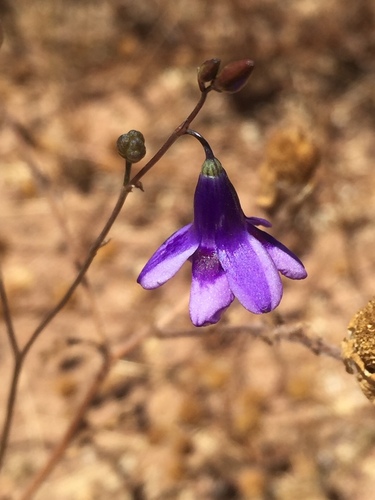
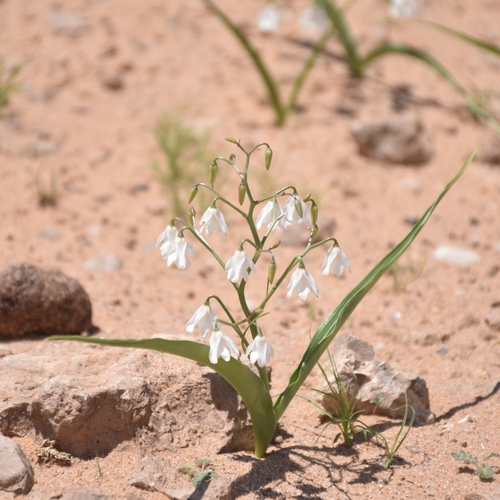
(c) Khuselwa Mabuyane, some rights reserved (CC BY-NC), uploaded by Khuselwa Mabuyane
iNaturalist· cc-by-sa
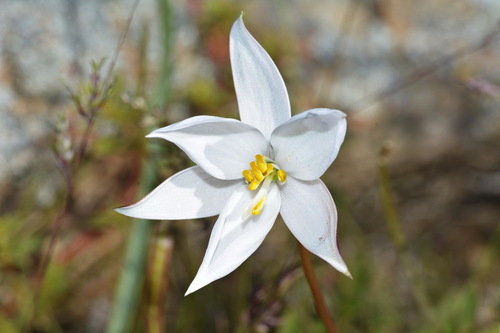
(c) Tony Rebelo, some rights reserved (CC BY-SA), uploaded by Tony Rebelo
Summary
Source: WikipediaCyanella hyacinthoides ("lady's hand" or "Raaptoluintjie") is a species of cormous annual or perennial herb native to the western parts of South Africa.
Description
Bulbous plant reaching 0.3 m tall by 0.2 m wide. Hermaphroditic, pollinated by bees. Flowers July–August. Hardy to UK zone 9; frost tender. Grows in light sandy well-drained soils across mildly acidic to basic pH ranges. Requires full sun and tolerates drought.
Edible Uses
The bulb is edible cooked and can be used as an onion substitute.
Traditional Uses
The corms are eaten raw or cooked in milk or roasted.
This uses section is brief — help expand it
Medicinal Uses
None known
Where It Grows
Root, Bulb, Fruit,
Cultivation
Prefers a light sandy soil. Requires a very warm sunny position in a very well-drained soil, it is best grown at the foot of a south-facing wall or in a south-facing bed. Plants have deeply seated corms and are very drought resistant once established. Plants are not very frost hardy, but they can be grown outdoors in the milder areas of the country if given a good mulch. Plant the bulbs 15cm deep in autumn to flower in spring or in the spring to flower in the summer. Lift the bulbs when they die down, dry them and store in a cool place until it is time to replant. Flowers are produced in 3 - 4 years from seed.
Propagation
Sow seed thinly in autumn in a greenhouse, at a density that avoids the need to thin seedlings. Once germinated, grow the seedlings in the same pot for their first year, giving an occasional liquid feed to prevent mineral deficiency. When the plants are dormant, pot up two to three small bulbs per pot and grow them on in a greenhouse until they reach flowering size, then plant out in spring after the last expected frosts. Offsets can be divided during dormancy; larger bulbs can go straight into permanent positions, while smaller ones are best grown on for a year in a cold frame before planting out.
Other Uses
None known
Production
A cleaned corm weighs about 14 gms. They are harvested during the wet season.
Other Information
Tecophilaeaceae
Notes
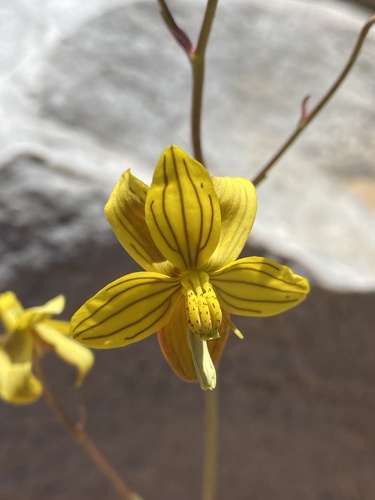
A herb. It develops a corm. It can grow as an annual or keep growing from year to year. It grows 15-35 cm high. There are several slender leaves develop from the corm. The corm has a long neck. The flowers are white, pink, purple or lilac. They have a scent. There are 5 small stamen above and one large stamen below.
Nutrition
| Part | Moisture | kJ | kcal | Protein | Vit A | Vit C | Iron | Zinc |
|---|---|---|---|---|---|---|---|---|
| Bulb | 55.5 | 736 | 176 | 3.8 | — | 33.3 | 1.1 | 0.8 |
Synonyms
Also Known As
Raap, Raaptol, Raapuintjie
References (21)
- Akinola, R., et al, 2020, A Review of Indigenous Food Crops in Africa and the Implications for more Sustainable and Healthy Food Systems. Sustainability 2020, 12, 3493;
- Davis, S.D., Heywood, V.H., & Hamilton, A.C. (eds), 1994, Centres of plant Diversity. WWF. Vol 1. p 211
- Fox, F. W. & Young, M. E. N., 1982, Food from the Veld. Delta Books. p 71, 349
- Hedrick, U.P., 1919, (Ed.), Sturtevant's edible plants of the world. p 254 (As Cyanella capensis)
- Hibbert, M., 2002, The Aussie Plant Finder 2002, Florilegium. p 78
Show all 21 references Hide references
- Hussey, B.M.J., Keighery, G.J., Cousens, R.D., Dodd, J., Lloyd, S.G., 1997, Western Weeds. A guide to the weeds of Western Australia. Plant Protection Society of Western Australia. p 74
- Jardin, C., 1970, List of Foods Used In Africa, FAO Nutrition Information Document Series No 2.p 73 (As Cyanella capensis)
- Lazarides, M. & Hince, B., 1993, Handbook of Economic Plants of Australia, CSIRO. p 71
- Manning, J., 2007, Field Guide to Fynbos. Struik Nature p 92
- Paczkowska, G. & Chapman, A.R., 2000, The Western Australian Flora. A Descriptive Catalogue. Western Australian Herbarium. p 130
- Plants for a Future database, The Field, Penpol, Lostwithiel, Cornwall, PL22 0NG, UK. http://www.scs.leeds.ac.uk/pfaf/ (Also as Cyanella capensis)
- Plowes, N. J. & Taylor, F. W., 1997, The Processing of Indigenous Fruits and other Wildfoods of Southern Africa. in Smartt, L. & Haq. (Eds) Domestication, Production and Utilization of New Crops. ICUC p 189
- Royal Botanic Gardens, Kew (1999). Survey of Economic Plants for Arid and Semi-Arid Lands (SEPASAL) database. Published on the Internet; http://www.rbgkew.org.uk/ceb/sepasal/internet [Accessed 11th June 2011]
- Ruiters-Welcome, A. K., 2019, Food plants of southern Africa. Ph.D. thesis. Univ. of Johannesburg p 105
- Syst. Ed. 10:985. 1759 (As Cyanella capensis)
- van Wyk, Be., & Gericke, N., 2007, People's plants. A Guide to Useful Plants of Southern Africa. Briza. p 84
- van Wyk, B-E., 2011, The potential of South African plants in the development of new food and beverage products. South African Journal of Botany 77 (2011) 857–868
- Wehmeyer, A. S, 1986, Edible Wild Plants of Southern Africa. Data on the Nutrient Contents of over 300 species
- Welcome, A. K. & Van Wyk, B.-E., 2019, An inventory and analysis of the food plants of southern Africa. South African Journal of Botany 122 (2019) 136–179
- World Checklist of Useful Plant Species 2020. Royal Botanic Gardens, Kew
- Youngblood, D., 2004, Identification and Quantification of Edible Plant Foods in the Upper (Nama) Karoo, South Africa. Economic Botany 58 (Supplement) :S43-S65