Rhamnus cathartica
L.
Buckthorn
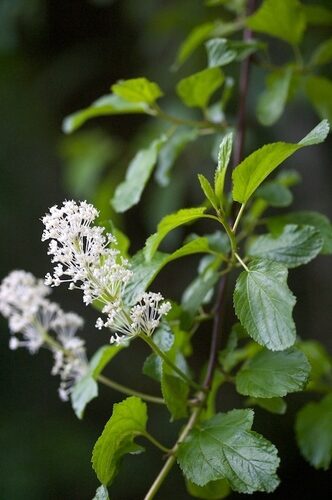
iNaturalist· cc-by
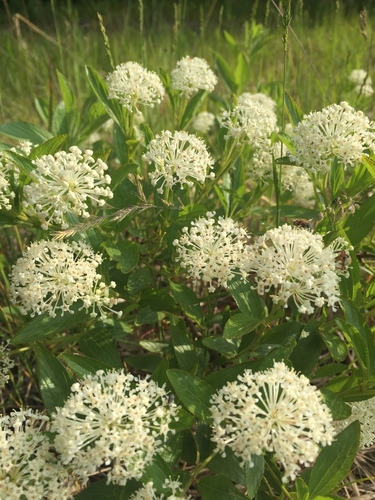
(c) Robert Flogaus-Faust, some rights reserved (CC BY)
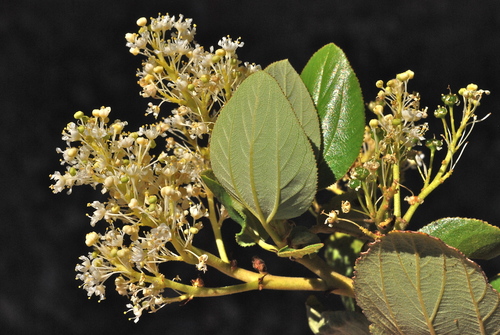
iNaturalist· cc-by-nc
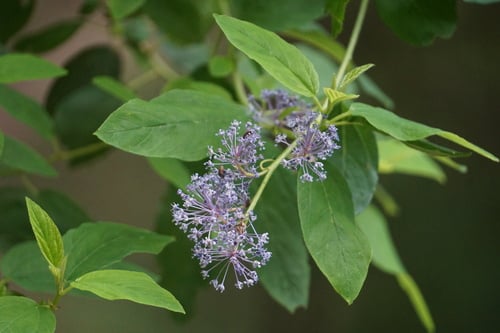
(c) Sadie Hickey, some rights reserved (CC BY-NC), uploaded by Sadie Hickey
iNaturalist· cc-by-nc
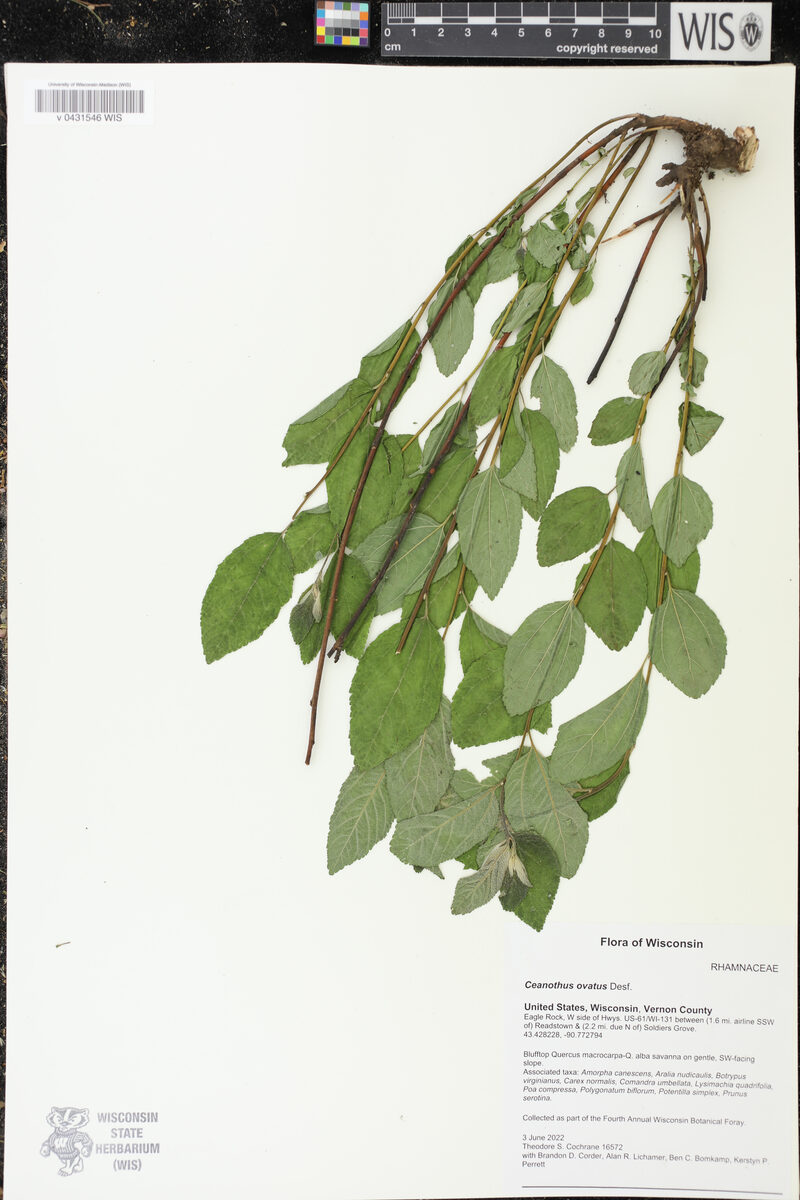
(c) oneelvis, some rights reserved (CC BY-NC)
Summary
Source: WikipediaRhamnus cathartica, the European buckthorn, common buckthorn, purging buckthorn, or just buckthorn, is a species of small tree in the flowering plant family Rhamnaceae. It is native to Europe, northwest Africa and western Asia, from the central British Isles south to Morocco, and east to Kyrgyzstan. It was introduced to North America as an ornamental shrub in the early 19th century or perhaps before, and is now naturalized in the northern half of the continent, and is classified as an invasive plant in several US states and in Ontario, Canada.
Description
A shrub or small tree. It grows 5-8 m tall. The small branches end in a spine. The leaves are alternate and narrowly oval. They are 3-6.5 cm long by 1.5-3 cm wide. The fruit are round and black and 1 cm across. They have 3 stones.
Edible Uses
None known
Traditional Uses
The fruit is used to make syrup.
This uses section is brief — help expand it
Medicinal Uses
Both the bark and fruit have been used for their purgative effect, though their action can be quite violent, so they are rarely used in human medicine today. The berries, harvested when fully ripe, are cathartic, depurative, diuretic, laxative, and violently purgative. For adults, chewing around 8–15 ripe berries before breakfast acts as a strong and effective laxative; they should not be given to children. An infusion made from not-quite-ripe fruit is gentler in action. Use with caution — in large doses the fruit can cause vomiting and violent diarrhoea. The German Commission E Monographs approve Rhamnus cathartica for the treatment of constipation.
Known Hazards
The seeds and leaves are mildly poisonous for humans and most other animals, but are readily eaten by birds, who disperse the seeds in their droppings. The toxins cause stomach cramps and laxative effects that may function in seed dispersal. The chemical compounds responsible for this laxative effect are anthraquinone and emodin. The species name cathartica and the common name purging buckthorn refer to this effect. In 1994, R. cathartica was implicated in the outbreak of an idiopathic neurological disease in horses, although no causative agent was officially identified. In trials where rodents were fed the leaves and stems of R. cathartica, glycogen metabolism became abnormal and glycogen deposits formed in the cytoplasm of liver cells. Abnormalities in glycogen metabolism lead to diabetes in humans.
Distribution
It is a temperate plant. Arboretum Tasmania.
Where It Grows
Asia, Australia, Central Asia, China, Cuba, Europe, Ireland, Kyrgyzstan, Luxembourg, North America, Slovenia, Switzerland, Tajikistan, Tasmania, USA, West Indies,
Cultivation
Succeeds in any reasonably good soil. Prefers a dry or moist calcareous soil in sun or light dappled shade. This species is hardy to at least -15°c. Plants regenerate well after cutting or burning but young plants are rather prone to frost damage when grown in an exposed position. Plants are resistant to cattle grazing but young plants can be damaged by rabbits. Plants have a very shallow root system. This species often bears the aecidospore stage of 'crown rust' of oats so it should not be grown near cereals. The species in this genus are notably resistant to honey fungus. A good bee plant and a main food plant for the brimstone butterfly. Dioecious. Male and female plants must be grown if seed is required.
Propagation
Seed is best sown as soon as it is ripe in autumn in a cold frame. Stored seed requires 1–2 months of stratification at 5°C and should be sown as early in the year as possible in a cold frame. Prick seedlings into individual pots when large enough to handle and grow on in a greenhouse or cold frame through their first winter. Plant out in late spring or early summer the following year. Cuttings of half-ripe wood can be taken in July/August in a frame, mature wood cuttings from the current year's growth can be taken in autumn in a frame, and layering can be carried out in early spring.
Other Uses
A green dye is obtained from the immature fruit; combined with gum arabic and limewater it produces a green pigment suitable for watercolour painting. Yellow, orange, and brownish dyes can also be extracted, though the colours are rich but fugitive. A yellow dye from the bark has been used to colour paper and maps. The plant is often grown as an informal hedge and tolerates trimming well. The wood is hard and handsome with a marble-like grain, and is used for small turnery.
Other Information
It is cultivated.
Synonyms
Also Known As
čistilna kozja češnja, Espino cerval
References (3)
- Abbet, C., et al, 2014, Ethnobotanical survey on wild alpine food plants in Lower and Central Valais (Switzerland). Journal of Ethnopharmacology 151 (2014) 624–634
- http://www.botanic-gardens-ljubljana.com/en/plants
- Zeven, A. C. & de West, J. M. J., 1982, Dictionary of cultivated plants and their regions of diversity. Wageningen. p 118