Ziziphus abyssinica
Hochst. ex A Rich.
Jube-jube
iNaturalist· cc-by-nc-sa
(c) Marco Schmidt, some rights reserved (CC BY-NC-SA)
iNaturalist· cc-by-nc
(c) Grant Reed, some rights reserved (CC BY-NC), uploaded by Grant Reed
iNaturalist· cc-by-nc
(c) AMADOU BAHLEMAN FARID, some rights reserved (CC BY-NC)
Summary
Source: WikipediaZiziphus abyssinica is a species of shrub in the family Rhamnaceae.
Description
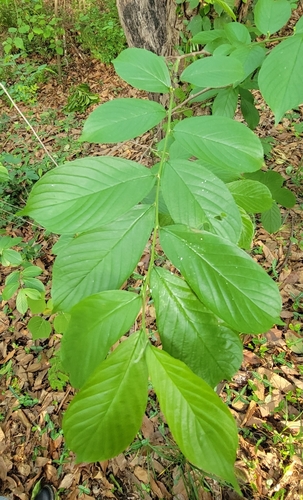
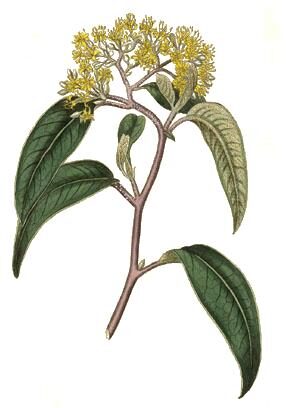
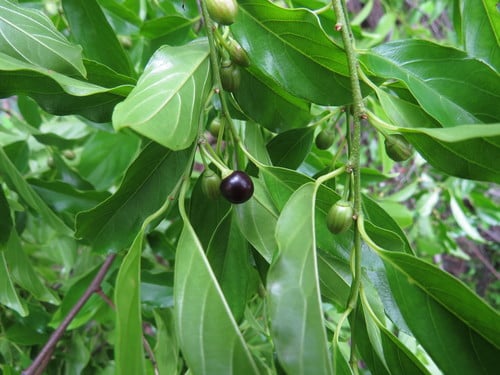
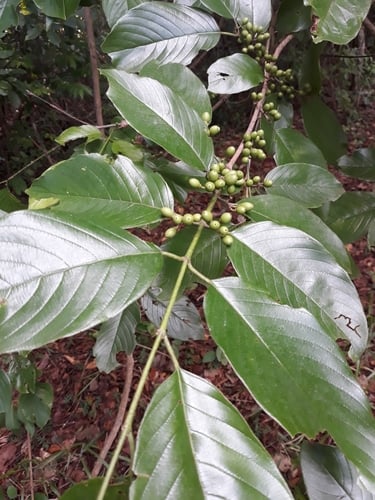
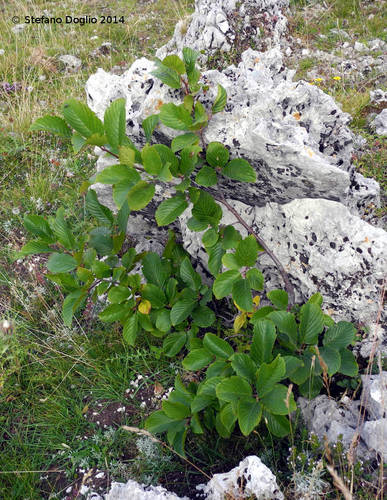
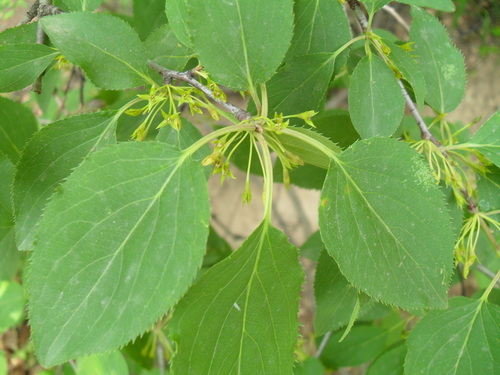
A thorny semi-evergreen shrub. It grows 3-6 m high. It has a single straight trunk. The branches droop to give a rounded crown. The bark is dark grey and deeply grooved. Branches zigzag and are hairy. They have single or paired, dark brown thorns 2 cm long. In a pair, one is straight and one is curved backwards. Leaves are alternate along the stem. They are oval and leathery. Their length varies from 5-8 cm. The leaf base is unequal. Leaves are shiny green on top and hairy and orange yellow below. There are 2-3 clear veins. The leaf has a finely toothed edge and a short hairy stalk. Flowers are green or yellow in small star like heads. They are 1-2 cm across on stalks 1 cm long. The flowers have an unpleasant sharp smell. Fruit are rounded and 2-3 cm across. They are smooth and ripen to a shiny red-brown. There are 1-2 seeds inside a stone. The flesh of the fruit is edible.
Edible Uses
The ripe fruit pulp and seeds are eaten raw, though seeds are often discarded. The leaves are also edible. The fruit are eaten especially by children and sold in local markets.
Traditional Uses
The ripe fruit pulp and seeds are eaten raw. Often the seeds are discarded.
This uses section is brief — help expand it
Medicinal Uses
The roots are boiled and the liquid drunk as a treatment for after-birth pains, stomach-ache, snakebite, and also to induce abortion. A decoction of the roots, mixed with those of Rhynchosia resinosa, is drunk as a treatment for stomach-ache. The roots are pounded and the powder is rubbed on the chest, which is first scarified, as a treatment for pneumonia. The leaves are boiled and used as a steam bath for the treatment of pneumonia. Ash from the burnt leaves is mixed with common salt and rubbed externally on to the throat to relieve tonsillitis.
Distribution
A tropical plant. It grows in the lowlands. It occurs in medium to low elevations in Africa. It grows in dry savannah. It is often beside rivers. It grows in the Sahel in West Africa. It can grow in arid places. In Ethiopia it grows between 450-2,000 m above sea level.
Where It Grows
Africa, Angola, Asia, Benin, Botswana, Burkina Faso, Burundi, Cameroon, Central Africa, Chad, Congo DR, Côte d'Ivoire, Djibouti, East Africa, Eritrea, Eswatini, Ethiopia, Ghana, Guinea, Guinée, Guinea-Bissau, India, Ivory Coast, Kenya, Lesotho, Malawi, Mali, Mozambique, Niger, Nigeria, Sahel, Sao Tome and Principe, Senegal, Somalia, South Africa, Southern Africa, South Sudan, Sudan, Swaziland, Tanzania, Togo, Uganda, USA, West Africa, Zambia, Zimbabwe,
Cultivation
Plants are grown from seeds. Seeds can be sown in pots then transplanted or sown directly where they are to grow. To collect seeds the fruit pulp is removed then the seeds dried. The hard seed cover should be cracked carefully or soaked in cold water for 24 hours before sowing. Plants can be pruned. It is used as a hedge. Plants can be cut back and will re-grow.
Propagation
Seed - best sown as soon as it is ripe.
Other Uses
A cinnamon-coloured dye is obtained from the bark. The dark-brown to black wood is hard, heavy and resistant to termites and borers. It is used for furniture, interior work, carving, building poles and tool handles. The wood is used for fuel and for making charcoal. The plant is fiercely thorny and this virtue has been put to good use by making hedges of the plant that can keep out (or in) domestic animals and larger wild animals.
Production
In Zimbabwe fruit are ripe June to September.
Other Information
The fruit are eaten especially by children. The fruit are sold in local markets.
Notes
There are about 86-100 Ziziphus species. They grow in the tropics. There are 30 species in tropical America.
Synonyms
Also Known As
Abetere, Anguga, Desert apple, Emuriei, Esilang, Gurumohit, Gusura, Habei, Kagowole, Kala-nangwa, Kalobwe, Kankhande, Katagi, Kitolousuu, Kobtta, Kottae, Laang dial, Lang akon, Lango, Larukluror, Mkunazi, Mpiripiri, Muae, Mutanula, Nabag, Olangu, Qal-landi, Ufuru
References (39)
- Abbiw, D.K., 1990, Useful Plants of Ghana. West African uses of wild and cultivated plants. Intermediate Technology Publications and the Royal Botanic Gardens, Kew. p 42
- Addis, G., Asfaw, Z & Woldu, Z., 2013, Ethnobotany of Wild and Semi-wild Edible Plants of Konso Ethnic Community, South Ethiopia. Ethnobotany Research and Applications. 11:121-141
- Assogbadjo, A. E. et al, 2013, Specific Richness and Cultural Importance of Wild Edible Trees in Benin. Acta Hort. 979, ISHS 2013
- Atato, A., et al, 2010, Diversity of Edible Wild Fruit Tree Species of Togo. Global Science Books.
- Awas, T., 1997, A Study on the Ecology and Ethnobotany of Non-cultivated Food Plants and Wild Relatives of Cultivated crops in Gambella Region, Southwestern Ethiopia. Addis Ababa University. p 61
Show all 39 references Hide references
- Berihun, T. & Molla, E., 2017, Study on the Diversity and Use of Wild Edible Plants in Bullen District Northwest Ethiopia. Hindawi Journal of Botany. Article ID 8383468
- Bunderson, W. T. et al, 2002, Common Agroforestry Species in Malawi. Malawi Agroforestry Extension Project, Pubication No. 46, Lilongwe. p 45
- Burkill, H. M., 1985, The useful plants of west tropical Africa, Vol. 4. Kew.
- Dale, I. R. and Greenway, P. J., 1961, Kenya Trees and Shrubs. Nairobi. p 393
- Fowler, D. G., 2007, Zambian Plants: Their Vernacular Names and Uses. Kew. p 54
- Fox, F. W. & Young, M. E. N., 1982, Food from the Veld. Delta Books. p 315
- Gallagher, D. E., 2010, Farming beyond the escarpment: Society, Environment, and Mobility in Precolonial Southeastern Burkina Faso. PhD University of Michigan.
- Goode, P., 1989, Edible Plants of Uganda. FAO p 30
- Goode, P., 1989, Edible Plants of Uganda. FAO p 40
- Grivetti, L. E., 1980, Agricultural development: present and potential role of edible wild plants. Part 2: Sub-Saharan Africa, Report to the Department of State Agency for International Development. p 43, 71, 72
- http://www.fao.org/forestry/25323-096344a3de335832e8f363c3ac5184a66.pdf
- Katende, A.B., Birnie, A & Tengnas B., 1995, Useful Trees and Shrubs for Uganda. Identification, Propagation and Management for Agricultural and Pastoral Communities. Technical handbook No 10. Regional Soil Conservation Unit, Nairobi, Kenya. p 682
- Kebebew, M. & Leta, G., 2016, Wild Edible Plant Bio-diversity and Utilization System in Nech Sar National Park, Ethiopia. International Journal of Bio-resource and Stress Management 2016, 7(4):885-896
- Lulekal, E., et al, 2011, Wild edible plants in Ethiopia: a review on their potential to combat food insecurity. Afrika Focus - Vol. 24, No 2. pp 71-121
- Maundu, P. et al, 1999, Traditional Food Plants of Kenya. National Museum of Kenya. 288p
- Mengistu, F. & Hager, H., 2008, Wild Edible Fruit Species Cultural Domain, Informant Species Competence and Preference in Three Districts of Amhara Region, Ethiopia. Ethnobotany Research & Applications 6:487-502
- Molla, A., Ethiopian Plant Names. http://www.ethiopic.com/aplants.htm
- Mpasiwakomu, R. A., 2017, The Diversity and Utilization of Wild Edible and Medicinal Plant Species found in Uvinza Miombo Woodlands, Tanzania. M. Sc. thesis University of Tanzania.
- Mutie, F. G., 2020, Conservation of Wild Food Plants and Their Potential for Combatting Food Insecurity in Kenya as Exemplified by the Drylands of Kitui County. Plants 2020, 9, 1017
- Mutie, F. M., et al, 2023, Important Medicinal and Food Taxa (Orders and Families) in Kenya, Based on Three Quantitative Approaches. Plants 2023, 12, 1145
- Ojelel, S. & Kakudidi, E. K., 2015, Wild edible plant species utilized by a subsistence farming community in the Obalanga sub-county, Amuria district, Uganda. Journal of Ethnobiology and Ethnomedicine. 11:7
- Oryema, C., et al, 2013, Edible wild fruit species of Gulu District, Uganda. International Journal of Biology and Biological Sciences Vol 2(4) pp 068-082
- Palgrave, K.C., 1996, Trees of Southern Africa. Struik Publishers. p 549
- Peters, C. R., O'Brien, E. M., and Drummond, R.B., 1992, Edible Wild plants of Sub-saharan Africa. Kew. p 166
- Prins, H. & Maghembe, J. A., 1994, Germination studies on seed of fruit trees indigenous to Malawi. Forest Ecology and Management 64:111-125
- Rasingam, L., 2012, Ethnobotanical studies on the wild edible plants of Irula tribes of Pillur Valley, Coimbatore district, Tamil Nadu, India. Asian Pacific Journal of Tropical Biomedicine. (2012) S1493-S1497
- Royal Botanic Gardens, Kew (1999). Survey of Economic Plants for Arid and Semi-Arid Lands (SEPASAL) database. Published on the Internet; http://www.rbgkew.org.uk/ceb/sepasal/internet [Accessed 6th June 2011]
- Ruffo, C. K., Birnie, A. & Tengnas, B., 2002, Edible Wild Plants of Tanzania. RELMA p 736
- Scudder, 1962, 1971,
- Tebkew, M. et al, 2014, Underutilized wild edible plants in the Chilga District, northwestern Ethiopia: focus on wild woody plants. Agriculture & Food Security 3:12
- Tredgold, M.H., 1986, Food Plants of Zimbabwe. Mambo Press. p 139
- Vivien, J., & Faure, J.J., 1996, Fruitiers Sauvages d'Afrique. Especes du Cameroun. CTA p 270
- World Checklist of Useful Plant Species 2020. Royal Botanic Gardens, Kew
- www.worldagroforestrycentre.org/treedb/