Acer carpinifolium
Siebold & Zucc.
iNaturalist· cc-by
(c) belvedere04, some rights reserved (CC BY), uploaded by belvedere04
iNaturalist· cc0
no rights reserved, uploaded by Stephen James McWilliam
iNaturalist· cc-by-nc
(c) Keita Watanabe, some rights reserved (CC BY-NC), uploaded by Keita Watanabe
Summary
Source: WikipediaAcer carpinifolium (hornbeam maple; Japanese: チドリノキ Chidorinoki "zigzag tree") is a species of maple native to Japan, on the islands of Honshū, Kyūshū, and Shikoku, where it grows in woodlands and alongside streams in mountainous areas. It is a small deciduous tree growing to 10–15 m tall, with smooth, dark greenish-grey to grey-brown bark. The leaves are 7–15 cm long and 3–6 cm broad, simple, unlobed, and pinnately veined with 18–24 pairs of veins and a serrated margin. They resemble leaves of hornbeams more than they do other maples, except for being arranged in opposite pairs, and in the very small basal pair of veins being palmately arranged as in other maples. The flowers are 1 cm diameter, greenish yellow, produced in pendulous racemes 5–12 cm long in spring as the new leaves open; they are dioecious, with male and female flowers on separate trees. The fruit is a samara of two seeds each with a 2–3 cm long wing. It is occasionally cultivated as an ornamental plant in temperate regions, mainly as a botanical curiosity to demonstrate the wide range of leaf morphology in the genus Acer, but also for its bright yellow autumn colour. Both the scientific and common names derive from the superficial resemblance of its leaves to those of the genus Carpinus (hornbeams).
Description
A shrub or small tree. It grows 5 m tall. There are prickles along the stem. The leaves are twice divided and there are 8-18 pairs of pinnae. There are up to 50 pairs of pinnules on each pinnae. The flowers are yellow. They are in large clusters at the ends of branches. The pods are flattened.
Edible Uses
The sap contains sugar and can be drunk fresh or boiled down into a syrup used as a sweetener on many foods, though the sugar concentration is considerably lower than in sugar maples (A. saccharum). The trunk is tapped in early spring, with the best flow on warm sunny days following a frost. The highest yields come from trees grown in cold-winter areas with continental climates.
Medicinal Uses
None known
Distribution
It is a temperate plant.
Where It Grows
North America,
Cultivation
Of easy cultivation, it prefers a good moist well-drained soil, preferring a sunny position but tolerating some shade. Grows well in heavy clay soils. Chlorosis can sometimes develop as a result of iron deficiency when the plants are grown in alkaline soils, but in general maples are not fussy as to soil pH. Most maples are bad companion plants, inhibiting the growth of nearby plants. This species is dioecious, at least one male plant needs to be grown with up to 5 females if seed is required.
Propagation
Seed is best sown as soon as it is ripe in a cold frame, where it typically germinates the following spring. Stored seed should be pre-soaked for 24 hours and then stratified for 2–4 months at 1–8°C, though germination can be slow. Seed harvested green — fully developed but before drying and forming germination inhibitors — can be sown immediately and should germinate in late winter; seed taken too early produces very weak or no plants. Prick seedlings into individual pots and grow on until they reach at least 20cm before planting out permanently. Layering takes about 12 months and is successful with most species in this genus. Cuttings of young shoots taken in June or July should have 2–3 pairs of leaves plus one pair of buds at the base; removing a thin slice of bark at the base and applying a rooting hormone improves success. Rooted cuttings must show new growth during summer before being potted up, otherwise they are unlikely to survive winter. Grafting is not possible for this species as no compatible rootstock has been found.
Other Uses
The leaves can be packed around apples, root crops, and similar produce to help preserve them.
References (1)
- Fern, Plants for a future.
More from Sapindaceae
Aesculus assamica
Ma niang nam
Aesculus californica
Californian Buckeye, Californian Horse-Chestnut, Berraco
Aesculus chinensis
Chinese horse chestnut
Aesculus flava
Sweet buckeye, Horse Chestnut, Yellow Buckeye
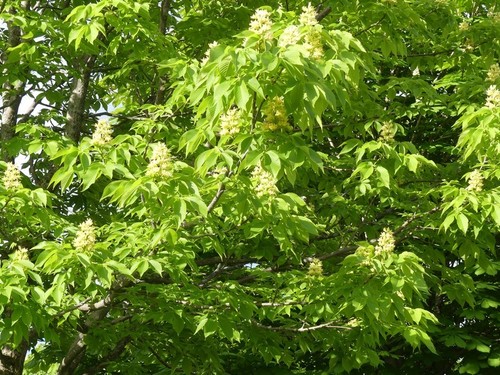
Aesculus glabra
Ohio buckeye, Fetid buckeye
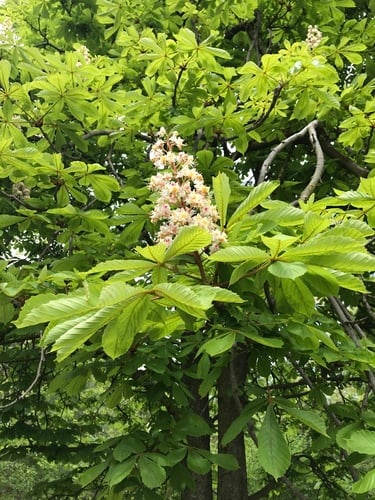
Aesculus hippocastanum
European horse chestnut