Begonia auriculata
Hook.
Earlike begonia, Cathedral begonia
iNaturalist· cc-by-nc
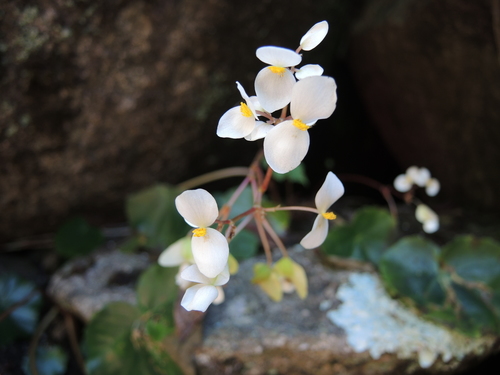
(c) Anne-Hélène Paradis, some rights reserved (CC BY-NC), uploaded by Anne-Hélène Paradis
iNaturalist· cc-by-nc
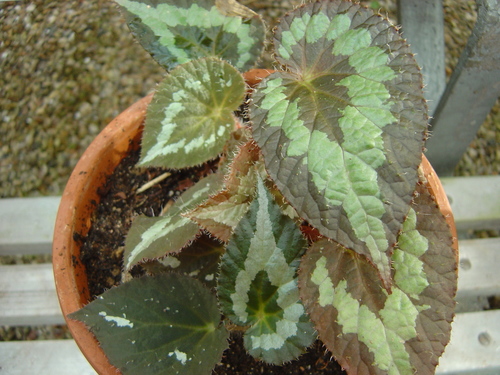
(c) Anne-Hélène Paradis, some rights reserved (CC BY-NC)
Description
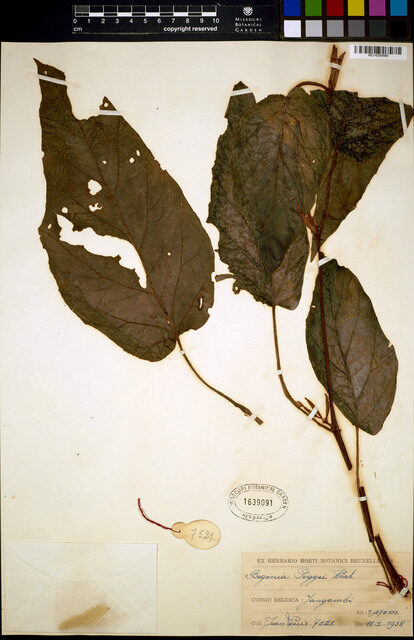
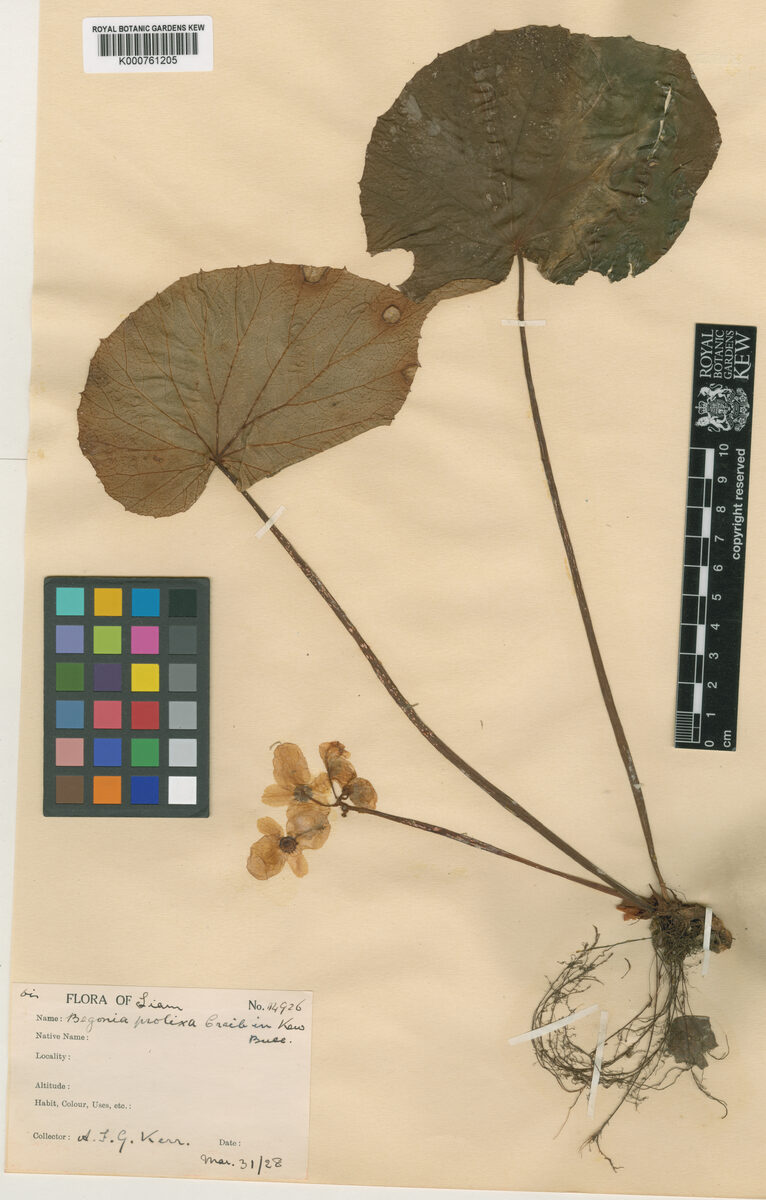
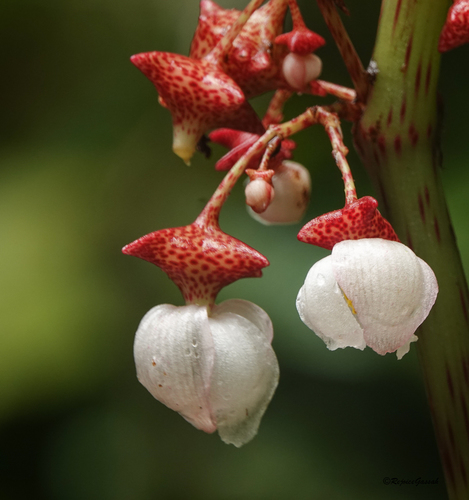
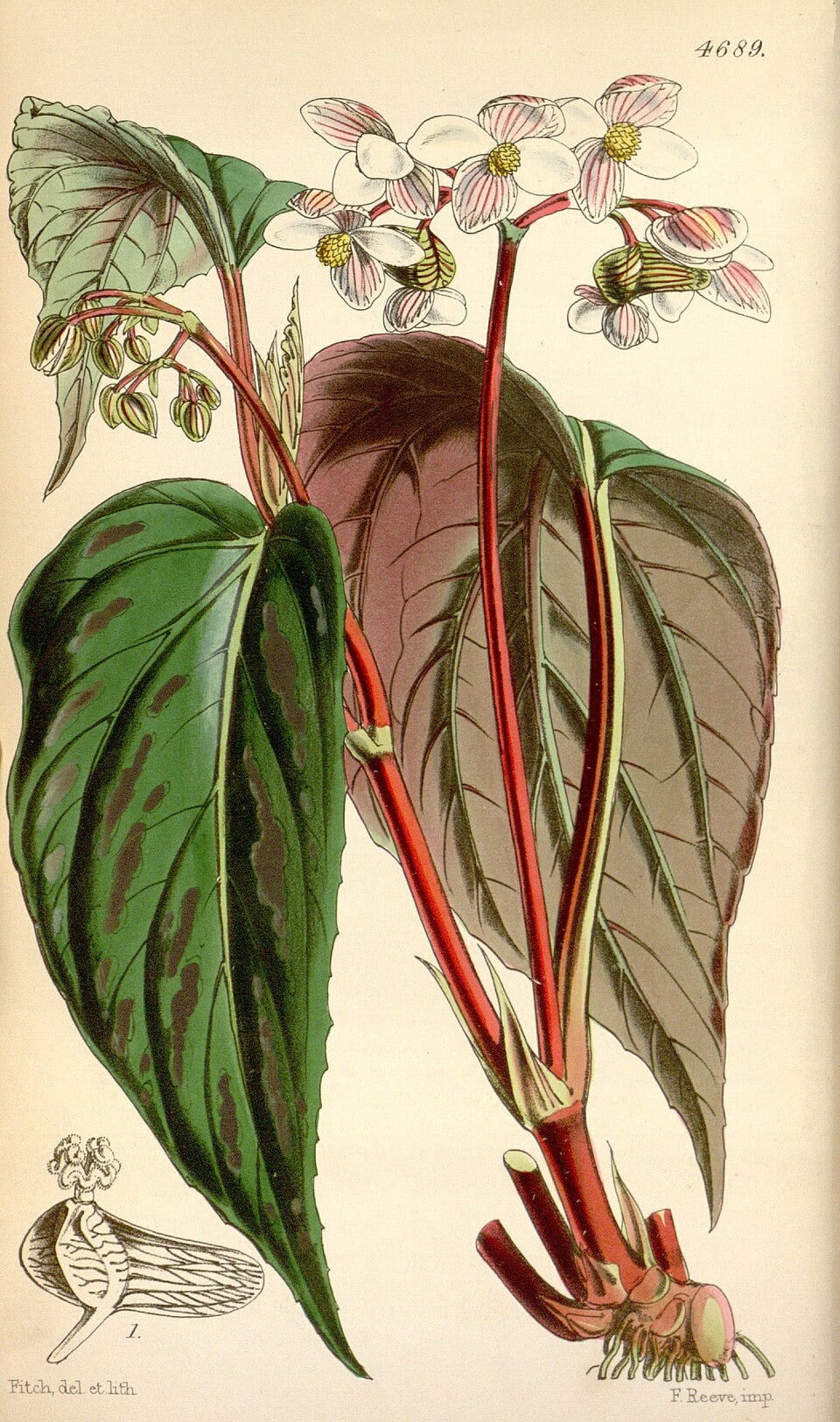
A herb that has a rhizome. The stems are branched, pink and hairy. The leaves are small and waxy. They are a coppery olive green with a silvery green towards the centre on the upper surface. They are brownish-red underneath. The leaf stalks are long, pink and hairy. The flowers are in groups and have green bracts. The flowers are pink.
Edible Uses
The leaves are eaten.
Distribution
It is a tropical plant. It grows in the humid tropics between 300-1,800 m above sea level.
Where It Grows
Africa, Asia, Central Africa, Gabon, Guinea, Guinée, Indonesia, SE Asia,
Cultivation
Plants can be grown from cuttings.
Also Known As
Begonia katedral
References (4)
- Laferriere, J. E., 1992, Begonias as Food and Medicine. Economic Botany, Vol. 46, No. 1, pp. 114-116
- Martin, F.W. & Ruberte, R.M., 1979, Edible Leaves of the Tropics. Antillian College Press, Mayaguez, Puerto Rico. p 178 (As Begonia siriculata)
- Sukarya, D. G., (Ed.) 2013, 3,500 Plant Species of the Botanic Gardens of Indonesia. LIPI p 1069
- Terra, G.J.A., 1973, Tropical Vegetables. Communication 54e Royal Tropical Institute, Amsterdam, p 29 (As Begonia siriculata)