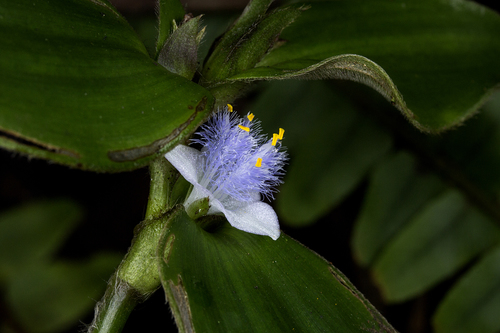
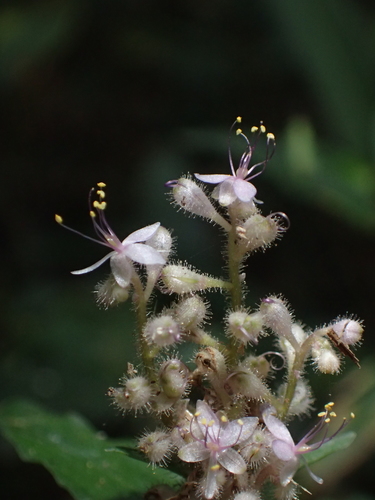
Commelina virginica
L.
Virginia day-flower
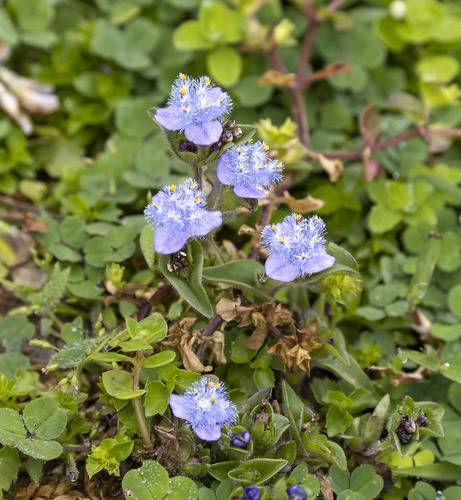
iNaturalist· cc-by-nc
(c) Suzanne Cadwell, some rights reserved (CC BY-NC), uploaded by Suzanne Cadwell
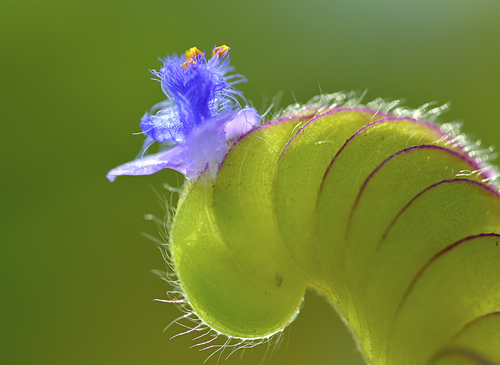
iNaturalist· cc-by-nc
(c) Paul Marcum, some rights reserved (CC BY-NC), uploaded by Paul Marcum
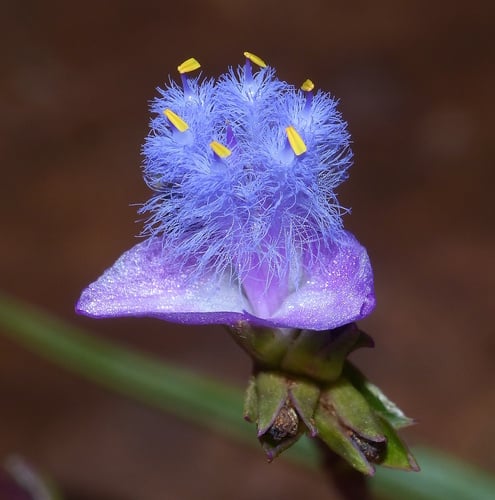
iNaturalist· cc-by-nc
(c) Ann Walter-Fromson, some rights reserved (CC BY-NC), uploaded by Ann Walter-Fromson
Summary
Source: WikipediaCommelina virginica, commonly known as the Virginia dayflower, is a perennial herbaceous plant in the dayflower family. It is native to the mideastern and southeastern United States, where it is typical of wet soils. While most members of the genus have thin, fibrous roots, the Virginia dayflower is relatively unique for its genus in having a perennial rhizome. The plant was first described by Carl Linnaeus in his 1762 publication of the second edition of Species Plantarum. A phylogenetic study based on the nuclear ribosomal DNA region 5S NTS and the chloroplast region trnL-trnF, two commonly used gene regions for determining relationships, suggested that Commelina virginica is most closely related to two African species, namely Commelina capitata and Commelina congesta. However, the statistical support for this result was low. Morphologically speaking the supposedly related species do share some unique traits. C. virginica and C. capitata have red hairs at the top of their leaf sheaths, an unusual character in the genus, while C. virginica and C. congesta both have clustered inflorescences on very short stalks.
Description
Virginia dayflower is an annual or perennial plant reaching 1.2 m (4 ft) tall. It flowers from June to August with seeds maturing August through October. The plant is hermaphroditic and thrives in light sandy or medium loamy well-drained soils. It tolerates mildly acidic, neutral, and basic soils, and can grow in semi-shade or full sun with either dry or moist conditions.
Edible Uses
The starchy tubers are edible when cooked, though they have a fairly bland flavour. The leaves are also edible.
Medicinal Uses
None known
Distribution
It is a temperate plant.
Where It Grows
Europe, Haiti, North America, USA, West Indies,
Cultivation
Prefers a light fairly dry well-drained loam with added leafmold. Prefers a sunny position with some shelter. Plants are not very winter hardy in Britain, the roots are best dug up in autumn and stored like dahlias in a cool frost free place. When grown in a light well-drained soil and mulched well, the roots usually survive the winter outdoors. The roots of this plant do not seem to be tuberous, the plant seems to be more like an annual.
Propagation
Sow seed in March in a greenhouse; germination typically takes 4–5 weeks at 20°C. Once seedlings are large enough to handle, prick them out into individual pots and plant out in late spring or early summer after the last expected frosts. Divide in early spring, ensuring each portion has at least one growing bud. Cuttings taken during the growing season are very easy to root.
Other Uses
None known
Notes
There are about 230 Commelina species.
References (3)
- Ekman Herbarium records Haiti
- Plants for a Future database, The Field, Penpol, Lostwithiel, Cornwall, PL22 0NG, UK. http://www.scs.leeds.ac.uk/pfaf/
- Sp. pl. ed. 2, 1:61. 1762