Streptolirion volubile
Edgew.
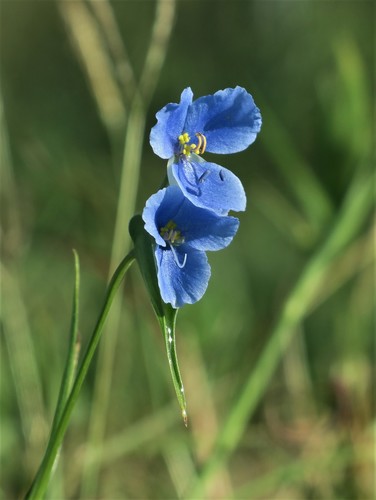
iNaturalist· cc-by-nc
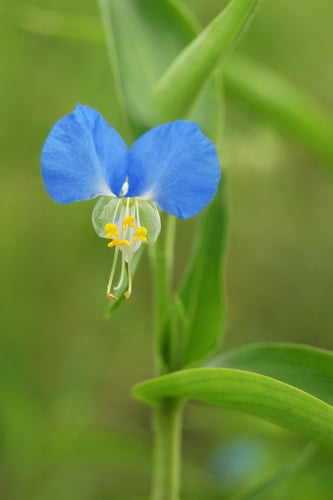
(c) onidiras-iNaturalist, some rights reserved (CC BY-NC), uploaded by onidiras-iNaturalist
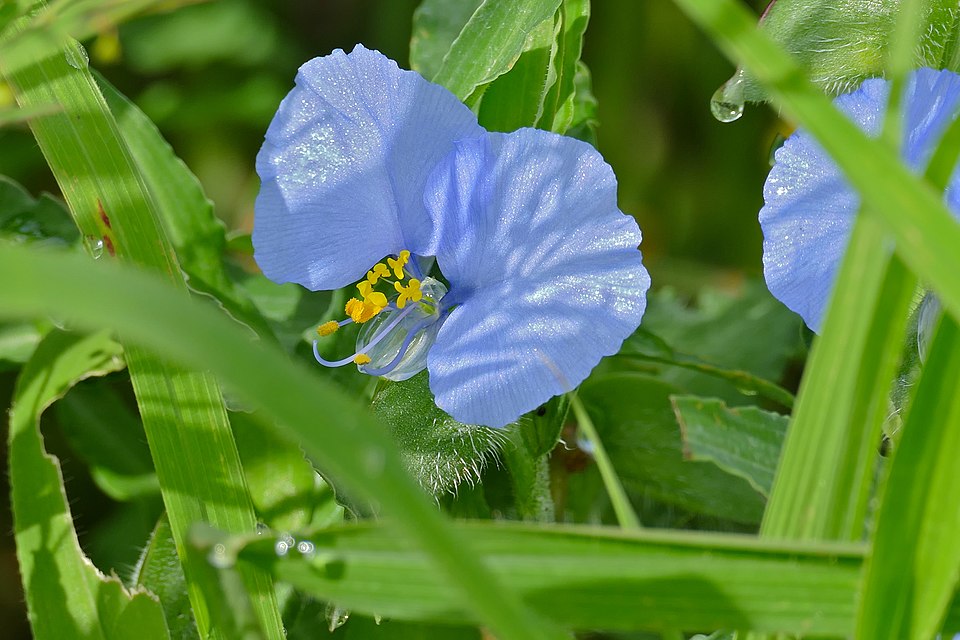
iNaturalist· cc-by-nc
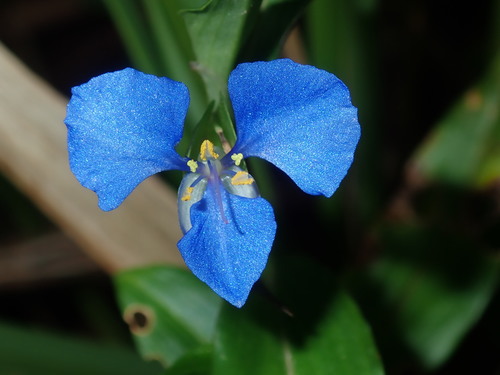
(c) 亦文, some rights reserved (CC BY-NC)
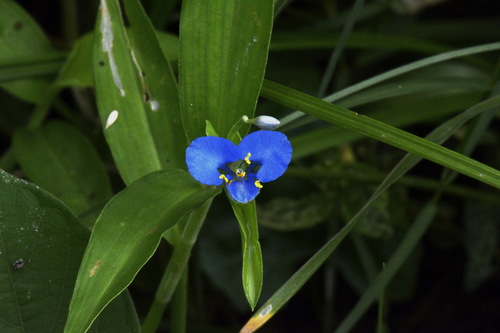
iNaturalist· cc-by-nc
(c) Nash Turley, some rights reserved (CC BY-NC)
Summary
Source: WikipediaStreptolirion volubile is a species of climbing monocotyledonous flowering plants in the dayflower family. It has a broad distribution in Asia, from the Russian Far East and Korea through China to Indochina and the Himalayas. Three subdivisions are accepted. Streptolirion volubile var. angustifolia Aver. – Vietnam Streptolirion volubile subsp. khasianum (C.B.Clarke) D.Y.Hong – eastern Himalaya to south-central China and Vietnam. It is a stronger climber than subsp. volubile and covered with erect brown hairs. Streptolirion volubile subsp. volubile – Russian Far East and Korea through China to Indochina and the Himalayas.
Description
A herb. It is usually climbing. Stems can be 1-6 m long. It can be covered with yellow or brown hairs. The leaf stalk is 3-12 cm long. The leaves are heart shaped or round and 5-15 cm long by 3-15 cm wide. The flowers are white or pale purple.
Edible Uses
The leaves are cooked and eaten as a vegetable, used in soup, or eaten raw. The young stems and flowers are also edible and palatable.
Traditional Uses
The leaves are cooked and eaten as a vegetable and used in soup. They are also eaten raw.
This uses section is brief — help expand it
Distribution
It is a tropical and subtropical plant. It grows in forests and on mountain slopes from near sea level to 3,200 m above sea level in southern China. In Sichuan and Yunnan.
Where It Grows
Asia, Bhutan, China, Himalayas, India, Indochina, Japan, Korea, Laos, Myanmar, Northeastern India, SE Asia, Sikkim, Thailand, Tibet, Vietnam,
Other Information
They are palatable.
Notes
There is only on Streptolirion species.
Synonyms
Also Known As
Bi, Dang dai lu, Mailexu, Mi zuo wa, Mo dui dui han, Tadaro
References (4)
- Cao, Y., et al, 2020, Ethnobotanical study on wild edible plants used by three trans-boundary ethnic groups in Jiangcheng County, Pu’er, Southwest China. Journal of Ethnobiology and Ethnomedicine (2020) 16:66
- Geng, Y., et al, 2016, Traditional knowledge and its transmission of wild edibles used by the Naxi in Baidi Village, northwest Yunnan province. Journal of Ethnobiology and Ethnomedicine. 12:10
- Luo, B., et al, 2019, Wild edible plants collected by Hani from terraced rice paddy agroecosystem in Honghe Prefecture, Yunnan, China. Journal of Ethnobiology and Ethnomedicine 15:56
- Srivastava, R. C., 2010, Traditional knowledge of Nyishi (Daffla) tribe of Arunachal Pradesh. Indian Journal of Traditional Knowledge. 9(1):26-37