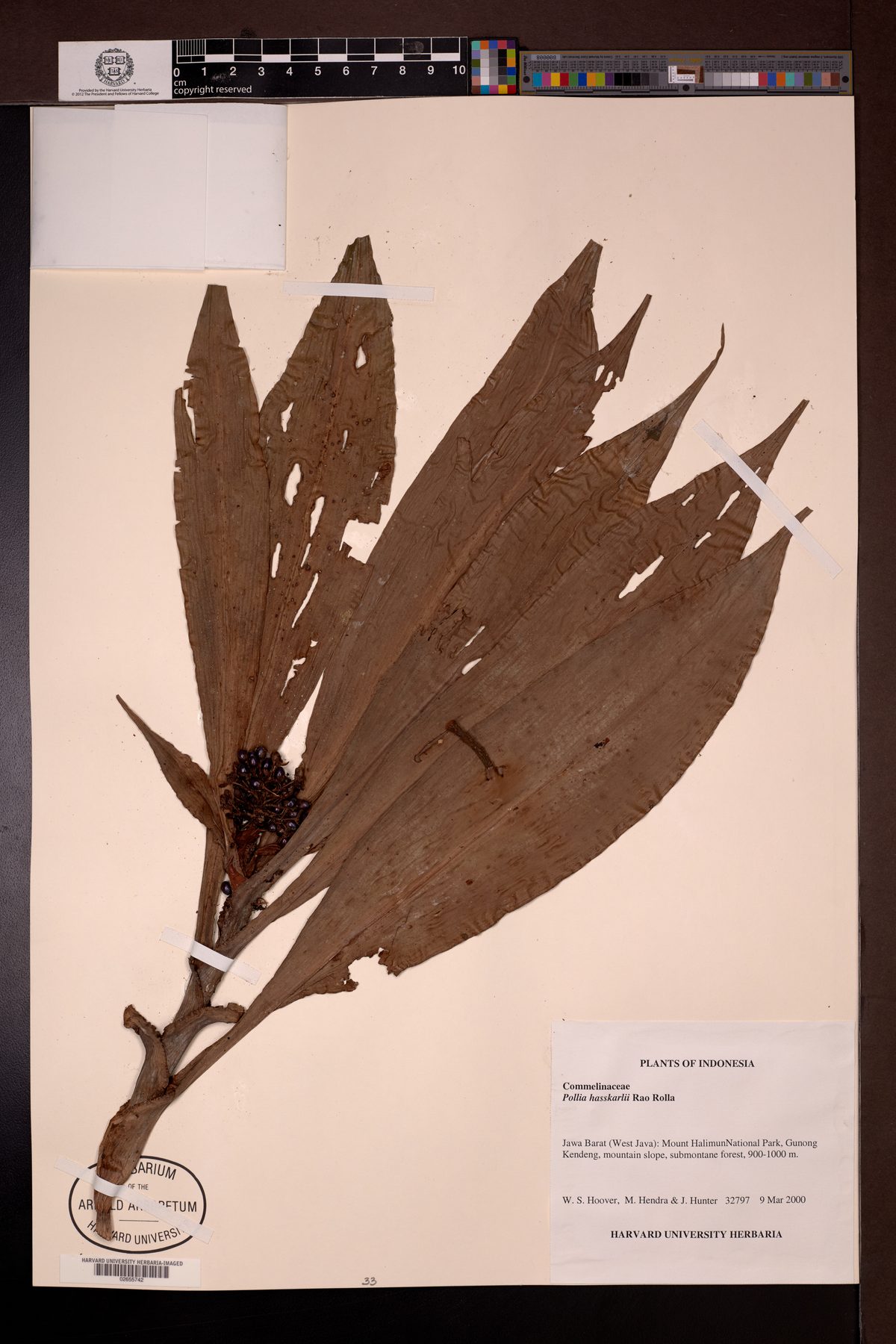
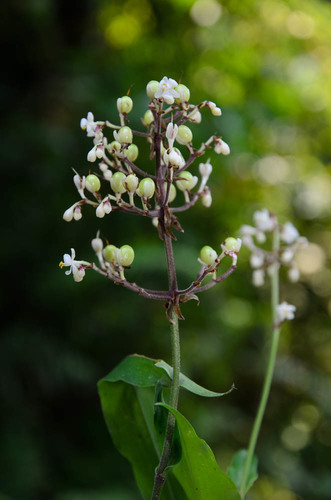
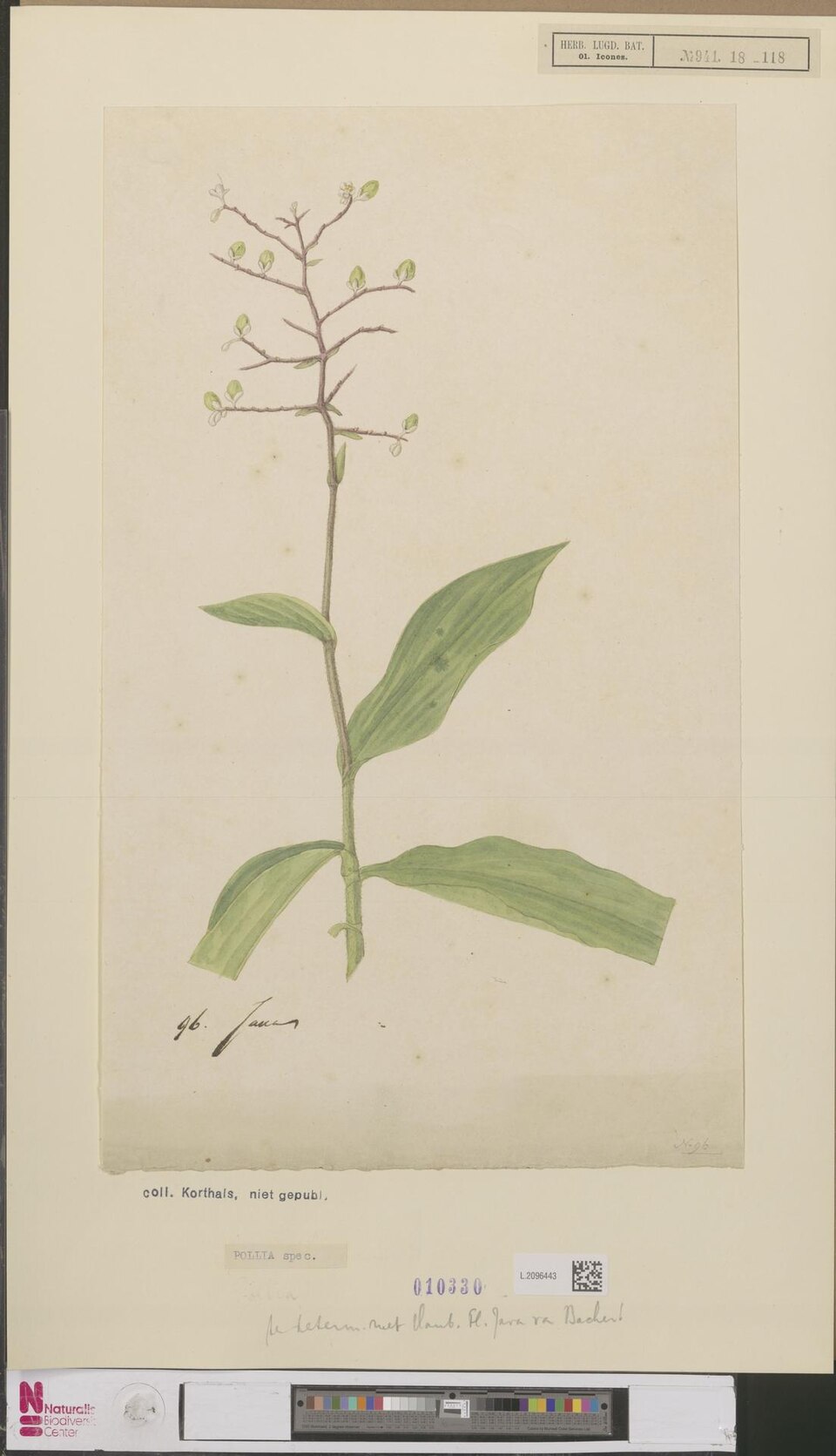
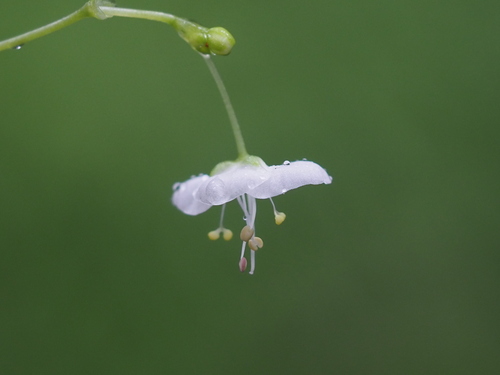
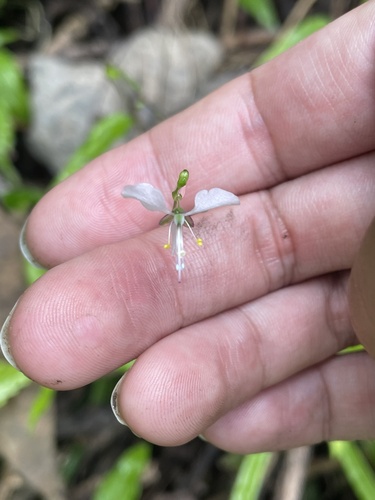
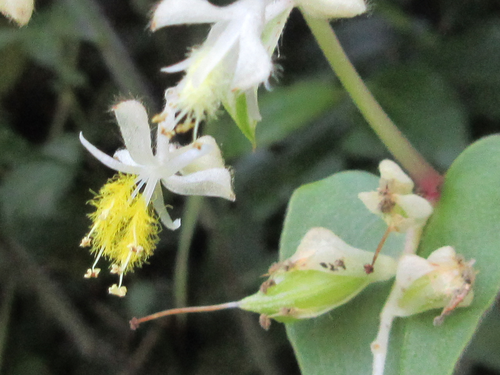
Commelina forskaolii
Vahl
Kansura, Kanshura
iNaturalist· cc-by-nc
(c) Morten Ross, some rights reserved (CC BY-NC), uploaded by Morten Ross
iNaturalist· cc-by
(c) Morten Ross, some rights reserved (CC BY)
Summary
Source: WikipediaCommelina forskaolii, sometimes known as rat's ear, is an herbaceous plant in the dayflower family native to much of Africa, Arabia, and India. It has also been introduced to Florida in the United States. It is considered a common species in most of its range. It can be easily recognized by its bright blue flowers with winged stamen filaments. The seeds are also distinctive with distinctive irregular ridges on their sides. It often forms dense mats, and can be found most commonly in sandy soils in at least somewhat sunny situations. The species is considered a weed in many areas because of its hardiness and ability to produce cleistogamous flowers.
Description
A herb. The stems are fleshy and lie along the ground. They form roots at the nodes. The leaf stalks form a sheath around the stem. The leaves are small. The flower emerges from a pocket like spathe. The flowers are blue.
Edible Uses
The leaves are cooked and eaten, becoming soft when prepared and often mixed with coarse vegetables or maize. The seeds are ground into flour for making bread.
Traditional Uses
The seeds are used to make flour for bread. The leaves are cooked and eaten. They are soft when cooked so are often mixed with coarse vegetables or maize.
Distribution
A tropical plant. It grows on gravely soil. It can be on sandy soil over limestone material. It grows from sea level to 1,700 m above sea level. It grows in hot arid places and places with a marked dry season. It can tolerate drought. It can grow in arid places.
Where It Grows
Africa, Asia, Benin, Botswana, Burkina Faso, Cameroon, Central Africa, Congo, East Africa, Gambia, Ghana, Guinea, Guinée, Guinea-Bissau, India, Kenya, Madagascar, Mali, Middle East, Mozambique, Namibia, Nigeria, North America, Saudi Arabia, Senegal, Socotra, Somalia, South Africa, Southern Africa, South Sudan, Sudan, Tanzania, USA, West Africa, Zambia, Zimbabwe,
Cultivation
Plants are grown from root cuttings.
Production
The branches are threshed to collect the seeds.
Other Information
The leaves are widely used. They are of average palatability.
Notes
There are about 230 Commelina species.
Synonyms
Also Known As
Dzadza, Goche, Goshe, Kikoe, Kikowe, Kimore, Nkwasia
References (20)
- Enum. pl. 2:172. 1805 (As Commelina forskaolii)
- FAO, 1988, Traditional Food Plants, FAO Food and Nutrition Paper 42. FAO Rome p 214
- Fowler, D. G., 2007, Zambian Plants: Their Vernacular Names and Uses. Kew. p 86
- Gallagher, D. E., 2010, Farming beyond the escarpment: Society, Environment, and Mobility in Precolonial Southeastern Burkina Faso. PhD University of Michigan.
- Grivetti, L. E., 1980, Agricultural development: present and potential role of edible wild plants. Part 2: Sub-Saharan Africa, Report to the Department of State Agency for International Development. p 49
Show all 20 references Hide references
- GUPTA & KANODIA,
- Jardin, C., 1970, List of Foods Used In Africa, FAO Nutrition Information Document Series No 2.p 69
- Martin, F.W. & Ruberte, R.M., 1979, Edible Leaves of the Tropics. Antillian College Press, Mayaguez, Puerto Rico. p 183
- Maundu, P. et al, 1999, Traditional Food Plants of Kenya. National Museum of Kenya. 288p
- Mutie, F. G., 2020, Conservation of Wild Food Plants and Their Potential for Combatting Food Insecurity in Kenya as Exemplified by the Drylands of Kitui County. Plants 2020, 9, 1017
- Mutie, F. M., et al, 2023, Important Medicinal and Food Taxa (Orders and Families) in Kenya, Based on Three Quantitative Approaches. Plants 2023, 12, 1145
- Ngugi, G., 2000, Case Study from Kenya on Indigenous Wild Vegetables. Paper 4 Workshop in Kenya 1999. p 34
- Patil, M. V. & Patil, D. A., 2000, Some More Wild Edible Plants of Nasik District (Maharashtra). Ancient Science of Life Vol. X1X (3&4): 102-104
- Pickering, H., & Roe, E., 2009, Wild Flowers of the Victoria Falls Area. Helen Pickering, London. p 51 (As Commelina forskaolii)
- Royal Botanic Gardens, Kew (1999). Survey of Economic Plants for Arid and Semi-Arid Lands (SEPASAL) database. Published on the Internet; http://www.rbgkew.org.uk/ceb/sepasal/internet [Accessed 10th April 2011]
- SAXENA,
- SHANKARNARAYAN & SAXENA,
- Vernon, R., 1983, Field Guide to Important Arable Weeds of Zambia. Dept of Agriculture, Chilanga, Zambia. p 102
- World Checklist of Useful Plant Species 2020. Royal Botanic Gardens, Kew
- www.zimbabweflora.co.zw 2011