Commelina ensifolia
R. Br.
Scurvy grass, Wandering jew
iNaturalist· cc-by
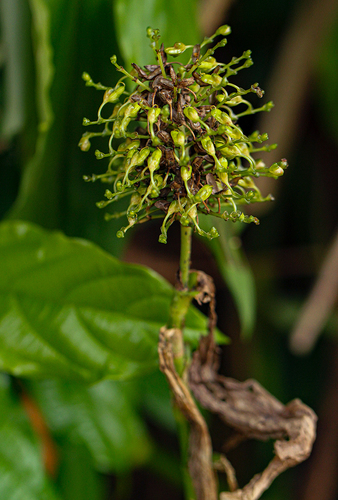
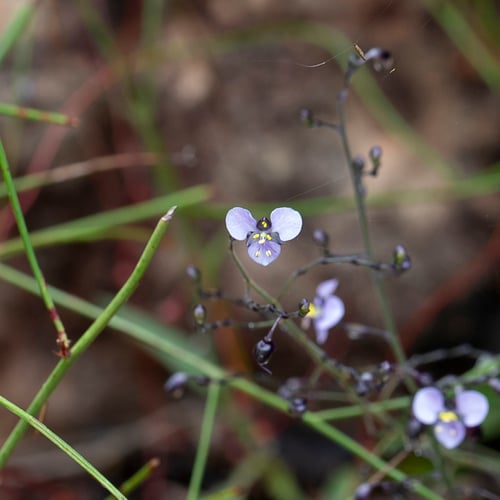
(c) coenobita, some rights reserved (CC BY), uploaded by coenobita
iNaturalist· cc-by
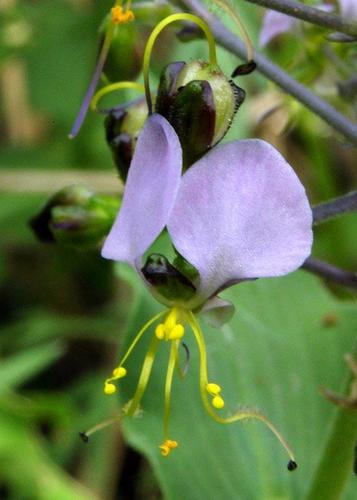
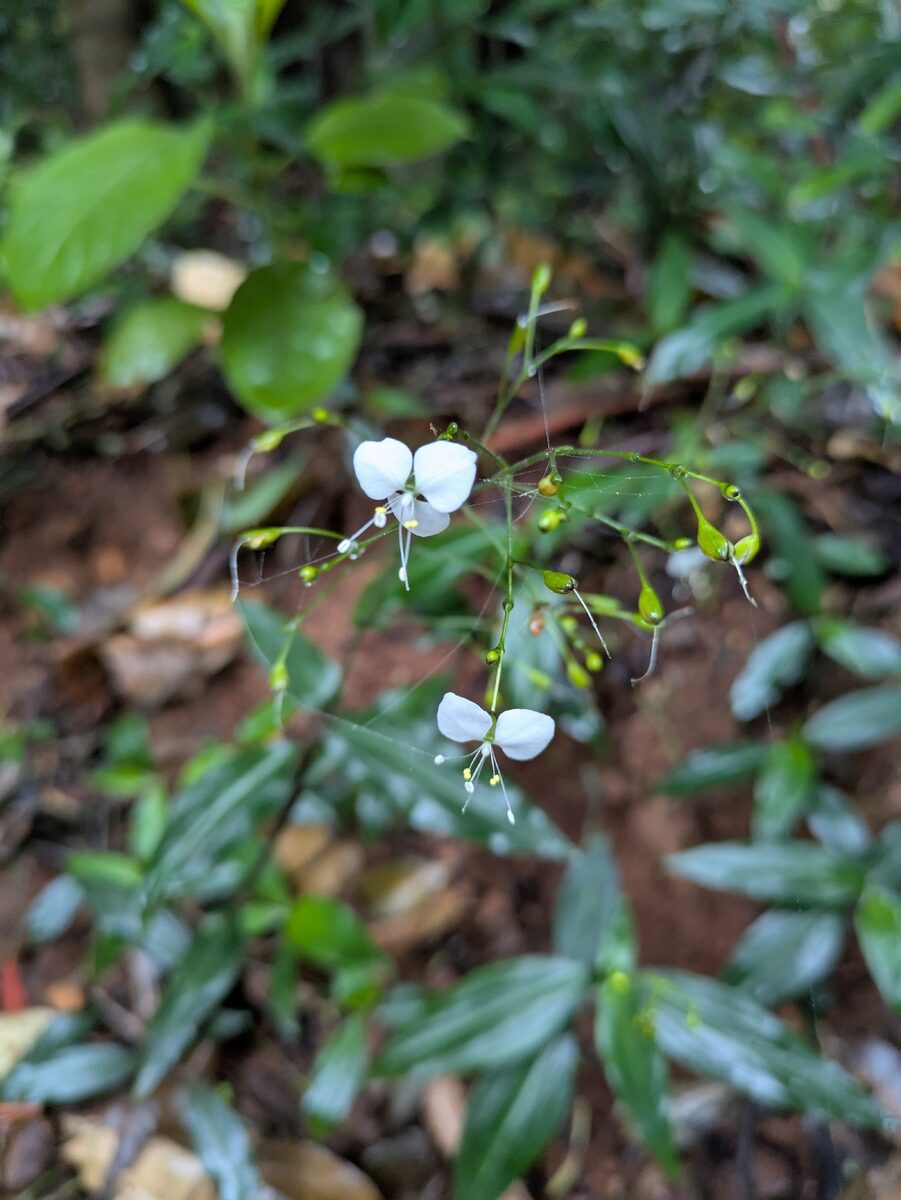
(c) Arturo Benavides Mendoza, some rights reserved (CC BY)
iNaturalist· cc-by-nc
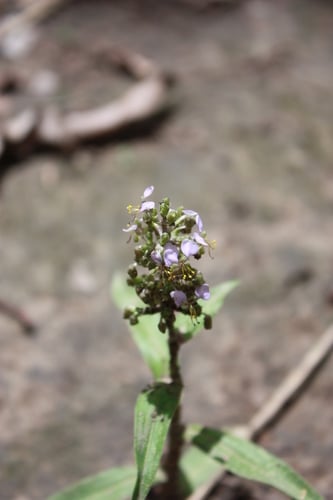
(c) gamlenar, some rights reserved (CC BY-NC)
Summary
Source: WikipediaCommelina ensifolia, commonly known as scurvy weed, scurvy grass or wandering Jew, is an annual herb native to Australia, India, and Sri Lanka. The species grows as a prostrate herb, producing roots from the stem at the nodes. Flowers are bright blue with three petals, however one petal is much smaller than the others, often producing an appearance of two petals. The species prefers moist soils, but has a broad natural range, extending from coastal monsoon forest to the arid central deserts where it grows as an ephemeral following favourable rains. The species has been eaten as a green vegetable by Aboriginals. European settlers also ate the plant to prevent scurvy, giving rise the common name of scurvy grass. The species is a minor weed in some parts of its natural range.
Description
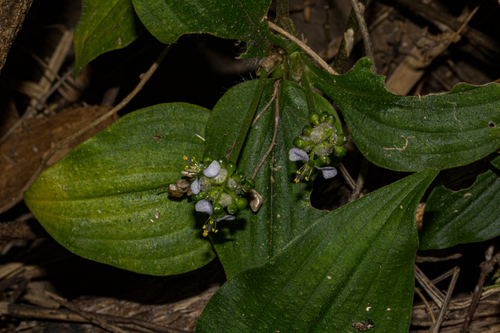
A soft trailing annual plant. It grows 30-50 cm high. The leaves are 5-10 cm long and 0.4-0.8 cm wide. They are narrowly sword shaped. They are dark green and sheath the stem at the base. The flowers are in the leafy sheath. They are 1 cm across. The flowers are blue. They have 2 rounded flimsy petals.
Edible Uses
The leaves are cooked as a vegetable. The tubers and roots are also edible.
Traditional Uses
The leaves are cooked as a vegetable.
This uses section is brief — help expand it
Distribution
A tropical plant. It suits tropical and subtropical places. It grows in moist places often near swamps. It is very frost sensitive.
Where It Grows
Asia, Australia*, India, Papua New Guinea, PNG,
Cultivation
Plants can be grown from stem cuttings which strike easily.
Notes
There are about 230 Commelina species.
Synonyms
Also Known As
Amala, Buargu
References (16)
- Arinathan, V., et al, 2007, Wild edibles used by Palliyars of the western Ghats, Tamil Nadu. Indian Journal of Traditional Knowledge. 6(1) pp 163-168
- Cancilla, D., 2018, Ethnobotanical and Ethnozoological Values Desktop Assessment - Eliwana Project. p 11
- Cooper, W. and Cooper, W., 2004, Fruits of the Australian Tropical Rainforest. Nokomis Editions, Victoria, Australia. p 130
- Crawford, I. M., 1982, Traditional Aboriginal Plant Resources in the Kalumburu Area: Aspects in Ethno-economics. Records of the Western Australian Museum Supplement No. 15
- Cribb, A.B. & J.W., 1976, Wild Food in Australia, Fontana. p 119
Show all 16 references Hide references
- Elliot, W.R., & Jones, D.L., 1984, Encyclopedia of Australian Plants suitable for cultivation. Vol 3. Lothian. p 62
- Jackes, B. R., 2010, Plants of Magnetic Island. 3rd Edition. James Cook University, Australia. p 29
- Kenneally, K.E., Edinger, D. C., and Willing T., 1996, Broome and Beyond, Plants and People of the Dampier Peninsula, Kimberley, Western Australia. Department of Conservation and Land Management. p 202
- Lazarides, M. & Hince, B., 1993, Handbook of Economic Plants of Australia, CSIRO. p 63
- Low, T., 1991, Wild Herbs of Australia and New Zealand. Angus & Robertson. p 102
- Low, T., 1992, Bush Tucker. Australia’s Wild Food Harvest. Angus & Robertson. p 119, 138
- Paczkowska, G. & Chapman, A.R., 2000, The Western Australian Flora. A Descriptive Catalogue. Western Australian Herbarium. p 40
- Romanowski, N., 2007, Edible Water Gardens. Hyland House. p 106
- Townsend, K., 1999, Field Guide to Plants of the Dry Tropics. Society for Growing Australian Plants, Townsville Branch Inc. p 152
- Vigilante, T., et al, 2013, Island country: Aboriginal connections, values and knowledge of the Western Kimberley islands in the context of an island biological survey. Records of the Western Australian Museum Supplement 81: 145-182
- Wheeler, J.R.(ed.), 1992, Flora of the Kimberley Region. CALM, Western Australian Herbarium, p 1020