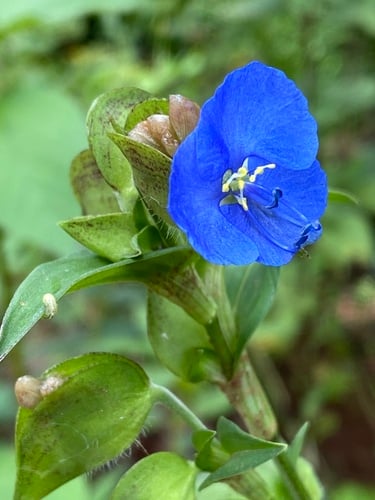
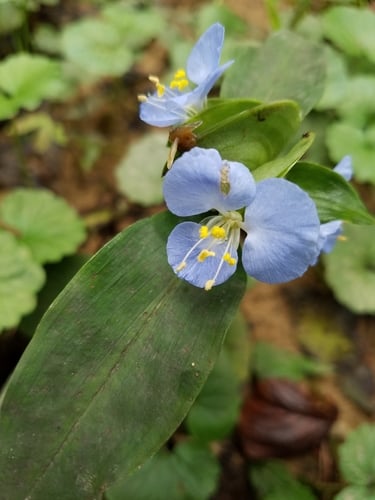
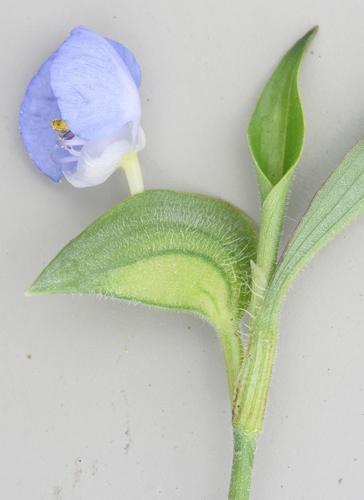
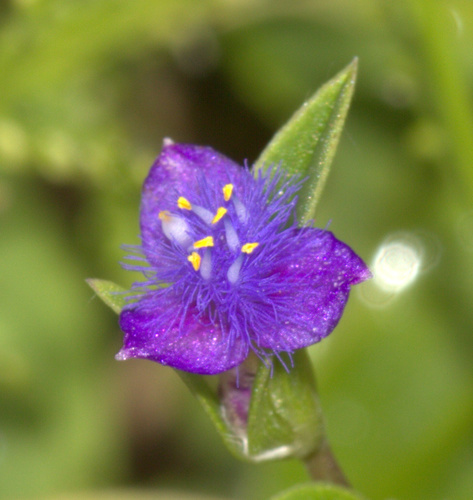
Commelina elliptica
Kunth.
Peruvian spiderwort
iNaturalist· cc-by-nc
(c) Humberto Rocha Sánchez, some rights reserved (CC BY-NC)
iNaturalist· cc-by-nc
(c) Humberto Rocha Sánchez, some rights reserved (CC BY-NC)
iNaturalist· cc-by-nc
(c) javaro, some rights reserved (CC BY-NC)
Summary
Source: WikipediaA dwarf perennial reaching only 10cm tall, hardy to UK zone 8. Bears hermaphroditic flowers from July to September with seeds ripening August to October. Prefers light sandy or medium loamy, well-drained soil with neutral to mildly alkaline pH. Grows in semi-shade or full sun and tolerates both dry and moist conditions.
Description
A low growing herb. It grows 10 cm tall. It has a fattened tuberous root. The leaves are 10 cm long. The flower bracts are 3 cm by 4 cm.
This description is brief — help expand it
Edible Uses
The tubers are edible when cooked and are rich in starch, though with a fairly bland flavour. This use is recorded for the closely related C. tuberosa and is considered likely applicable to this species as well.
Traditional Uses
The root tubers are cooked and eaten.
This uses section is brief — help expand it
Medicinal Uses
None known
Distribution
A tropical plant. It grows in alpine or mountain locations. It suits hardiness zone 8.
Where It Grows
Andes, Argentina, Bolivia, Central America, Colombia, Mexico, North America, Peru, South America, Venezuela,
Cultivation
Prefers a light well-drained loam with added leafmold. Succeeds in an ordinary, reasonably moist soil in a sunny position with some shelter. Plants are hardy to about -10°c if the roots are protected from freezing. The roots are best dug up in the autumn and stored like dahlias in a cool frost free place. When grown in a light well-drained soil and mulched well, the roots usually survive the winter outdoors. This species is closely related to C. tuberosa.
Propagation
Seed — sow in March in a greenhouse. Germination usually takes 4–5 weeks at 20°C. Prick seedlings into individual pots when large enough to handle and plant out in late spring or early summer after the last expected frosts. Division in early spring, ensuring each portion has at least one growing bud. Cuttings taken during the growing season root very easily.
Other Uses
None known
Notes
There are about 230 Commelina species.
Synonyms
References (3)
- Kew Plants of the World On line
- Plants for a Future database, The Field, Penpol, Lostwithiel, Cornwall, PL22 0NG, UK. http://www.scs.leeds.ac.uk/pfaf/
- Thomas, E., et al, 2008, The Relationship Between Plant Use and Plant Diversity in the Bolivian Andes, with Special Reference to Medicinal Plant Use. Hum Ecol (2008) 36:861–879