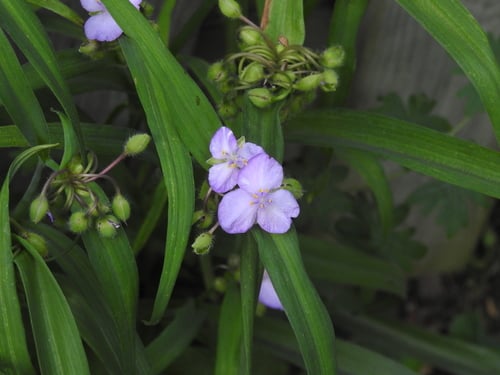
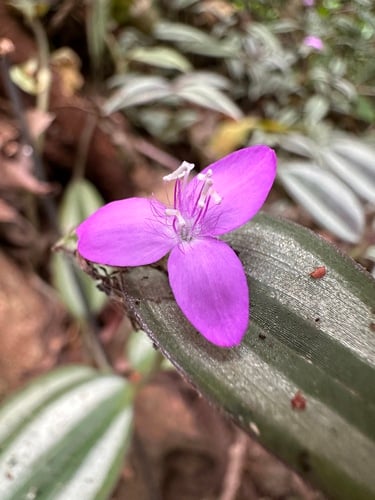
Commelina erecta var. angustifolia
(Michx.) Fernald.
Whitemouth dayflower
iNaturalist· cc-by-nc
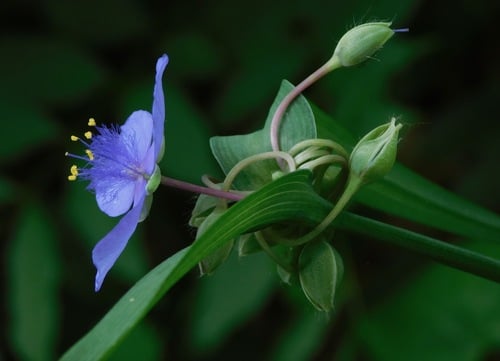
(c) jrebman, some rights reserved (CC BY-NC), uploaded by jrebman
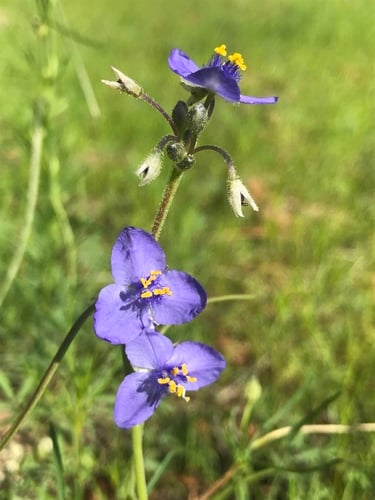
iNaturalist· cc-by-nc
(c) Luís Roberto da Silva, some rights reserved (CC BY-NC), uploaded by Luís Roberto da Silva
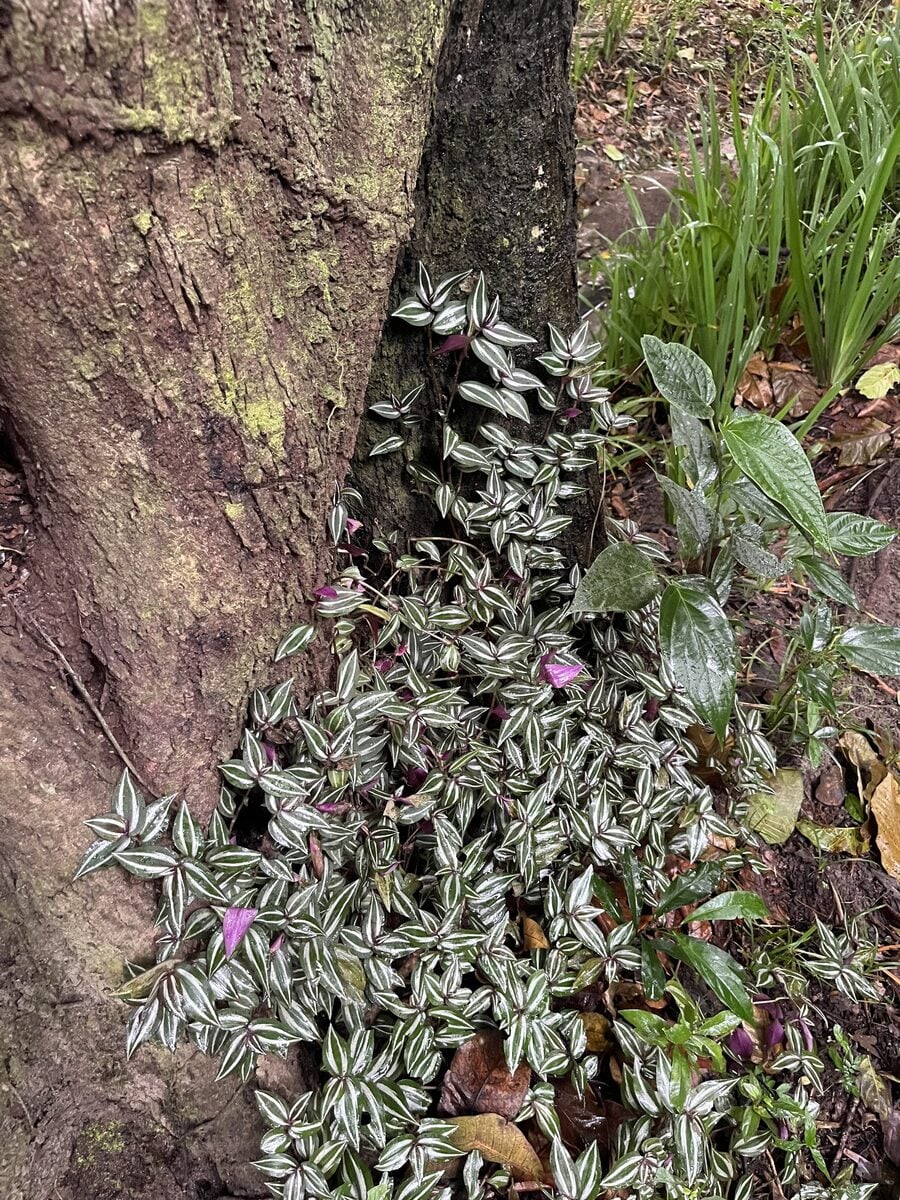
iNaturalist· cc-by
(c) Michael J. Papay, some rights reserved (CC BY), uploaded by Michael J. Papay
Summary
Source: WikipediaCommelina erecta, commonly known as white mouth dayflower, slender dayflower, or widow's tears. C. erecta is a blue flower often recognized by its two large blue petals and smaller white petal. It is a perennial herb common across the world and native throughout the Americas, Africa and western Asia.
Description
A perennial herb of the spiderwort family native to subtropical regions, with the edible portion being the root.
This description is brief — help expand it
Medicinal Uses
C. erecta is a wild edible plant and is consumed by many groups of people across its distribution. It is also used as a traditional medicine is some groups. C. erecta is commonly consumed and used as a traditional medicine in Brazil, and analysis of its bioactive compounds shows that can act as an antioxidant, antibacterial, antifungal, and anti-inflammatory agent. In Uruguay, it is commonly made into a juice to treat eye infections. C. erecta is also used by the Seminole to sooth irritation.
Distribution
It is a subtropical plant.
Where It Grows
Argentina, Brazil, Mexico, North America, Paraguay, Uruguay, USA,
Notes
There are about 230 Commelina species. There are several Commelina angustifolia's as different synonyms depending of the Authority.
Synonyms
References (5)
- Diaz-Betancourt, M., et al, 1999, Weeds as a future source for human consumption. Rev. Biol. Trop. 47(3):329-338 (Commelina erecta)
- Hedrick, U.P., 1919, (Ed.), Sturtevant's edible plants of the world. p 213
- Heywood, V.H., Brummitt, R.K., Culham, A., and Seberg, O., 2007, Flowering Plant Families of the World. Royal Botanical Gardens, Kew. p 359
- Loughmiller, C & L., 1985, Texas Wildflowers. A Field Guide. University of Texas, Austin. p 45
- Plants for a Future database, The Field, Penpol, Lostwithiel, Cornwall, PL22 0NG, UK. http://www.scs.leeds.ac.uk/pfaf/