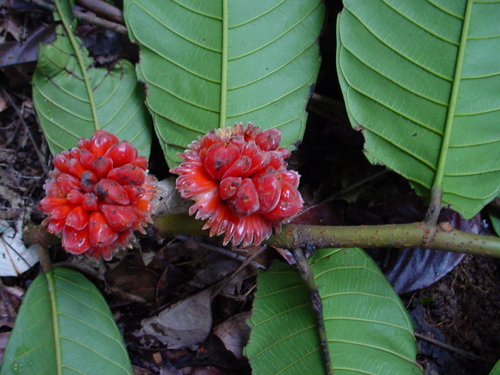
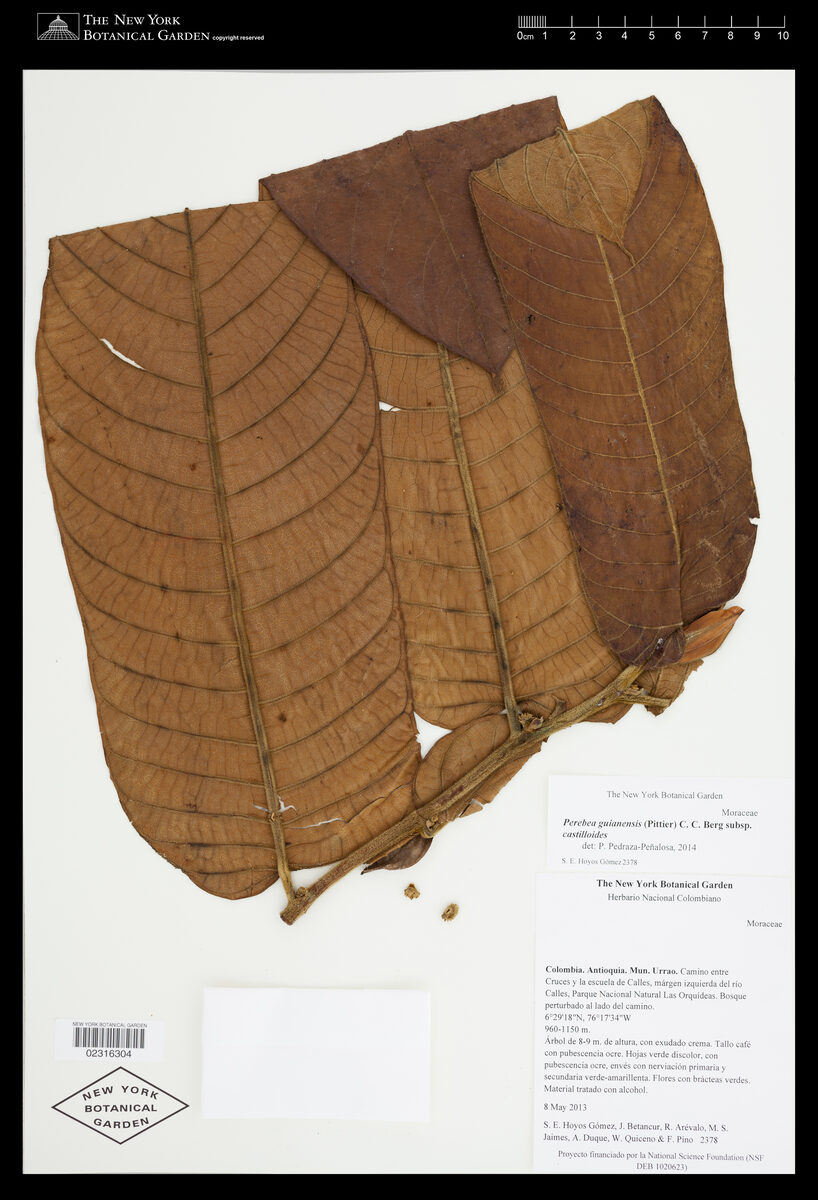
Ficus glaberrima
Blume
iNaturalist· cc-by-nc
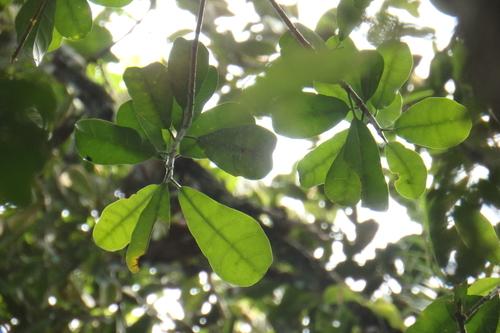
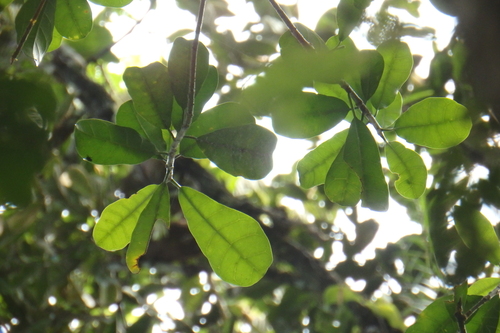
(c) Basu Dev Neupane, some rights reserved (CC BY-NC), uploaded by Basu Dev Neupane
iNaturalist· cc-by-nc
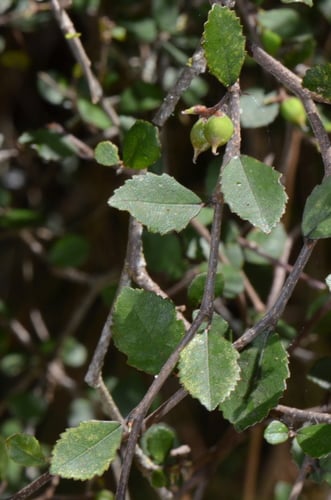
(c) Richard Gill, some rights reserved (CC BY-NC)
Summary
Source: WikipediaFicus glaberrima is an Asian species of fig tree in the family Moraceae. The native range of this species is India, S. China and tropical Asia: Indo-China to the Lesser Sunda Islands (but not Borneo, Sulawesi or the Philippines). The species can be found in Vietnam: where it may be called đa trụi or đa lá xanh.
Description
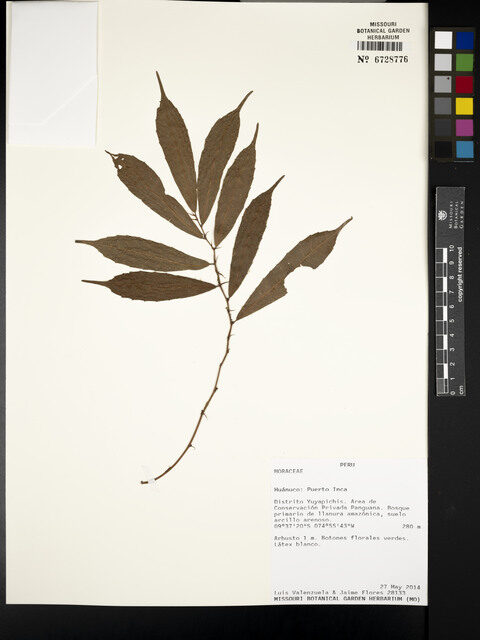
A fig. It is a tree that grows 15 m tall. The trunk is 15-30 cm across. Young branches are softly hairy. The leaf stalks are 1-3 cm long. The leaves are 10-20 cm long by 3-7 cm wide. The figs are in the axils of leaves in leafy branches. They are in pairs and are orange to yellow when ripe. They are about 1 cm across.
Edible Uses
Fruit - raw. The fruits of var bracteata are sweet and juicy. The yellow-orange to purple-black, subglobose fruits are 8 - 11mm wide.
Distribution
It is a subtropical plant. It grows in open forests and plains in limestone mountains between 500-2,800 m above sea level in southern China.
Where It Grows
Asia, Bhutan, Cambodia, China, India, Indonesia, Malaysia, Myanmar, Nepal, SE Asia, Sikkim, Thailand, Tibet, Vietnam,
Cultivation
Fig trees have a unique form of fertilization, each species relying on a single, highly specialized species of wasp that is itself totaly dependant upon that fig species in order to breed. The trees produce three types of flower; male, a long-styled female and a short-styled female flower, often called the gall flower. All three types of flower are contained within the structure we usually think of as the fruit. The female fig wasp enters a fig and lays its eggs on the short styled female flowers while pollinating the long styled female flowers. Wingless male fig wasps emerge first, inseminate the emerging females and then bore exit tunnels out of the fig for the winged females. Females emerge, collect pollen from the male flowers and fly off in search of figs whose female flowers are receptive. In order to support a population of its pollinator, individuals of a Ficus spp. must flower asynchronously. A population must exceed a critical minimum size to ensure that at any time of the year at least some plants have overlap of emmission and reception of fig wasps. Without this temporal overlap the short-lived pollinator wasps will go locally extinct.
Propagation
Seed - germinates best at a temperature around 20°c. Air layering. Tip cuttings around 4 - 12cm long, taken from lateral branches.
Other Uses
A fibre obtained from the inner bark is used to prepare ropes.
Synonyms
Also Known As
Pakhri, Pakhuri
References (5)
- Dangol, D. R. et al, 2017, Wild Edible Plants in Nepal. Proceedings of 2nd National Workshop on CUAOGR, 2017.
- Ferns, Useful Tropical plants.
- Flora of China.
- Gautam, R. S., et al, 2020, Wild Edible Fruits of Nepal. Int. J. Appl. Sci. Biotechnol. Vol 8(3): 289-304
- Kunwar, R. M., & Bussmann, R. A., 2006, Ficus (Fig) species in Nepal: a review of diversity and indigenous uses. Lyonia 11(1)