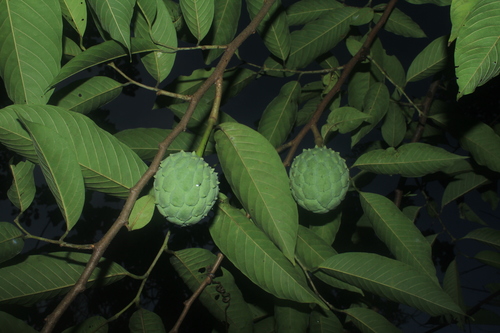
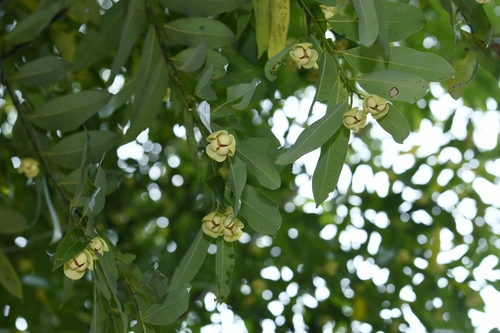
Monodora angolensis
Welw.
iNaturalist· cc-by-nc
(c) Stefaneakame, some rights reserved (CC BY-NC)
iNaturalist· cc-by-nc
(c) Stefaneakame, some rights reserved (CC BY-NC)
iNaturalist· cc-by-nc
(c) Stefaneakame, some rights reserved (CC BY-NC)
Summary
Source: WikipediaMonodora angolensis is a species of plant in the family Annonaceae. It is native to Angola, Cameroon, Central African Republic, Democratic Republic of the Congo, Equatorial Guinea, Gabon, Ivory Coast, Nigeria, Republic of the Congo, Sudan, Tanzania, Uganda, Zambia and Zaire. Friedrich Welwitsch, the Austrian botanist who first formally described the species, named it after Angola where he found it growing near the town of Pungo-Andongo.
Description
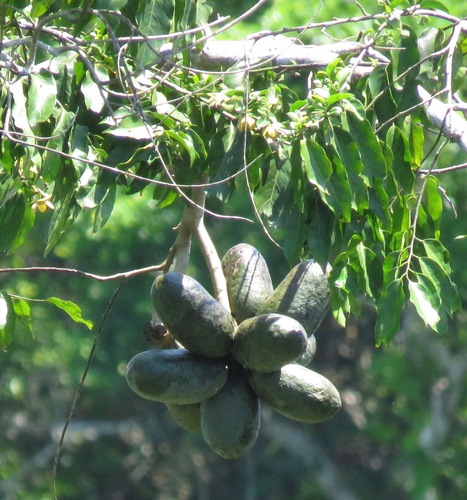
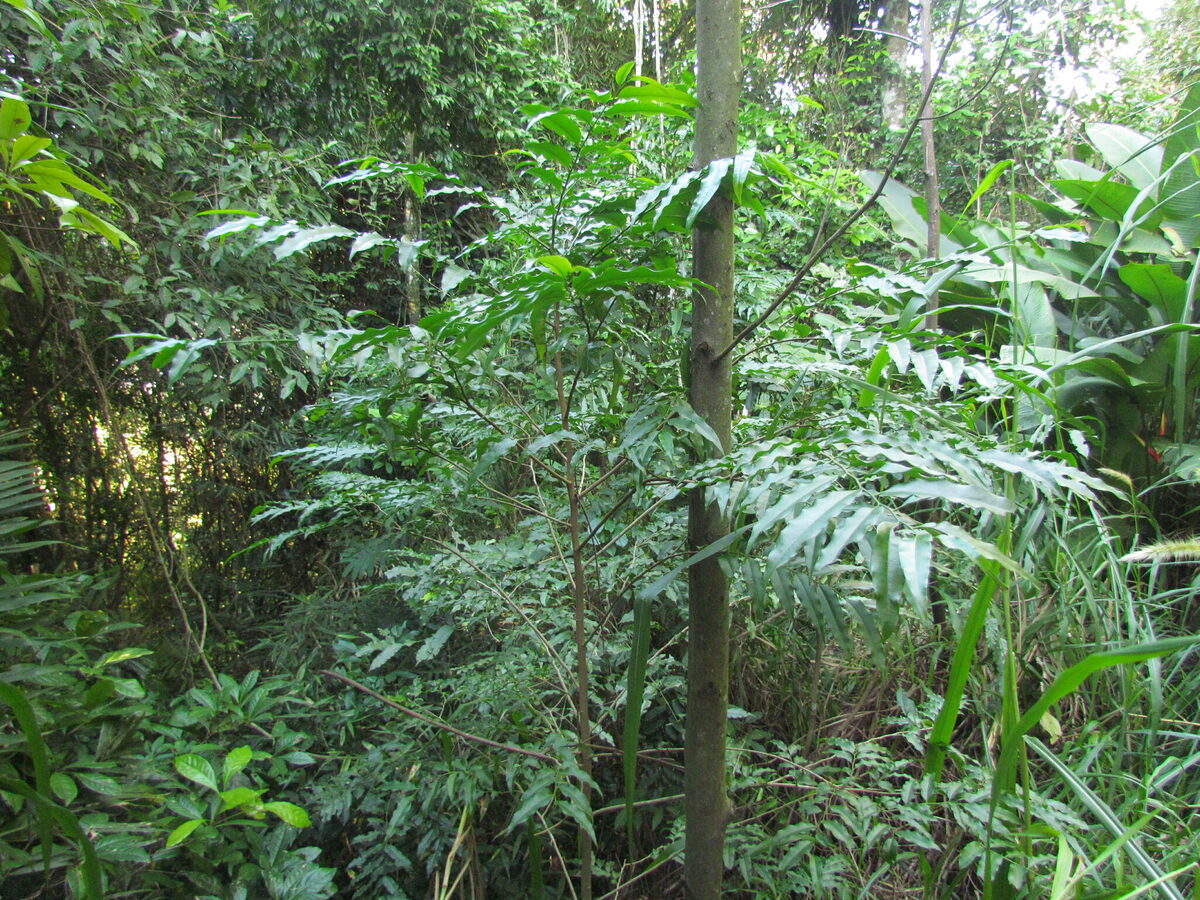
A medium sized tree. It grows 8-20 m tall. The trunk can be 40 cm across. The branches are low down. The leaves are 5-20 cm long and 3-5 cm wide. The flowers have petals 3-6 cm long and 2-3 cm wide. They have a scent. The fruit are round to cone shaped and 6-8 cm long by 5-7 cm wide at the base.
Edible Uses
The seeds are used as a nutmeg substitute in soup and with vegetables and meat.
Traditional Uses
The seeds are used as a nutmeg substitute in soup, and with vegetables and meat.
This uses section is brief — help expand it
Distribution
It is a tropical plant. It grows in humid forests.
Where It Grows
Africa, Angola, Cameroon, Central Africa, Central African Republic, CAR, Congo DR, Congo R, Gabon, Indonesia, Sudan, Tanzania, Uganda, Zimbabwe,
Cultivation
Plants are grown from fresh seeds. The seed is soaked in cold water for 12 hours.
Other Information
It is sold in local markets.
Synonyms
Also Known As
Mpeve, Mpeya
References (3)
- Harris, D. J., 2002, The vascular plants of the Dzanga-Sangha Reserve, Central African Republic. National Botanic Garden of Belgium, 2002. – 274 pages p 44
- Latham, P & Mbuta, A., 2017, Useful Plants of Central Province, Democratic Republic of Congo. Volume 2. Salvation Army p 45
- Mawunu, M., et al, 2020, First Survey of the Edible Non-Wood Forest Products Sold in Uige Province, Northern Angola. European Journal of Agriculture and Food Sciences. Vol. 2, No. 6