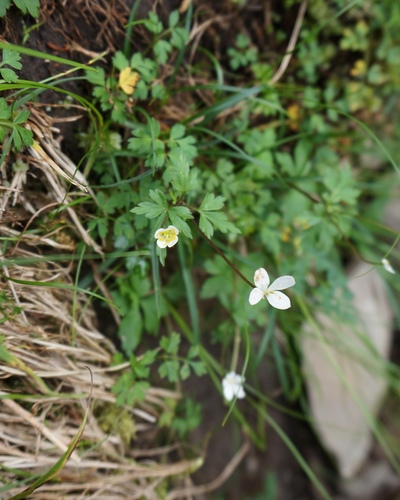
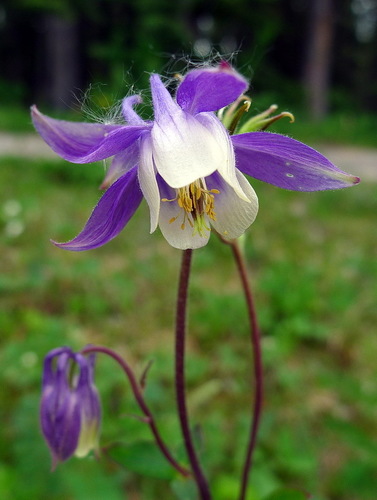
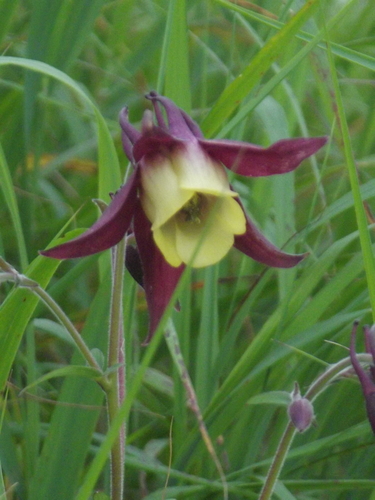
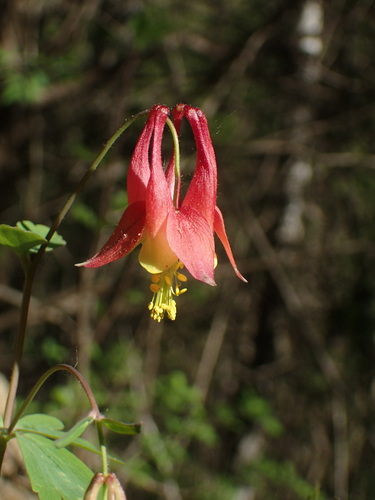
Aconitum stapfianum
Hand.-Mazz.
gbif· cc0
President and Fellows of Harvard College
Description
A shrub or small tree. It grows 5 m tall. There are prickles along the stem. The leaves are twice divided and there are 8-18 pairs of pinnae. There are up to 50 pairs of pinnules on each pinnae. The flowers are yellow. They are in large clusters at the ends of branches. The pods are flattened.
Edible Uses
The root is edible but requires careful preparation: it must be stewed in boiling water and cooked with pork; cold water must not be added.
Traditional Uses
It is highly poisonous because of aconitine. It must be carefully prepared. It must be stewed in boiling water. It is cooked with pork. NBCold water must not be added.
Medicinal Uses
Aconite was described in ancient Greek and Roman medicine by Theophrastus, Dioscorides, and Pliny the Elder. Folk medicinal use of Aconitum species is practiced in some parts of Slovenia. A producer of Yunnan Baiyao, a traditional Chinese medicine remedy, has disclosed that the preparation contains aconite.
Known Hazards
Members of the genus Aconitum contain substantial amounts of highly toxic alkaloids (such as aconitine, mesaconitine, and pseudaconitine), especially in their roots and tubers. Ingestion of as little as 2 mg of aconitine or 1 g of plant material may cause death from respiratory paralysis or heart failure. Mild to severe toxicity may be experienced from skin contact. Symptoms such as numbness and tingling and feelings of coldness in the face and extremities usually appear within one hour of exposure, and sometimes almost immediately. Other features may include nausea, vomiting, diarrhea, sweating, dizziness, difficulty in breathing, headache, and confusion. In severe poisoning, sensations of tingling and numbness spreads to the limbs, and pronounced motor weakness occurs. Cardiovascular features include low blood pressure and abnormal heart rhythm. Death usually occurs within two to six hours in fatal poisoning. Treatment of poisoning involves close monitoring of blood pressure and cardiac rhythm. Gastrointestinal decontamination with activated charcoal can be used if administered within an hour or so of ingestion. Drugs such as atropine, lidocaine, and amiodarone may be used to treat dysrhythmias. Cardiopulmonary bypass, ECMO, and hemoperfusion may be useful if symptoms are refractory to treatment with these drugs. The roots of A. ferox contain large quantities of the alkaloid pseudaconitine; they have been used in the production of the poison called bikh, bish, or nabee in Nepal. Aconite has traditionally been used in many cultures in the preparation of arrow poisons. For example, the Brokpa people in Ladakh have been known to use aconite poisons on their arrows to hunt Siberian ibex. The Matagi and Ainu people also used aconite preparations to hunt bear. They were also used by the Aleut people for hunting whales. The Chinese were known to use aconite poisons both for hunting and for warfare. Aconite-tipped arrows are also described in the Rigveda. It has been hypothesized that Socrates was executed using aconite rather than with hemlock. It has also been suggested that Alexander the Great and Ptolemy XIV Philopator were assassinated with aconite. An early human trial with a control arm took place in 1524, when Pope Clement VII poisoned a pair of prisoners with aconite-laced marzipan, testing an antidote on one that survived, leaving the untreated prisoner to suffer a painful death. In April 2021, the president of Kyrgyzstan, Sadyr Japarov, promoted aconite root as a treatment for COVID-19. Subsequently, at least four people were admitted to hospitals suffering from poisoning. Facebook removed Japarov's posts advocating use of the substance, saying "We've removed this post as we do not allow anyone, including elected officials, to share misinformation that could lead to imminent physical harm or spread false claims about how to cure or prevent COVID-19".
Distribution
It is a temperate plant.
Where It Grows
Asia, China,
References (1)
- Zhang, L., et al, 2016, Ethnobotanical study of traditional edible plants used by the Naxi people during droughts. Journal of Ethnobiology and Ethnomedicine. 12:39