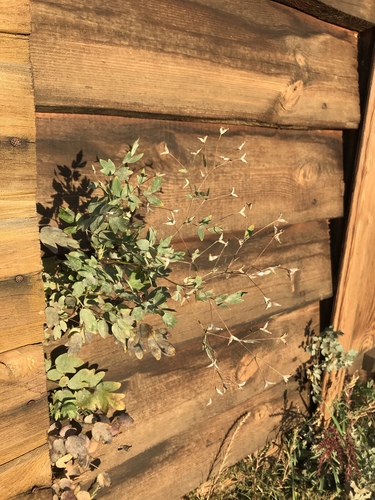
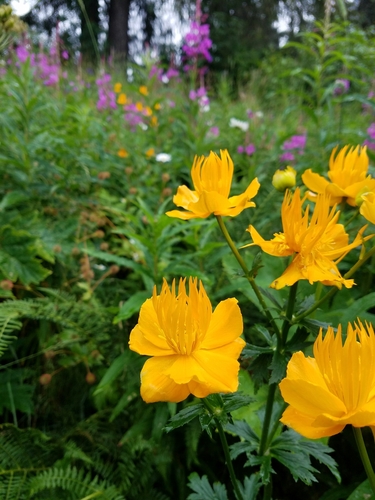
Caltha leptosepala
DC.
Western marsh marigold, American Marsh Marigold, White-flowered marsh-marigold
iNaturalist· cc-by-nc
(c) Oscar, some rights reserved (CC BY-NC), uploaded by Oscar
iNaturalist· cc-by-nc
(c) Grace Fletcher, some rights reserved (CC BY-NC)
Summary
Source: WikipediaCaltha leptosepala, the white marsh marigold, twinflowered marsh marigold, or broadleaved marsh marigold, is a North American species of flowering plant in the buttercup family. The species has regionally distinct variations.
Description
A herb. It keeps growing from year to year. It has a short erect rootstock. It grows 30 cm high and spreads 30 cm wide. The leaves are fleshy and heart-shaped. The flowers occur singly and are silvery white. They are on leafless stalks which stick up above the leaves. The fruiting heads are shaped like a top and contain several pods which contain many seeds.
Edible Uses
Edible Parts: Flowers Leaves Root Edible Uses: Root - it must be well cooked. Some caution is advised, see the notes above on toxicity. Flower buds - raw, cooked or pickled and used as a caper substitute. Some caution is advised, see the notes above on toxicity. Young leaves, before the flowers emerge are eaten raw or cooked. Some caution is advised, see the notes above on toxicity. Older leaves, before the plant flowers, can be eaten if well cooked. Some caution is advised, see the notes above on toxicity. Edible Uses & Rating: Only the young leaves, young leafstalks, young flowers, and young roots are considered edible, and only after boiling. Older tissues contain increasing concentrations of jervine, helleborin, and protoanemonine—potent toxins that are well known in the buttercup family. These compounds are irritants and can cause severe digestive distress if not broken down by heat. When properly cooked, the plant provides a mild, agreeable green suitable for a potherb, but it is never a high-value wild food. Its usefulness lies in early availability rather than culinary excellence. In terms of overall edibility, young, fully cooked tissues rate modestly, while raw or mature tissues must be regarded as unsafe [2-3]. Taste, Processing & Kitchen Notes: Young leaves possess a soft-leathery texture and a mild flavor somewhat reminiscent of monkeyflower greens. When cooked, they lose their slight raw acridity and develop a gentle, agreeable flavor without bitterness or soapiness. The leaves remain easily chewable both raw and cooked, although raw use is unsafe. Boiling not only neutralizes toxins but also removes the unpleasantness sometimes associated with marsh plants. Most foragers boil the greens for 10–20 minutes and discard the water, with a second brief boil recommended for additional safety. The leaves serve as a modest-quality potherb, suitable in soups or mixed greens but unlikely to be used as a primary vegetable [2-3]. Seasonality (Phenology): The species emerges immediately after snowmelt, often as one of the first visible plants in alpine and subalpine meadows. Vegetative growth peaks throughout early summer while soils remain saturated. Blooming typically occurs from June through August, although the exact timing varies with elevation and snowpack. Fruit develops shortly afterward. From a foraging perspective, the edible stage corresponds strictly to the period immediately after emergence, before the plant has a chance to accumulate higher levels of toxic compounds. Safety & Cautions (Food Use): Extreme caution is necessary. Only young plant parts should be used, and all must be thoroughly boiled to neutralize toxic compounds. Protoanemonine and related chemicals cause blistering of the mouth, gastrointestinal irritation, vomiting, diarrhea, and other symptoms if consumed raw or insufficiently cooked. Older plants contain higher concentrations and should not be eaten at all. Because the plant inhabits marshes, boiling also helps minimize the risk of waterborne parasites. It is not a plant suitable for regular or repeated consumption. Harvest & Processing Workflow: Foragers should locate very young plants early in the melt season and harvest only tender leaves, shoots, or young flowers. These parts should be washed thoroughly to remove sediment and then boiled for at least 10–20 minutes, with the water discarded. A second boiling is recommended for safety. Once prepared, the cooked greens may be added to soups or eaten as a mild potherb. Older leaves, roots, or flowers should not be harvested due to toxicity. Look-Alikes & Confusion Risks: Although white marsh marigold can resemble buttercups in overall flower structure, its white sepals, habitat preference, and kidney-shaped leaves make identification straightforward. The Eurasian marsh marigold (Caltha palustris), found in northern regions, bears yellow sepals and is larger. Other wetland plants such as primroses or some Ranunculus species may grow in similar habitats but differ in petal arrangement and foliage structure. Confusion risk is low for careful observers. Traditional / Indigenous Use Summary: Indigenous groups of the Rocky Mountains, including the Salish, Kootenai, and Shoshone, used young cooked leaves and shoots as an early spring vegetable during periods when other foods were scarce. Boiling was universally practiced, and knowledge of toxicity was deeply embedded in traditional ecological wisdom. The plant was never a staple but served as a timely seasonal tonic when resources were limited.
Traditional Uses
Caution: Only the very young leaves are boiled in 2 changes of water then eaten. They are used as a potherb. Flower buds are pickled as capers. The roots are boiled and eaten.
Medicinal Uses
Antispasmodic Expectorant Poultice Warts The whole plant is antispasmodic and expectorant. It has been used to remove warts. A poultice of the chewed roots has been applied to inflamed wounds.
Known Hazards
The leaves contain toxic alkaloids, but are eaten by elk nonetheless.
Distribution
It grows in wet alpine and subalpine meadows in the Rocky Mountains. It suits cold climates. It is best in a moist, peaty, well-drained soil. It is resistant to frost but damaged by drought. It suits hardiness zones 6-9.
Where It Grows
Alaska, Australia, Canada, North America*, USA,
Cultivation
A plant of the waterside, it prefers growing in a sunny position in wet soils or shallow water, though it will tolerate drier conditions if there is shade from the summer sun. It requires a deep rich slightly acidic soil. Grows well in heavy clay soils. Plants are hardy to about -20c. A greedy plant, inhibiting the growth of nearby plants, especially legumes. Identification & Habit: Caltha leptosepala is a rhizomatous, perennial forb standing 5–25 cm tall, emerging early in the melt season when soils are still frigid. Leaves are simple, basal or lower-stem alternate, long-petioled, and broadly kidney-, egg-, or heart-shaped, often with gently scalloped or faintly toothed margins. The surfaces are glabrous, thick, and slightly leathery, coated with a natural hydrophobic sheen that sheds water instantly. The flowers—appearing solitary or in small clusters—are striking: composed of 5–12 white, petal-like sepals (true petals are absent), surrounding bright yellow stamens and numerous pistils. This gives the bloom a buttercup-like structure despite the marigold name. Fruit forms as clusters of dry follicles, each splitting along one seam to release several seeds. Pollination is primarily by small mountain-zone insects—especially solitary bees, syrphid (hover) flies, small beetles, and early-season flies. Hoverflies seem especially common on warm days in high wet meadows. Growing Conditions: Caltha leptosepala requires continuously moist to saturated soils and thrives in cold, high-elevation locations that receive prolonged snow cover. It grows in full sun or light shade provided the substrate remains wet, and it cannot tolerate drying. Soils may be mineral, silty, or organic, but must never desiccate. It is an obligate wetland species. In garden settings, it requires a bog garden, pond margin, or constantly irrigated cool area to survive. Its natural hardiness places it within USDA Zones 3–7, occasionally extending into Zone 8 in high mountain contexts with cool summers. Habitat & Range: This species is widespread across western North America. Its range extends from Alaska through western Canada and south into Washington, Oregon, Idaho, Montana, Wyoming, Utah, Colorado, and into the highest mountains of northern Arizona and northern New Mexico. It grows in wet alpine and subalpine meadows, beside spring-fed rivulets, along cold streams, in seeps, and anywhere that steady snowmelt creates long-lasting wet patches. Elevations typically fall between 1,500 and 3,500 meters. Size & Landscape Performance: Plants generally remain 5–25 cm tall and form loose clusters rather than dense mats. In cultivation, they can provide attractive early-season flowers and lush foliage, but only if their high-moisture requirements are met. They are sensitive to heat and drought and will fail under dry or warm conditions. In appropriate settings—particularly bog gardens—they offer excellent ornamental value while remaining manageable in size. Cultivation (Horticulture): White Marsh Marigold can be grown ornamentally, although it is less commonly cultivated than the Eurasian Caltha palustris. It prefers deep, cool soils that remain saturated under the surface and benefits from full sun in colder climates. In warmer regions, partial shade may prevent overheating. It requires winter cold to maintain a proper dormancy cycle. Plants adapt well to bog gardens, stream margins, or continuously irrigated marsh beds. Pests & Problems: In the wild, the plant is generally trouble-free. In cultivation, its primary vulnerabilities include root rot if exposed to stagnant, warm water; dieback under hot weather; and desiccation if soils dry. Occasional browsing by deer or elk occurs but usually does not threaten the plant’s survival. Cultivar / Selection Notes: There are no named cultivars of Caltha leptosepala. All plants used historically or ornamentally are wild-type forms. White Marsh Marigold is a striking alpine wetland plant, valued historically for its early availability rather than outstanding flavor. Its beauty, ecological role, and presence in frigid, waterlogged meadows make it an iconic species of the high West. Edibility is limited by toxicity, and only young, thoroughly cooked tissues should ever be consumed. For the forager or botanist, it is a species of high interest but requires significant care.
Propagation
Seed - best sown as soon as it is ripe in a cold frame in late summer. Stand the pots in 2 - 3cm of water to keep the soil wet. The seed usually germinates in 1 - 3 months at 15°c. When they are large enough to handle, prick the seedlings out into individual pots and grow them on in a tray of water in a cold frame until they are at least 15cm tall. Plant them out into their permanent positions in the summer. Division in early spring or autumn. Very easy, larger clumps can be replanted direct into their permanent positions, though it is best to pot up smaller clumps and grow them on in a cold frame until they are rooting well. Plant them out in the summer or following spring.
Other Uses
Ecology & Wildlife: White Marsh Marigold supports a suite of early-season pollinators, including solitary bees, syrphid flies, fungus gnats, and small alpine beetles that tolerate cold temperatures. In many subalpine habitats it is among the first nectar and pollen sources available. The plant also helps stabilize wet meadow soils, where its rhizomes bind loose substrate near meltwater channels. Its presence contributes to early-season pollinator survival during the period immediately after snowmelt, when few other plants are in bloom. Special Uses
Notes
There are about 10 Caltha species. They grow in temperate bogs.
Synonyms
References (13)
- Bodkin, F., 1991, Encyclopedia Botanica. Cornstalk publishing, p 204
- Cormack, R. G. H., 1967, Wild Flowers of Alberta. Commercial Printers Edmonton, Canada. p 103
- Cundall, P., (ed.), 2004, Gardening Australia: flora: the gardener's bible. ABC Books. p 291
- Kermath, B. M., et al, 2014, Food Plants in the Americas: A survey of the domesticated, cultivated and wild plants used for Human food in North, Central and South America and the Caribbean. On line draft. p 166
- Lim, T. K., 2015, Edible Medicinal and Non Medicinal Plants. Volume 9, Modified Stems, Roots, Bulbs. Springer p 21
Show all 13 references Hide references
- MacKinnon, A., et al, 2009, Edible & Medicinal Plants of Canada. Lone Pine. p 253
- Plants for a Future database, The Field, Penpol, Lostwithiel, Cornwall, PL22 0NG, UK. http://www.scs.leeds.ac.uk/pfaf/
- Porsild, A.E., 1974, Rocky Mountain Wild Flowers. Natural History Series No. 2 National Museums of Canada. p 174
- Romanowski, N., 2007, Edible Water Gardens. Hyland House. p 104
- Slocum, P.D. & Robinson, P., 1999, Water Gardening. Water Lilies and Lotuses. Timber Press. p 91
- Syst. veg. 1:310. 1818
- Tozer, F., 2007, The Uses of Wild Plants. Green Man Publishing. p 51
- Wilson, S., 1997, Some Plants are Poisonous. Reed. p 40