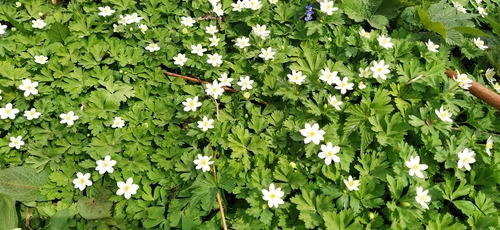
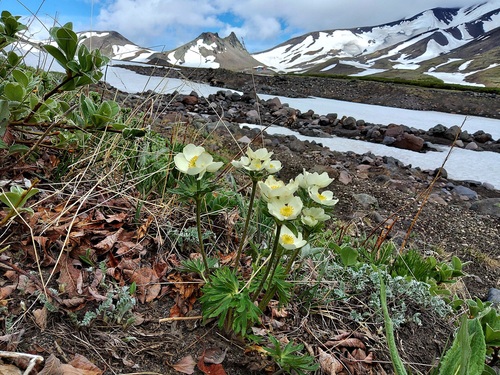
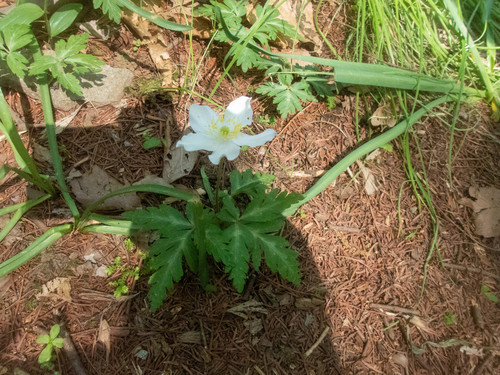
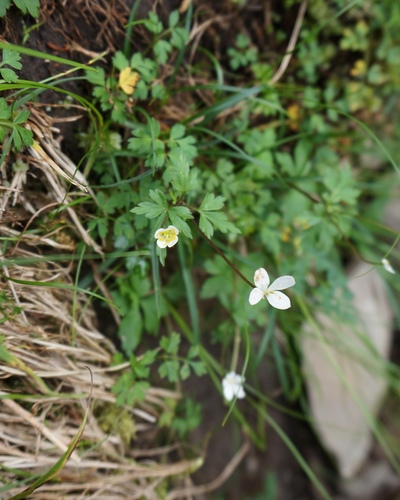
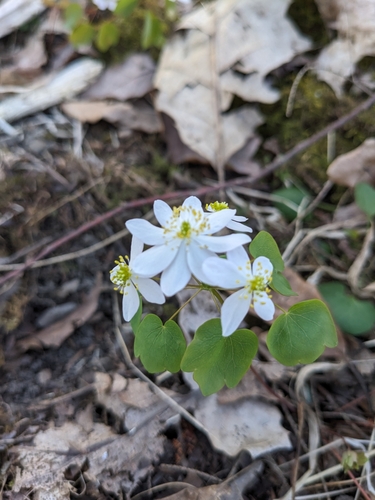
Caltha natans
Pall.
iNaturalist· cc-by
(c) Rob Foster, some rights reserved (CC BY), uploaded by Rob Foster
iNaturalist· cc-by-nc
(c) inessa_naturalist, some rights reserved (CC BY-NC)
Summary
Source: WikipediaCaltha natans is a species of flowering plant in the buttercup family. It goes by the common name floating marsh marigold.
Description
A herb. It keeps growing from year to year. It grows 30 cm tall. It is usually floating or under water.
This description is brief — help expand it
Edible Uses
Edible Parts: Flowers Leaves Root Edible Uses: Root - cooked. A survival food, used when all else fails. Some caution is advised, see the notes above on toxicity. Flower buds - cooked. Added to stews etc or pickled as capers. Some caution is advised, see the notes above on toxicity. Young leaves - cooked. Best before the plant flowers. Some caution is advised, see the notes above on toxicity.
Traditional Uses
Caution: It contains a poison that is destroyed on cooking. The flower buds are eaten cooked. They are added to stews and also used in pickles. The roots are boiled and eaten.
Medicinal Uses
Antispasmodic Expectorant Warts Used in the treatment of sore throats.
Known Hazards
The whole plant, but especially the older portions, contains the toxic glycoside protoanemanin - this is destroyed by heat. The sap can irritate sensitive skin.
Distribution
It is a cold temperate plant. It floats on mud and in ponds. It occurs between 25-1,500 m above sea level. It is best in wet soil. It suits hardiness zone 2.
Where It Grows
Alaska, Canada, China, Korea, Mongolia, North America, Siberia, USA,
Cultivation
A plant of boggy soils and shallow pond margins, it requires a deep rich slightly acidic soil. It grows well in heavy clay soils. It has slender floating or creeping stems that root at the nodes to form new plants. A greedy plant, inhibiting the growth of nearby plants, especially legumes.
Propagation
Seed - best sown as soon as it is ripe in a cold frame in late summer. Stand the pots in 2 - 3cm of water to keep the soil wet. The seed usually germinates in 1 - 3 months at 15°c. When they are large enough to handle, prick the seedlings out into individual pots and grow them on in a tray of water in a cold frame until they are at least 15cm tall. Plant them out into their permanent positions in the summer. Division in early spring or autumn. Very easy, larger clumps can be replanted direct into their permanent positions, though it is best to pot up smaller clumps and grow them on in a cold frame until they are rooting well. Plant them out in the summer or following spring.
Other Uses
None known Special Uses
Other Information
The root is a famine food.
Notes
There are about 10 Caltha species. They grow in temperate bogs.
References (4)
- Lim, T. K., 2015, Edible Medicinal and Non Medicinal Plants. Volume 9, Modified Stems, Roots, Bulbs. Springer p 21
- Plants for a Future database, The Field, Penpol, Lostwithiel, Cornwall, PL22 0NG, UK. http://www.pfaf.org
- Tozer, F., 2007, The Uses of Wild Plants. Green Man Publishing. p 51
- Urgamal, M., Oyuntsetseg, B., Nyambayar, D. & Dulamsuren, Ch. 2014. Conspectus of the vascular plants of Mongolia. (Editors: Sanchir, Ch. & Jamsran, Ts.). Ulaanbaatar, Mongolia. “Admon“ Press. 334pp. (p. 79-90).