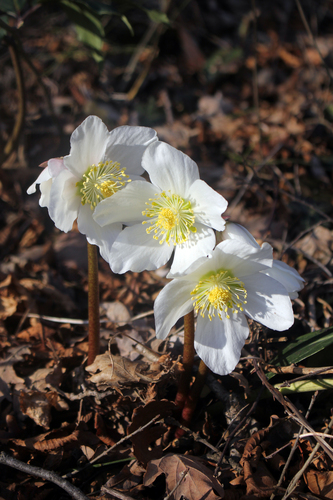
Caltha leptosepala var. howellii
(Huth.) Smit.
Alpine white marsh marigold, Two-flowered marsh marigold
gbif· cc0
GBIF
gbif· cc-by
The Trustees of the Natural History Museum, London
Summary
Source: WikipediaCaltha leptosepala, the white marsh marigold, twinflowered marsh marigold, or broadleaved marsh marigold, is a North American species of flowering plant in the buttercup family. The species has regionally distinct variations.
Description
A herb.
This description is brief — help expand it
Edible Uses
The leaves and flower buds were eaten by some of the indigenous peoples of Alaska.
Traditional Uses
Caution: The roots are boiled and eaten.
This uses section is brief — help expand it
Known Hazards
The leaves contain toxic alkaloids, but are eaten by elk nonetheless.
Distribution
It is a temperate plant.
Where It Grows
North America, USA,
Notes
There are about 10 Caltha species. They grow in temperate bogs.
Synonyms
References (3)
- Lim, T. K., 2015, Edible Medicinal and Non Medicinal Plants. Volume 9, Modified Stems, Roots, Bulbs. Springer p 21
- Plants for a Future database, The Field, Penpol, Lostwithiel, Cornwall, PL22 0NG, UK. http://www.scs.leeds.ac.uk/pfaf/
- Tozer, F., 2007, The Uses of Wild Plants. Green Man Publishing. p 51