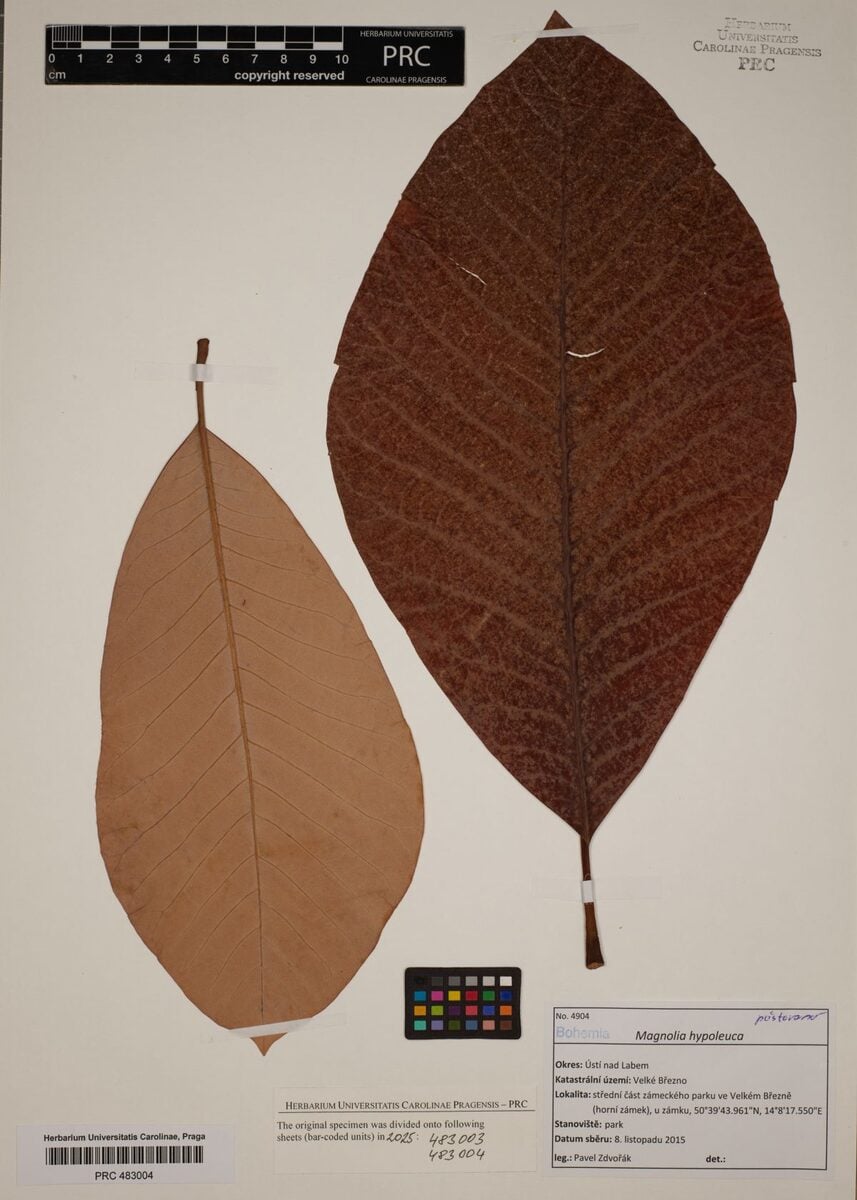
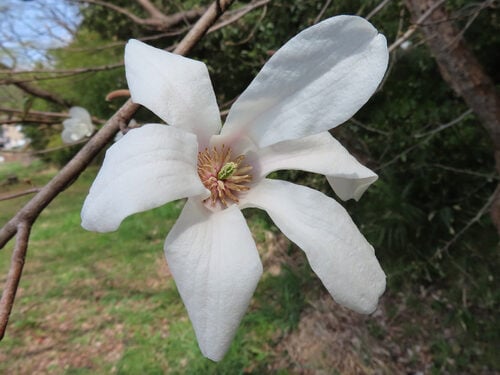
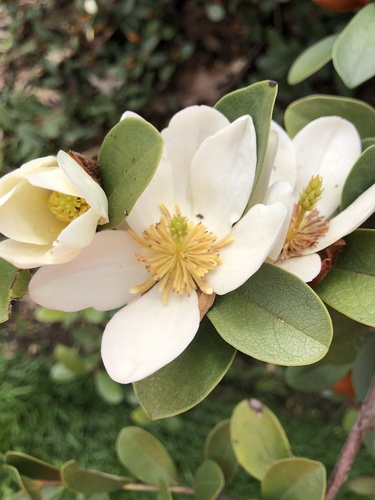
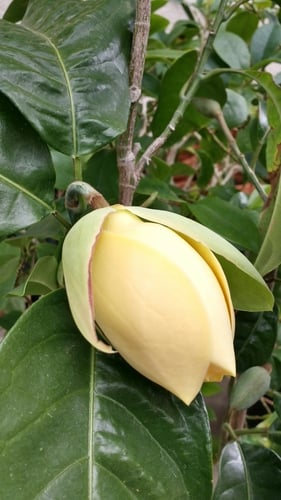
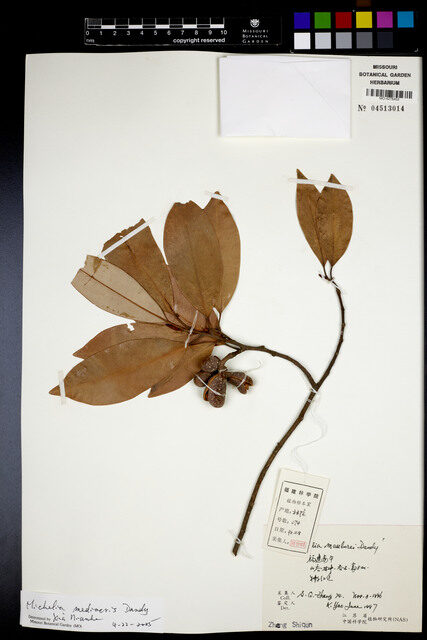
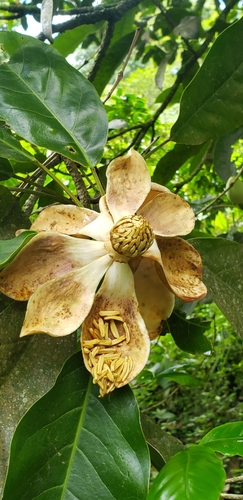
Magnolia campbellii
Hook.f. & Thomson
Campbell's magnolia
iNaturalist· cc-by-nc
(c) Phil Bendle, some rights reserved (CC BY-NC), uploaded by Phil Bendle
iNaturalist· cc-by-nc
(c) James Bailey, some rights reserved (CC BY-NC), uploaded by James Bailey
iNaturalist· cc-by-nc
(c) Basu Dev Neupane, some rights reserved (CC BY-NC), uploaded by Basu Dev Neupane
Summary
Source: WikipediaMagnolia campbellii, or Campbell's magnolia, is a species of Magnolia that grows in sheltered valleys in the Himalaya from eastern Nepal, Sikkim and Assam, India, east to southwestern China (southern Xizang, Yunnan, southern Sichuan) and south to northern Myanmar.
Description
A tree. It can grow 30 m tall. It loses its leaves during the year. The bark is smooth and grey. The leaves are 10-23 cm long by 5-10 cm wide. They are fuzzy underneath. The flowers are very large and 15-25 cm wide. There are 12-16 tepals.
Edible Uses
None known
Traditional Uses
The flower buds are boiled as a vegetable.
This uses section is brief — help expand it
Medicinal Uses
None known
Distribution
It is a temperate plant. Arboretum Tasmania. In Sikkim it grows between 2,400-3,100 m above sea level.
Where It Grows
Asia, Australia, Himalayas, India, Myanmar, Nepal, Northeastern India, Sikkim, Tasmania,
Cultivation
Best grown in a warm position in a moderately rich free soil of an open texture. Prefers a deep rich moist acid soil. Succeeds in an acid or neutral humus-rich soil in sun or part shade. Tolerates an alkaline soil if it is deep and rich in humus. Plants dislike dry winds. The branches are brittle so a sheltered position is required. Grows well in a sunny position in a woodland garden. Very tolerant of atmospheric pollution. Plants prefer moist summers. Dormant plants are hardy to about -10°c, but the flower buds are often killed back by late frosts. Another report says that the buds are hardy when tightly closed, but are liable to frost damage once they start to open. A very ornamental plant. Trees take at least 20 years from seed before they flower. The fleshy roots are easily damaged and any transplanting is best done during a spell of mild moist weather in late spring.
Propagation
Sow seed as soon as it is ripe in a cold frame. Stored seed must be kept cold over winter and sown in late winter in a cold frame. Germination usually occurs in spring but can take 18 months. Prick seedlings into individual pots when large enough to handle and grow on in light shade in a cold frame or greenhouse for at least the first winter. They can be planted into permanent positions once they exceed 15cm in height, but should be well mulched and given some protection from winter cold for their first one or two winters outdoors. Layering can be done in early spring.
Other Uses
The wood is very soft and is used in construction and for making furniture.
Synonyms
Also Known As
Ghoge champ, Ghoge chap, Ghogey champ, Wanggung
References (1)
- Tsering, J., et al, 2017, Ethnobotanical appraisal on wild edible plants used by the Monpa community of Arunchal Pradesh. Indian Journal of Traditional Knowledge. Vol 16(4), October 2017, pp 626-637