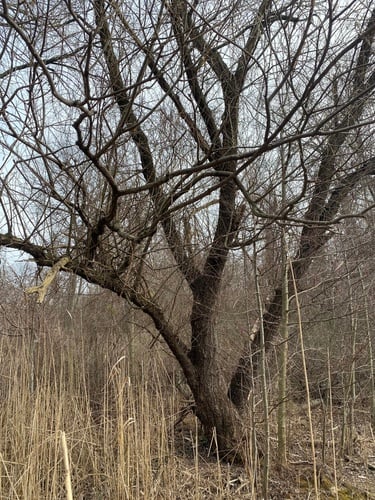
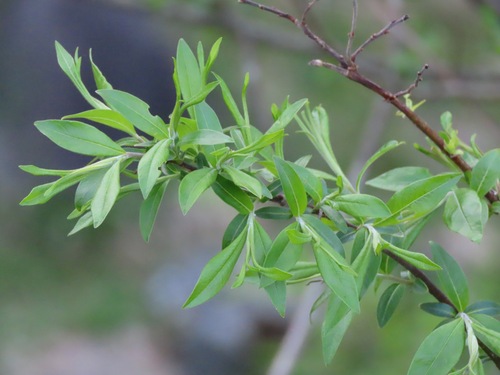
Casearia lasiophylla
Eichler
Guacatunga
iNaturalist· cc-by-nc
(c) Cleantony B.F. Torres, some rights reserved (CC BY-NC)
iNaturalist· cc-by-nc
(c) Cleantony B.F. Torres, some rights reserved (CC BY-NC)
iNaturalist· cc-by-nc
(c) Cleantony B.F. Torres, some rights reserved (CC BY-NC)
Summary
Source: WikipediaCasearia lasiophylla is a species of flowering plant in the family Salicaceae. It is endemic to Brazil.
Description
A subtropical shrub in the Salicaceae family that typically grows 2-4 metres tall.
This description is brief — help expand it
Edible Uses
Fruit - raw. A delicate flavour, it is actually the fleshy, orange aril surrounding the seed that is eaten. The globose fruit is a capsule around 6 - 10mm in diameter, containing a number of seeds that are surrounded by a fleshy aril.
Medicinal Uses
The plant (part not specified) has been used to treat wounds. The leaves contain an essential oil (yield 0.02%), the main component being identified as germacrene D (18.6%), beta-caryophyllene (14.7%), delta-cadinene (6.2%), and alpha-cadinol (5.4%). The oil exhibited antiproliferative activity against a number of cell lines
Known Hazards
The fruit is a capsute containing several seeds. Although the capsule of some species (and possibly also the seeds contained therein) is somewhat toxic, the fleshy aril surrounding the seeds is a different matter and in some species (see information below on edibility to see if this is one of them) is often eaten and is considered to be perfectly wholesome.
Distribution
It is a subtropical plant.
Where It Grows
Brazil, South America,
Cultivation
Plants can succeed in conditions ranging from fairly dense shade to full sun. Young plants have a moderate rate of growth.
Propagation
Seed - best sown as soon as it is ripe in a partially shaded position in a nursery seedbed. A low germination rate can usually be expected, with the seed sprouting within 14 - 28 days. When the seedlings are 5 - 6cm tall, pot them up into individual containers and they should be ready to plant out 5 - 7 months later.
Other Uses
The wood is medium-textured, moderately heavy, soft and easy to work with, with poor mechanical properties and with poor durability. It is only used locally, for purposes such as beams, scantlings and tool handles. Where large enough, the wood is used in the construction of local houses. The wood is used for fuel and to make charcoal. The tree can be used as a pioneer species for restoring native woodland and degraded areas. It is tolerant of soils contaminated with heavy metls such as zinc and cadmium and ca be used to help restore such areas. The flowers are a good source of food for bees.
References (1)
- www.colecionandofrutas.org