Populus grandidentata
Michaux
Bigtooth Aspen, Largetooth aspen
iNaturalist· cc-by-nc
(c) Brad Walker, some rights reserved (CC BY-NC), uploaded by Brad Walker
iNaturalist· cc-by-nc-sa
(c) Burkhard, some rights reserved (CC BY-NC-SA), uploaded by Burkhard
iNaturalist· cc-by-nc-sa
(c) dogtooth77, some rights reserved (CC BY-NC-SA)
Summary
Source: WikipediaPopulus grandidentata, commonly called large-tooth aspen, big-tooth aspen, American aspen, Canadian poplar, or white poplar, is a deciduous tree native to eastern North America.
Description
A small tree. It grows to 20 m tall. The trunk is 30 cm across. The bark is greenish and smooth. It becomes brown and divided into flat scaly ridges with age. The leaves are 6-10 cm long and 4.5-9 cm wide. The leaves on the shorter older twigs have sharp teeth. The leaves on younger twigs are more rounded. Their edges are wavy. The leaves are dull green and paler underneath. They turn yellow in autumn. The leafstalks are long, slender and flattened. The flowers are catkins 4-6 cm long. Male and female flowers are on separate trees. The fruit are 6 mm long and narrow cone shape. There are many tiny seeds.
Edible Uses
The inner bark can be boiled and eaten. While no further details are given for this species specifically, inner bark is commonly dried, ground into a powder, and used as a thickener in soups or added to cereals when making bread.
Traditional Uses
The soft inner bark layer is scraped, boiled and eaten.
This uses section is brief — help expand it
Medicinal Uses
Like most members of the genus, the bark contains salicin, a glycoside that probably decomposes into salicylic acid (aspirin) in the body, making it anodyne, anti-inflammatory, febrifuge, and tonic. It is used especially in treating rheumatism and fevers, and to relieve the pain of menstrual cramps. An infusion of the bark has also been used to ease and lessen menstrual flow.
Distribution
It is a temperate plant. It grows well on moist fertile soils. It is smaller and more scrubby on dry poor soils. It suits hardiness zones 3-9.
Where It Grows
Australia, Canada, North America, USA,
Cultivation
An easily grown plant, it does well in a heavy cold damp soil. Prefers a deep rich well-drained circumneutral soil, growing best in the south and east of Britain. Growth is much less on wet soils, on poor acid soils and on thin dry soils. It does not do well in exposed upland sites. It dislikes shade and is intolerant of root or branch competition. A fast-growing but short-lived tree, it does not appear to thrive in Britain, though it is extensively planted for timber in Austria. Trees usually produce suckers and form large thickets in the wild. This species is closely related to P. tremula. Poplars have very extensive and aggressive root systems that can invade and damage drainage systems. Especially when grown on clay soils, they should not be planted within 12 metres of buildings since the root system can damage the building's foundations by drying out the soil. Dioecious. Male and female plants must be grown if seed is required. Hybridizes freely with other members of this genus.
Propagation
Seed must be sown as soon as it is ripe in spring, as poplar seed has an extremely short period of viability and must be sown within a few days of ripening. Surface sow or just lightly cover the seed in trays in a cold frame. Prick out seedlings into individual pots when large enough to handle and grow on in the cold frame. If sufficient growth is made, plants can go out in late summer; otherwise keep in the cold frame until the following late spring. Most poplar species hybridize freely, so seed may not come true unless collected from the wild where no other poplars grow. Cuttings of mature wood taken in November or December in a sheltered outdoor bed — note that this species does not root readily from cuttings. Suckers can be taken in early spring. Layering can be done in spring, and root cuttings taken in winter.
Other Uses
This species is an excellent pioneer, establishing readily and growing quickly to provide good conditions for other woodland trees. Being intolerant of shade, it will eventually be out-competed by those trees. The wood is soft, rather woolly in texture, without smell or taste, of low flammability, not durable, and very resistant to abrasion. It weighs 29lb per cubic foot and is used mainly for pulp, producing a high quality paper.
Production
Trees live for 60 years.
Notes
There are about 35 Populus species.
References (9)
- Beckstrom-Sternberg, Stephen M., and James A. Duke. "The Foodplant Database." http://probe.nalusda.gov:8300/cgi-bin/browse/foodplantdb.(ACEDB version 4.0 - data version July 1994)
- Brickell, C. (Ed.), 1999, The Royal Horticultural Society A-Z Encyclopedia of Garden Plants. Convent Garden Books. p 821
- Cundall, P., (ed.), 2004, Gardening Australia: flora: the gardener's bible. ABC Books. p 1072
- Farrar, J.L., 1995, Trees of the Northern United States and Canada. Iowa State University press/Ames p 348
- Fl. bor.-amer. 2:243. 1803
Show all 9 references Hide references
- Kermath, B. M., et al, 2014, Food Plants in the Americas: A survey of the domesticated, cultivated and wild plants used for Human food in North, Central and South America and the Caribbean. On line draft. p 677
- Little, E.L., 1980, National Audubon Society Field Guide to North American Trees. Alfred A. Knopf. p 323
- Moerman, D. F., 2010, Native American Ethnobotany. Timber Press. p 431
- Toupal, R. S. & Hollenback, K., 2009, An Ethnobotany of Indiana Dunes National Lakeshore: Plant Uses of the Ojibwa People. Bureau of Applied Research in Anthropology. University of Arizona
More from Salicaceae
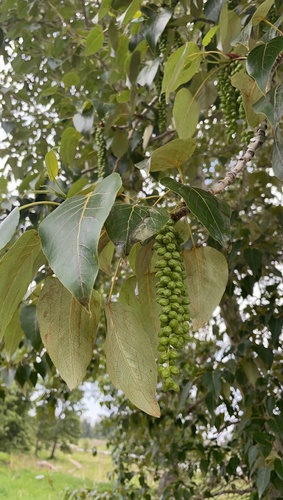
Populus balsamifera
Balsam Poplar, Tacamahac
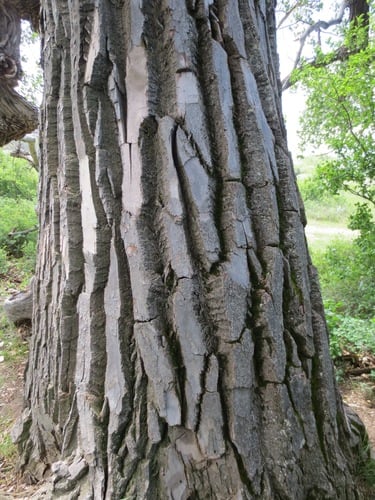
Populus deltoides
Eastern cottonwood, Carolina poplar
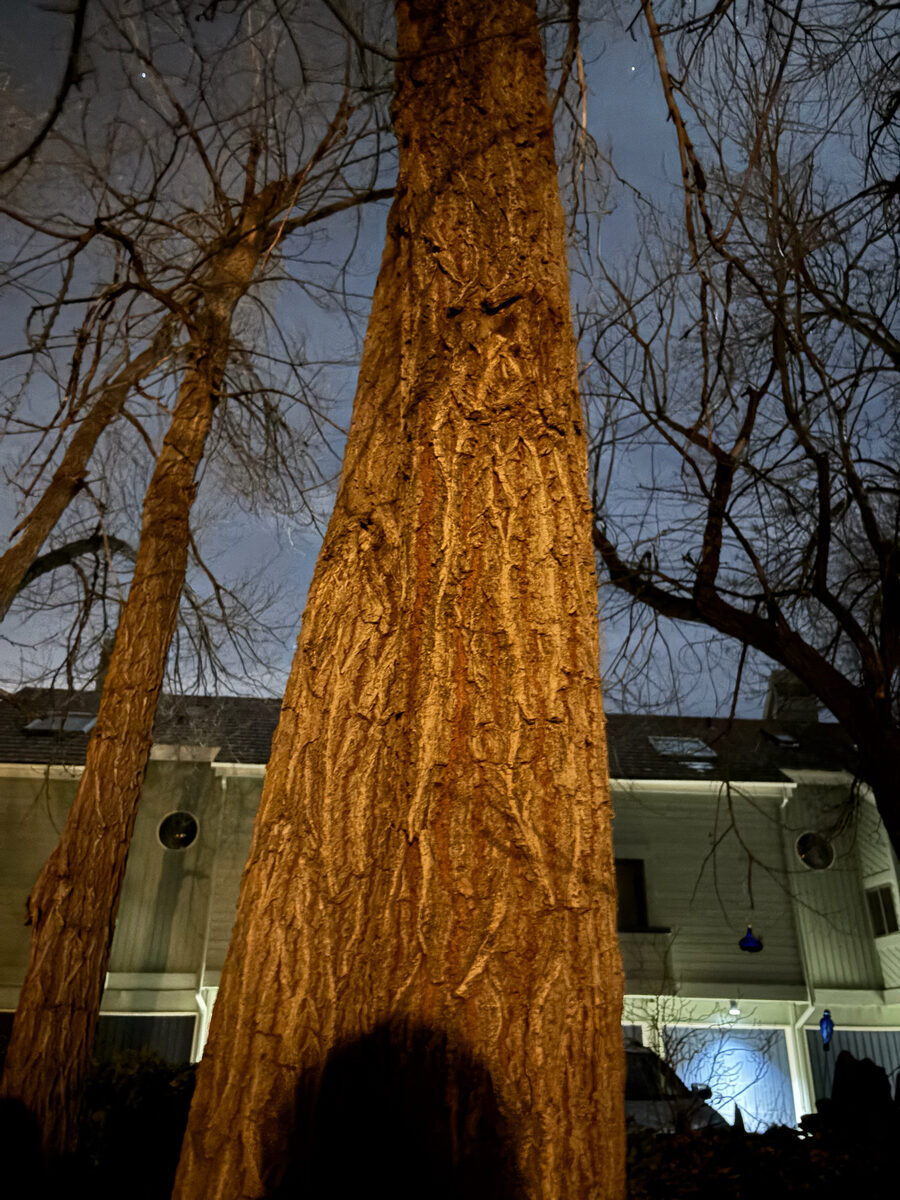
Populus deltoides monilifera - (Aiton.)Eckenw.
Plains Cottonwood
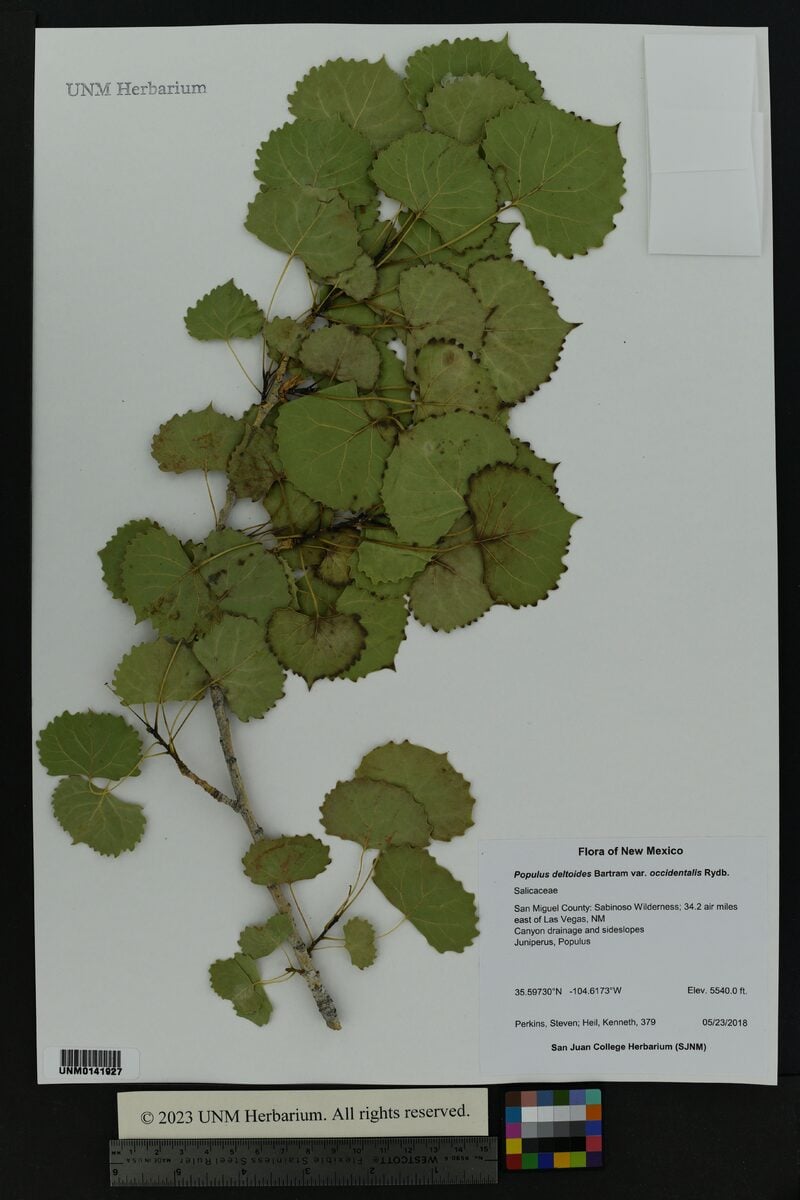
Populus deltoides var. occidentalis
Plains cottonwood
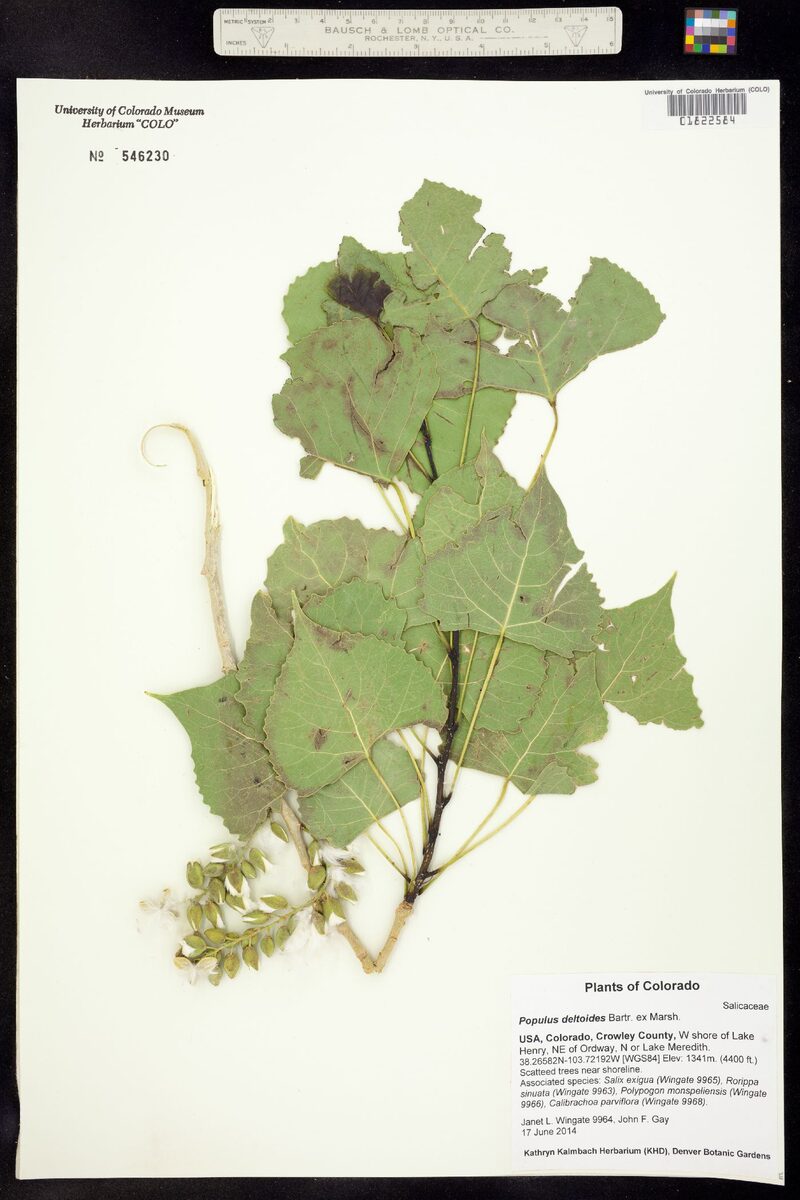
Populus deltoides var. wislizenii
Rio grande cottonwood
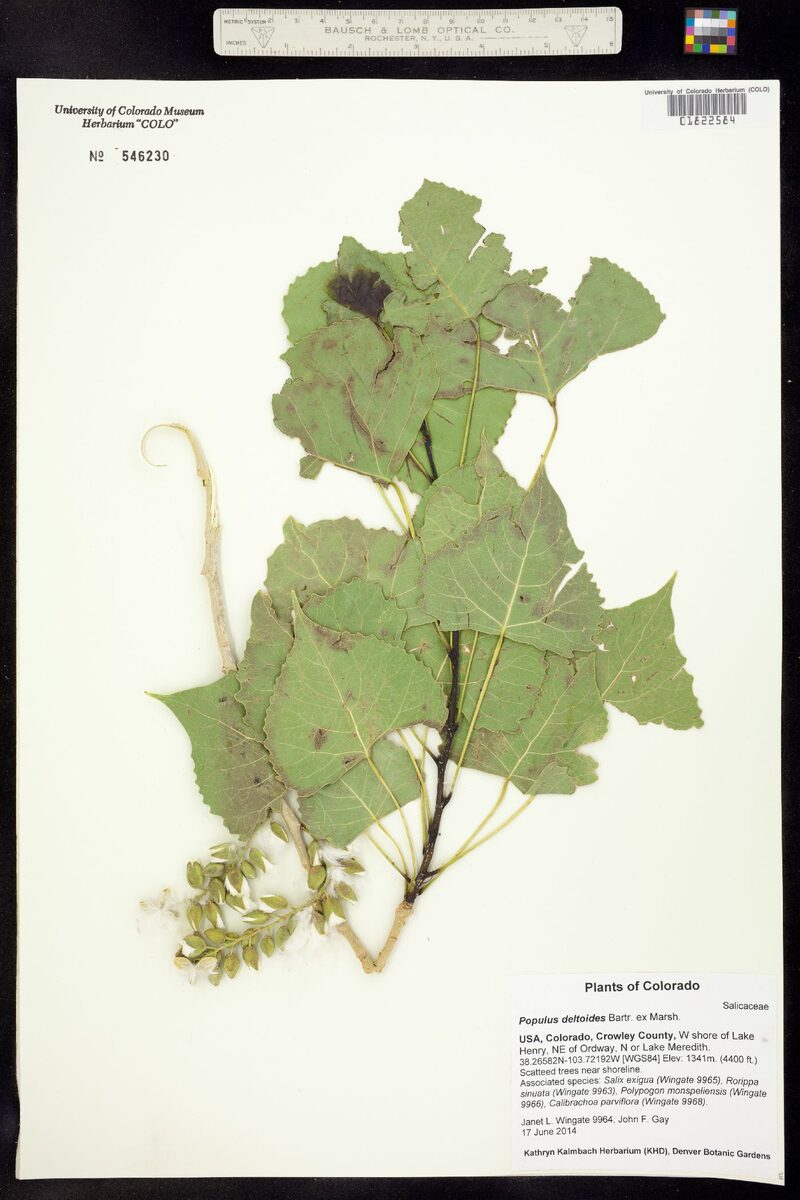
Populus deltoides wislizenii - (S.Watson.)Eckenw.
Rio Grande Cottonwood