Populus nigra
Linn.
Black poplar
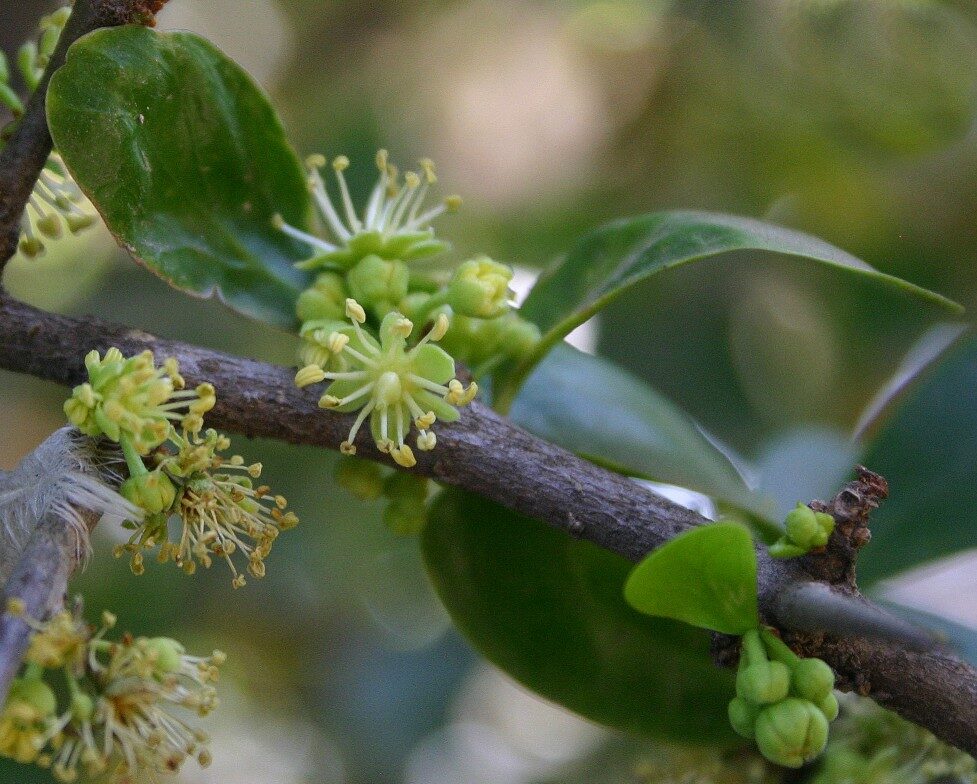
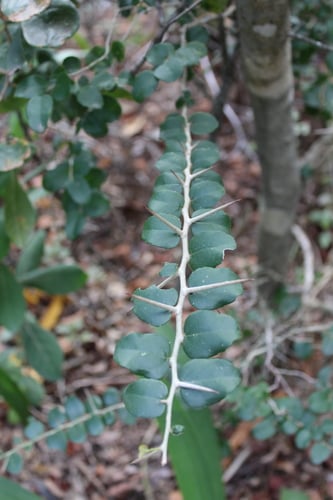
iNaturalist· cc-by-sa
(c) Ayotte, Gilles, 1948-, some rights reserved (CC BY-SA)
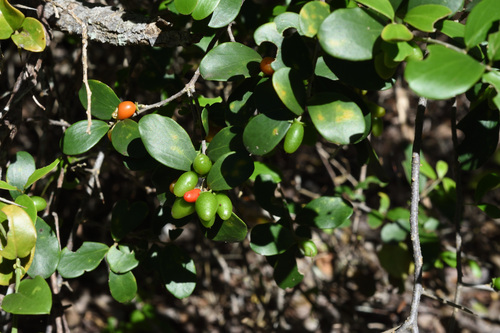
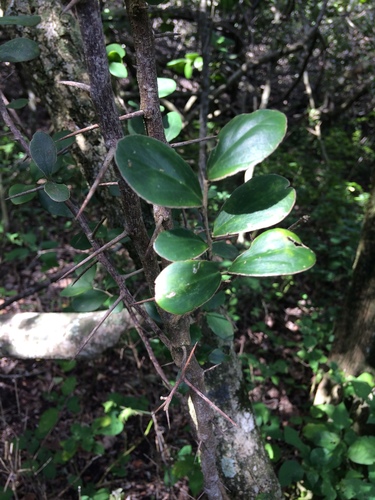
iNaturalist· cc-by-nc
(c) Paolo Mazzei, some rights reserved (CC BY-NC), uploaded by Paolo Mazzei
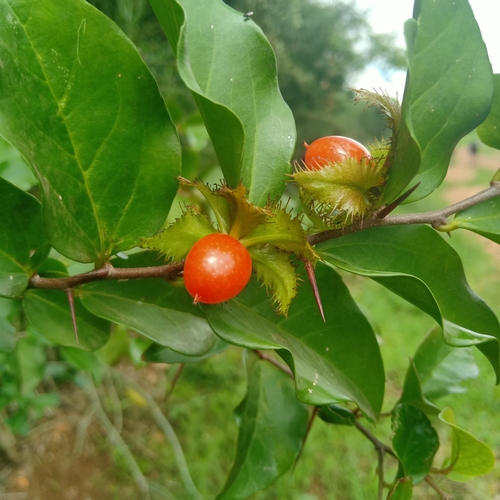
iNaturalist· cc-by-nc
(c) Hermann Falkner, some rights reserved (CC BY-NC), uploaded by Hermann Falkner
Summary
Source: WikipediaPopulus nigra, the black poplar, is a species of cottonwood poplar, the type species of section Aigeiros of the genus Populus, native to Europe, southwest and central Asia, and northwest Africa.
Description
A large tree. It grows 30 m high and spreads 18 m wide. It has a round crown and a thick straight trunk. The bark is grey and knotted and gnarled. The leaves are triangle shaped. They are 4-7.5 cm long and wide. They have a long point at the tip. They are wavy and have teeth along the edge. They are green above and paler underneath. They turn yellow in autumn. The leaf stalks are slender and flattened and 2.5-5 cm long. The flowers are catkins 5 cm long. They are narrow and droop.
Edible Uses
The inner bark can be dried, ground into a powder, and added to flour for making bread. It is considered a famine food, used only when all else fails.
Medicinal Uses
The leaf buds are covered with a resinous sap with a strong turpentine odour and a bitter taste. They contain salicin, a glycoside that probably decomposes into salicylic acid (aspirin) in the body. The buds are antiscorbutic, antiseptic, balsamic, diaphoretic, diuretic, expectorant, febrifuge, stimulant, tonic, and vulnerary. Taken internally, they are used for bronchitis, upper respiratory tract infections, and stomach and kidney disorders. They should not be prescribed to patients sensitive to aspirin. Externally, the buds treat colds, sinusitis, arthritis, rheumatism, muscular pain, and dry skin conditions, and can be placed in hot water and inhaled to relieve nasal congestion. Buds are harvested in spring before opening and dried for later use. The stem bark is anodyne, anti-inflammatory, antiseptic, astringent, diuretic, and tonic, containing salicylates from which aspirin is derived. It is used internally for rheumatism, arthritis, gout, lower back pain, urinary complaints, digestive and liver disorders, debility, and anorexia, and to reduce fevers and relieve menstrual cramp pain. Externally, the bark treats chilblains, haemorrhoids, infected wounds, and sprains. Bark is harvested from side branches or coppiced trees and dried for later use.
Known Hazards
Not suitable for patients sensitive to aspirin due to salicin content.
Distribution
It grows in moist soil in temperate regions. In Pakistan it grows up to 4,000 m altitude. It suits hardiness zones 2-10. Tasmania Herbarium. Arboretum Tasmania.
Where It Grows
Africa, Albania, Algeria, Andorra, Argentina, Asia, Australia, Austria, Balkans, Belgium, Bolivia, Britain, Bulgaria, Canary Is., Caucasus, China, Crete, Czech Republic, Denmark, Dominican Republic, Europe, France, Germany, Greece, Haiti, Himalayas, Hungary, Ireland, Italy, Kazakhstan, Korea, Lebanon, Libya, Macedonia, Mediterranean, Mongolia, Morocco, Myanmar, Netherlands, North Africa, North America, Pakistan, Poland, Portugal, Romania, Russia, San Marino, SE Asia, Siberia, Slovenia, South Africa, Spain, Sweden, Syria, Switzerland, Tasmania, Tunisia, Turkey, Türkiye, Turkmenistan, Ukraine, USA, Uzbekistan, Vietnam, Yugoslavia,
Cultivation
A very easily grown plant, it does well in a heavy cold damp soil. Prefers a deep rich well-drained circumneutral soil, growing best in the south and east of Britain. Growth is much less on wet soils, on poor acid soils and on thin dry soils. It is fairly wind tolerant, though it does not do well in exposed upland sites, or in maritime exposure. It dislikes shade and is intolerant of root or branch competition. A fast-growing tree, reaching maturity in about 100 years and declining thereafter. There are several named varieties that have been selected mainly for their ornamental value. The leaf buds, as they swell in the spring, and the young leaves have a pleasing fragrance of balsam. The fragrance is especially pronounced as the leaves unfold. Very tolerant of hard pruning, the trees have often been pollarded in the past. Plants seldom produce suckers. An important food plant for the caterpillars of several species of butterfly. Poplars have very extensive and aggressive root systems that can invade and damage drainage systems. Especially when grown on clay soils, they should not be planted within 12 metres of buildings since the root system can damage the building's foundations by drying out the soil. Dioecious. Male and female plants must be grown if seed is required.
Propagation
Seed must be sown as soon as it is ripe in spring, as poplar seed has an extremely short period of viability and must be sown within a few days of ripening. Surface sow or just lightly cover the seed in trays in a cold frame. Prick out seedlings into individual pots when large enough to handle and grow on in the cold frame. If sufficient growth is made, plants can go out in late summer; otherwise keep in the cold frame until the following late spring. Most poplar species hybridize freely, so seed may not come true unless collected from the wild where no other poplars grow. Take cuttings of mature wood from the current season's growth, 20–40cm long, in November or December, in a sheltered outdoor bed or direct into permanent positions — very easy. Suckers can be taken in early spring, though this species rarely produces them.
Other Uses
An extract of the shoots serves as a rooting hormone for all types of cuttings, prepared by soaking the chopped shoots in cold water for a day. This fast-growing tree is often planted as a quick screen or windbreak. The cultivar 'Italica' is commonly used for this purpose, though it has fragile branches and is prone to basal rots that can cause sudden collapse; 'Plantierensis' is considered a much more suitable choice. A resin obtained from the buds is made into a salve for home remedies. The bark is used as a cork substitute for floats and similar purposes. The wood is very soft, very light, and rather woolly in texture, without smell or taste, of low flammability, not durable, easy to work, and very resistant to abrasion, used for lower quality purposes.
Production
They grow rapidly but are short lived.
Synonyms
Also Known As
črni topol, Lombardy poplar, Safeda, Theves poplar
References (9)
- Cundall, P., (ed.), 2004, Gardening Australia: flora: the gardener's bible. ABC Books. p 1073
- Esperanca, M. J., 1988. Surviving in the wild. A glance at the wild plants and their uses. Vol. 1. p 124
- Hedrick, U.P., 1919, (Ed.), Sturtevant's edible plants of the world. p 512
- Heywood, V.H., Brummitt, R.K., Culham, A., and Seberg, O. 2007, Flowering Plant Families of the World. Royal Botanical Gardens, Kew. p 289
- Hibbert, M., 2002, The Aussie Plant Finder 2002, Florilegium. p 238
Show all 9 references Hide references
- http://www.botanic-gardens-ljubljana.com/en/plants
- Kew Plants of the World Online
- Little, E.L., 1980, National Audubon Society Field Guide to North American Trees. Alfred A. Knopf. p 325
- Sp. pl. 2:1034. 1753