Coffea arabica
L.
Arabian coffee
iNaturalist· cc-by-nc
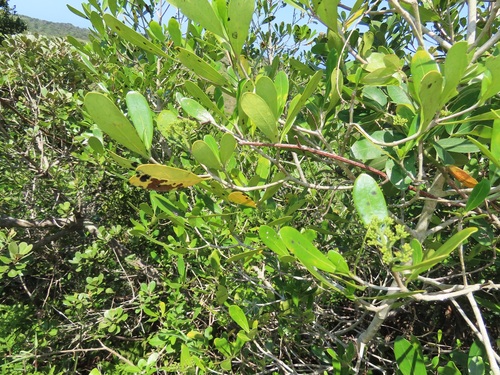
(c) Andrea Talone Rìo, some rights reserved (CC BY-NC), uploaded by Andrea Talone Rìo
iNaturalist· cc-by-nc-sa
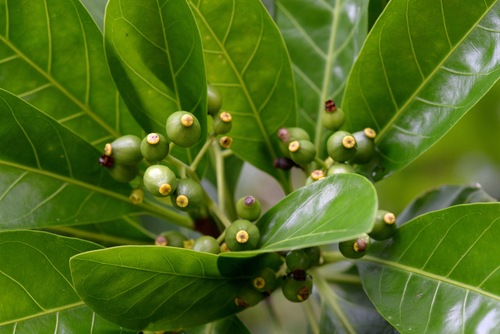
(c) Andres Hernandez S., some rights reserved (CC BY-NC-SA)
iNaturalist· cc-by
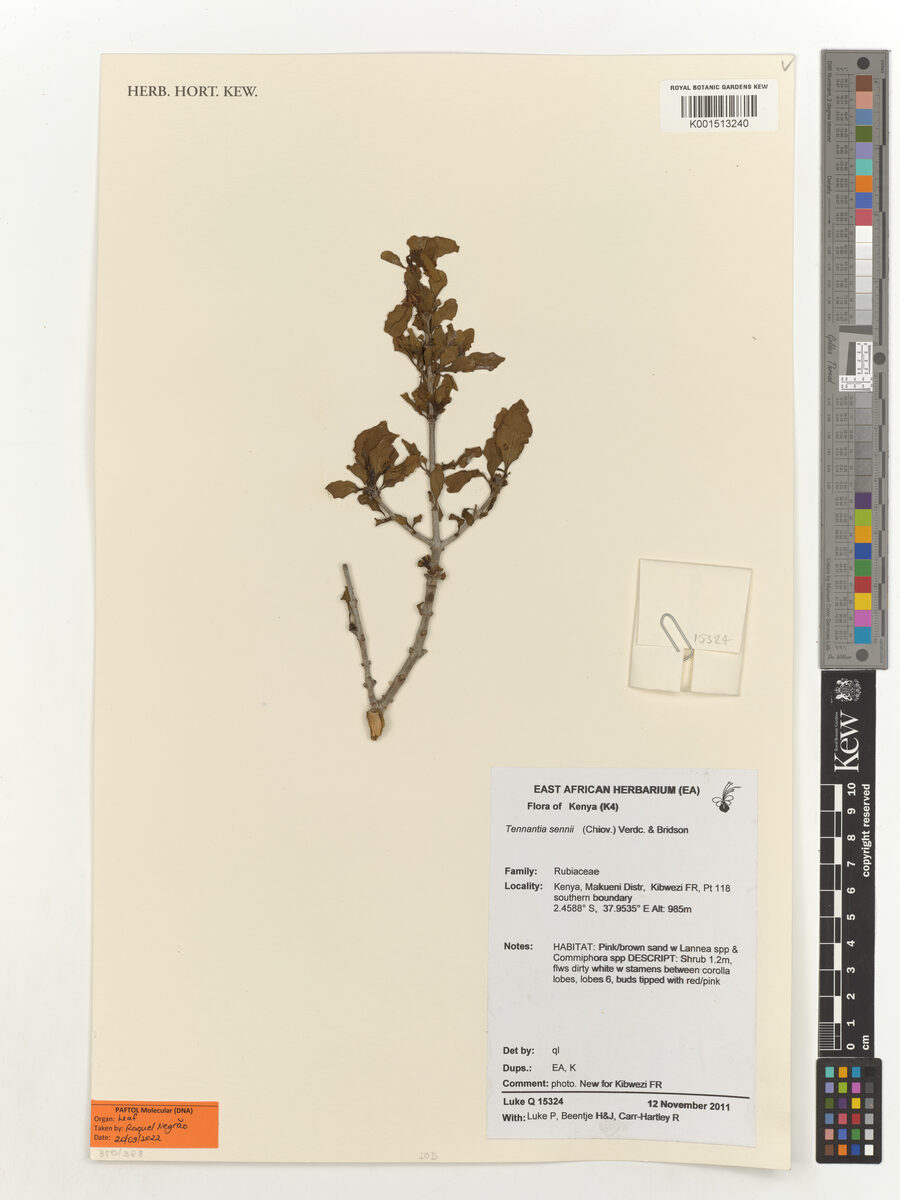
(c) Forest and Kim Starr, some rights reserved (CC BY)
Summary
Source: WikipediaCoffea arabica (), also known as the Arabica coffee, is a species of flowering plant in the coffee and madder family Rubiaceae. It is believed to be the first species of coffee to have been cultivated and is the dominant cultivar, representing about 60% of global production. Coffee produced from the less acidic, more bitter, and more highly caffeinated robusta bean (C. canephora) makes up most of the remaining coffee production. The natural populations of Coffea arabica are restricted to the forests of South Ethiopia and Yemen.
Description
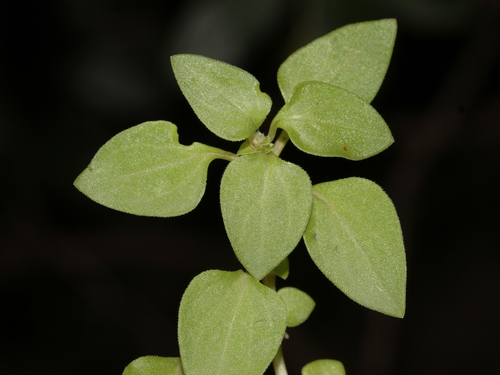
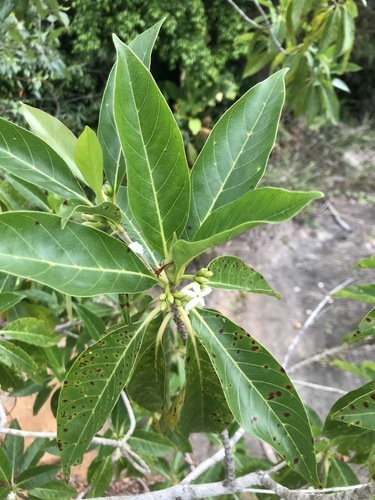
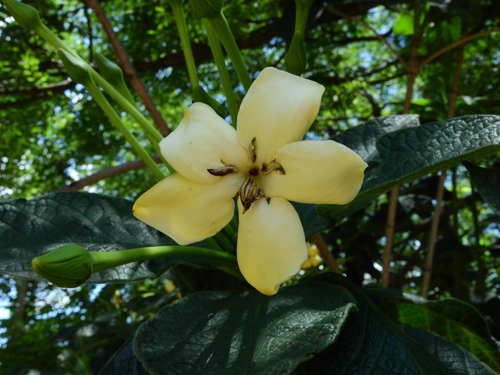
An evergreen shrub. It grows to 3-5 m high and spreads to 3 m across. The stem is slender and the branches are flexible. The leaves are glossy green, oblong, and tapering towards the tip. They occur opposite each other and have easy to see veins. The leaves are 10-15 cm long by 5 cm wide. The flowering stalks grow from these side branches and have 1-4 flowers. The flowers are white, with 5 petals. They have a scent. Flowers occur in clusters in the axils of leaves. The fruit are green but change to red when ripe. They contain 2 seeds. The seeds are grey-green. They are about 12 mm long. They are flattened on the side where they are pressed together. Coffee seeds are commonly called "beans".
Edible Uses
Coffea arabica accounts for 60% of the world's coffee production. The dried seeds ('beans') are roasted, ground and brewed into one of the two most popular beverages in the world. Coffee is also widely used as a flavouring in ice cream, pastries, candies and liqueurs, and an extract from the seeds serves the same purpose. The seeds have been used as a masticatory since ancient times, and when cooked in butter can be made into rich flat cakes. Dried, roasted green seeds are used as an appetizer, and chocolate-covered roasted seeds are eaten as a gourmet snack. The red fruits and leaves are chewed for their stimulating properties. The cooked leaves have a strong brown colour, a good texture and a relatively neutral flavour with only a hint of bitterness; they contain more caffeine than the fruit and are sometimes brewed as a tea substitute.
Traditional Uses
The seeds are used for coffee. The seeds are roasted and then ground to make a drink. Coffee extract is used for flavouring ice cream, candies, pastries, and soft drinks. The roasted seeds are eaten as snacks. The red fruit and leaves are chewed for their stimulant properties. The leaves are used as a tea substitute.
Medicinal Uses
The seeds contain caffeine, a widely used stimulant added to proprietary painkillers to enhance the effect of aspirin and paracetamol. They also contain theobromine and theophylline, and chlorogenic acid, which is both stimulant and diuretic as well as a known allergen. The seed is a bitter, aromatic, stimulant herb with diuretic effects that also controls vomiting. It is reported to be analgesic, aphrodisiac, anorexic, antidotal, cardiotonic, CNS-stimulant, counter-irritant, hypnotic, galactagogue and nervine. Though not typically classified as a medicinal herb, coffee is a highly effective general stimulant with a particular effect on the central nervous system, improving perception and physical performance. It has been found to help in some cases of headache or migraine. An enema made using coffee beans is an effective cleanser for the large bowel. Coffee is a folk remedy for asthma, atropine poisoning, fever, flu, headache, jaundice, malaria, migraine, narcosis, nephrosis, opium poisoning, sores and vertigo.
Known Hazards
The seeds contain chlorogenic acid, which is a known allergen.
Distribution
It is native to NE tropical Africa. A tropical and subtropical plant. It grows best in rich deep soils in a protected partly shaded position. It is drought and frost tender. It cannot stand flooding. It needs a temperature above 10°C. In West Africa it grows between 1,000-2,000 m altitude. In PNG it is mostly between 700-2,000 m above sea level. It suits hardiness zones 10-11. In XTBG Yunnan.
Where It Grows
Africa, Angola, Arabia, Asia, Australia, Bolivia, Brazil, Burundi, Cambodia, Cameroon, Cape Verde, Central Africa, Central America, China, Colombia, Cook Islands, Costa Rica, Cuba, Dominican Republic, East Africa, East Timor, Easter Island, Ecuador, Egypt, El Salvador, Eswatini, Ethiopia*, Fiji, Georgia, Grenada, Guam, Guatemala, Guiana, Guianas, Guyana, Haiti, Hawaii, Honduras, India, Indochina, Indonesia, Jamaica, Kenya*, Malawi, Marquesas, Martinique, Mexico, Middle East, Mozambique, Myanmar, Nepal, New Caledonia, Nicaragua, Niger, Niue, Norfolk Island, North Africa, North America, Pacific, Papua New Guinea, PNG, Peru, Philippines, Pohnpei, Rotuma, Sahel, Samoa, Sao Tome and Principe, Saudi Arabia, SE Asia, Sierra Leone, South Africa, Southern Africa, South America, Sri Lanka, St Helena, Sudan, Suriname, Swaziland, Taiwan, Thailand, Timor-Leste, Tonga, USA, Vanuatu, Venezuela, Vietnam, West Africa, West Indies, Yap, Yemen, Zimbabwe,
Cultivation
Coffea arabica can be grown at elevations from 1,300 to 2,800 metres in equatorial regions, with 1,500 - 1,900 metres being most common. The minimum elevation reduces to about 500 metres at a latitude around 15°N or S, whilst in the subtropics, it can be grown from sea level to 1,000 metres. The plant can tolerate low temperatures but not frost. It grows best in areas where annual daytime temperatures are within the range of 14 - 28°c but can tolerate 10 - 34°c. It prefers a mean annual rainfall in the range 1,400 - 2,300mm, but tolerates 750 - 4,200mm. With too much rainfall, the plant tends to develop wood at the expense of flowers and fruits. One to two months of less than 50mm rain facilitates uniform flowering. Heavy rain during and after harvest is not desirable. Coffea arabica prefers a position in light shade. Shading improves leaf and shoot growth but reduces root growth. Coffea arabica prefers deep friable soil on undulating land. Plants are unsuited to stiff clay or sandy soils but are considered tolerant of acid soils. It prefers a pH in the range of 5.5 - 7, tolerating 4.3 - 8.4. Plants can begin to bear within 2 - 3 years and fully bear at the age of 6 - 8 years. The optimum yield of clean, dry coffee beans is 2- 3 tonnes/ha, obtained in Kenya. The average yields are about 0.5 tonnes/ha in Brazil and 0.9 tonnes/ha in Africa. Coffee plants can produce economic yields for 30 - 40 years on average, though this can vary from 10 - 70 years and plants of 80 - 100 years are known. Two to four years after planting, Coffea arabica produces small, white, highly fragrant flowers. The sweet fragrance resembles the sweet smell of jasmine flowers. Following the flowers, red berries appear, which are harvested for the coffee beans inside. The plant is tetraploid, and over 30 mutations have been recognized. In bisexual flowers, pollen is shed shortly after the flower opens, and the stigma is receptive immediately. Self-pollination can occur, as seed sets, even when the flowers are bagged. Pollination is also by honeybees, which collect nectar and pollen from the flowers. Inferior coffee results from picking berries too early or too late. Dwarf varieties are available.
Propagation
Propagation is usually by seed. Optimum germination temperature is around 30–32°C; below 10°C germination is very slow. Seed viability is comparatively short and it is advisable to sow within two months of harvesting, as older seed takes longer to germinate and loses viability over time. Seeds can be planted with the attached parchment, but germination is quicker when this is removed. Seedlings can be raised in shaded nurseries and planted into permanent positions when 6–12 months old. Propagation is also possible by layering, air layering, budding, or single leaf-bud cuttings, which is the most commonly used cutting method.
Other Uses
The plant is often intercropped with food crops such as corn, beans or rice during its early years of growth, and is useful as an understorey plant or hedge. Coffelite, a type of plastic, is made from coffee beans. Coffee combined with iodine is used as a deodorant. The seeds contain caffeine, which has been described as a natural herbicide — it selectively inhibits germination of Amaranthus spinosus seeds. The bark can be made into pulp and parchment or used as manure and mulch. The whitish wood is hard, dense, heavy, tough, durable and takes a polish well; it is suitable for tables, chairs and turnery. Coffea arabica can be grown in a large container of 35 litres or more, and will also grow as an indoor plant, though it is unlikely to fruit indoors.
Production
Plants normally self pollinate. The fruit develops over 9 months. Coffee bushes bear fruit after 3-4 years and can continue to do so for 50 or 60 years. For best quality the outer layer of the seeds is removed in a pulping machine then fermented while wet for 12-24 hours before drying in the sun and having the parchment removed in a hulling machine. Five kgs of fresh berries would yield about 1 kg of dried clean coffee.
Other Information
It is cultivated.
Notes
There are about 40 Coffea species. They are mostly in Africa. In Botanical Gardens in Slovenia presumably in a hot house.
Synonyms
Also Known As
Buna Cafe, Cafeto, Carry, Coffee (Arabian), Kabe, Kafa, Kafe, Kajui, Kapeng arabica, Koffie, Kohfi, Koofiy, Kopi arabika
References (91)
- Ambasta, S.P. (Ed.), 2000, The Useful Plants of India. CSIR India. p 135
- Anderson, E. F., 1993, Plants and people of the Golden Triangle. Dioscorides Press. p 207
- Awas, T., 1997, A Study on the Ecology and Ethnobotany of Non-cultivated Food Plants and Wild Relatives of Cultivated crops in Gambella Region, Southwestern Ethiopia. Addis Ababa University. p 61
- Barwick, M., 2004, Tropical and Subtropical Trees. A Worldwide Encyclopedic Guide. Thames and Hudson p 125
- Bennett, B. C., 1990, Useful Plants of Amazonian Ecuador. US Agency for International Development. Fifth Progress Report. New York Botanical Gardens. p 39
Show all 91 references Hide references
- Bianchini, F., Corbetta, F., and Pistoia, M., 1975, Fruits of the Earth. Cassell. p 216
- Bodkin, F., 1991, Encyclopedia Botanica. Cornstalk publishing, p 270
- Bodner, C. C. and Gereau, R. E., 1988, A Contribution to Bontoc Ethnobotany. Economic Botany, 43(2): 307-369
- Bourke, R. M., Altitudinal limits of 230 economic crop species in Papua New Guinea. Terra australis 32.
- Bourret, D., 1981, Bonnes-Plantes de Nouvelle-Caledonie et des Loyaute. ORSTOM. p 23
- Bremness, L., 1994, Herbs. Collins Eyewitness Handbooks. Harper Collins. p 99
- Brouk, B., 1975, Plants Consumed by Man. Academic Press, London. p 34
- Brown, D., 2002, The Royal Horticultural Society encyclopedia of Herbs and their uses. DK Books. p 175
- Burkill, H. M., 1985, The useful plants of west tropical Africa, Vol. 4. Kew.
- Burkill, I.H., 1966, A Dictionary of the Economic Products of the Malay Peninsula. Ministry of Agriculture and Cooperatives, Kuala Lumpur, Malaysia. Vol 1 (A-H) p 635
- Bussman, R. W., et al, 2021, Unity in diversity—food plants and fungi of Sakartvelo (Republic of Georgia), Caucasus. Journal of Ethnobiology and Ethnomedicine (2021) 17:72 p 14
- Cobley, L.S. (rev. Steele, W.M.) 2nd Ed., 1976, An Introduction to the Botany of Tropical Crops. Longmans. p 203
- Coe, F. G. and Anderson, G. J., 1999, Ethnobotany of the Sumu (Ulwa) of Southeastern Nicaragua and Comparisons with Miskitu Plant Lore. Economic Botany Vol. 53. No. 4. pp. 363-386
- Cooper, W. and Cooper, W., 2004, Fruits of the Australian Tropical Rainforest. Nokomis Editions, Victoria, Australia. p 438
- Cruz, I. M., et al, 2015, Edible fruits and seeds in the State of Mexico. Revista Mexicana de Ciencias Agricolas. Vol. 6. Num. 2 pp 331-346
- Cundall, P., (ed.), 2004, Gardening Australia: flora: the gardener's bible. ABC Books. p 400
- D'Ambrosio, U., & Puri, R. K., 2016, Foodways in transition: food plants, diet and local perceptions of change in a Costa Rican Ngäbe community. Journal of Ethnobiology and Ethnomedicine (2016) 12:3 p 27
- Dharani, N., 2002, Field Guide to common Trees & Shrubs of East Africa. Struik. p 214
- Duarte, M. C., et al, 2022, Diversity of Useful Plants in Cabo Verde Islands: A Biogeographic and Conservation Perspective. Plants 2022, 11, 1313 p 16
- Ekman Herbarium records Haiti
- Etherington, K., & Imwold, D., (Eds), 2001, Botanica's Trees & Shrubs. The illustrated A-Z of over 8500 trees and shrubs. Random House, Australia. p 220
- Facciola, S., 1998, Cornucopia 2: a Source Book of Edible Plants. Kampong Publications, p 212
- Ferwerda, F.P., 1979, Coffees, in Simmonds, N.W., (ed), Crop Plant Evolution. Longmans. London. p 257
- Flora of Australia Volume 49, Oceanic Islands 1, Australian Government Publishing Service, Canberra. (1994) p 357
- Flowerdew, B., 2000, Complete Fruit Book. Kyle Cathie Ltd., London. p 209
- Friday, J. B., 2005, Forestry and Agroforestry Trees of East Timor. http://www.ctahr.hawaii.edu/forestry/data/Timor/Timor trees.html
- Hedrick, U.P., 1919, (Ed.), Sturtevant's edible plants of the world. p 209
- Heywood, V.H., Brummitt, R.K., Culham, A., and Seberg, O. 2007, Flowering Plant Families of the World. Royal Botanical Gardens, Kew. p 285
- Hu, Shiu-ying, 2005, Food Plants of China. The Chinese University Press. p 678
- Jardin, C., 1970, List of Foods Used In Africa, FAO Nutrition Information Document Series No 2.p 68
- Kiple, K.F. & Ornelas, K.C., (eds), 2000, The Cambridge World History of Food. CUP p 1760
- Kybal, J., 1980, Herbs and Spices, A Hamlyn Colour Guide, Hamlyn Sydney p 78
- Lazarides, M. & Hince, B., 1993, Handbook of Economic Plants of Australia, CSIRO. p 63
- Lentz, D. L., 1986, Ethnobotany of the Jicaque of Honduras. Economic Botany 40(2):210-219
- Llamas, K.A., 2003, Tropical Flowering Plants. Timber Press. p 325
- Long, C., 2005, Swaziland's Flora - siSwati names and Uses http://www.sntc.org.sz/flora/
- Lord, E.E., & Willis, J.H., 1999, Shrubs and Trees for Australian gardens. Lothian. p 217
- Luizza, M. W., et al., 2013, Local Knowledge of Plants and their uses among Women in the Bale Mountains, Ethiopia. Ethnobotany Research & Applications 11:315-339
- Lyle, S., 2006, Discovering fruit and nuts. Land Links. p 149
- Martin, F.W. & Ruberte, R.M., 1979, Edible Leaves of the Tropics. Antillian College Press, Mayaguez, Puerto Rico. p 60, 216
- Maundu, P. et al, 1999, Traditional Food Plants of Kenya. National Museum of Kenya. 288p
- Mengistu, F. & Hager, H., 2008, Wild Edible Fruit Species Cultural Domain, Informant Species Competence and Preference in Three Districts of Amhara Region, Ethiopia. Ethnobotany Research & Applications 6:487-502
- Miguel, E., et al, 1989, A checklist of the cultivated plants of Cuba. Kulturpflanze 37. 1989, 211-357
- Miya, M. S. & Gautum, D., 2021, Checklist of floral species at the Institute of Forestry, Pokhara Campus, Pokhara, Nepal. Journal of Institute of Forestry, Nepal 18 (2021) 133-177
- Molla, A., Ethiopian Plant Names. http://www.ethiopic.com/aplants.htm
- Morley, B. & Everard, B., 1970, Wild Flowers of the World. Ebury press. Plate 60
- Mutie, F. M., et al, 2023, Important Medicinal and Food Taxa (Orders and Families) in Kenya, Based on Three Quantitative Approaches. Plants 2023, 12, 1145
- Norrington, L., & Campbell, C., 2001, Tropical Food Gardens. Bloomings Books. p 101
- Pascual-Mendoza, S. et al, 2021, Traditional knowledge of edible plants in an indigenous community in the Sierra Norte of Oaxaca, Mexico. Plant Biosystems - An International Journal Dealing with all Aspects of Plant Biology
- Peekel, P.G., 1984, (Translation E.E.Henty), Flora of the Bismarck Archipelago for Naturalists, Division of Botany, Lae, PNG. p 533, 532
- Phon, P., 2000, Plants used in Cambodia. © Pauline Dy Phon, Phnom Penh, Cambodia. p 167
- Plants of Haiti Smithsonian Institute http://botany.si.edu/antilles/West Indies
- Purseglove, J.W., 1968, Tropical Crops Dicotyledons, Longmans. p 459
- Recher, P, 2001, Fruit Spirit Botanical Gardens Plant Index. www.nrg.com.au/~recher/ seedlist.html p 1
- Roa, J. A. G. & Boada, D. S. G., 2018, Fundación para el Fortalecimiento de la Fruticultura y Plantas Alimenticias no Convencionales en Colombia.
- Ruiters-Welcome, A. K., 2019, Food plants of southern Africa. Ph.D. thesis. Univ. of Johannesburg p 96
- Schatz, G.E., 2001, Generic Tree Flora of Madagascar. Royal Botanical Gardens, Kew and Missouri Botanical Garden. p 327
- Segura, S., et al, 2018, The edible fruit species in Mexico. Genet Resour Crop Evol (2018) 65:1767–1793
- Senbeta, F., et al, 2013, Diversity of Useful Plants in the Coffee Forests of Ethiopia. Ethnobotany Research & Applications 11:049-069
- Shin, T., et al, 2018, Traditional knowledge of wild edible plants with special emphasis on medicinal uses in Southern Shan State, Myanmar. Journal of Ethnobiology and Ethnomedicine (2018) 14:48
- Sillitoe, P. 1995, An Ethnobotanical Account of the Plant Resources of the Wola Region, Southern Highlands Province, Papua New Guinea. J. Ethnobiol. 15(2): 201-235
- Small, E., 2009, Top 100 Food Plants. The world's most important culinary crops. NRC Research Press. p 207
- Sp. pl. 1:172. 1753
- Staples, G.W. and Herbst, D.R., 2005, A tropical Garden Flora. Bishop Museum Press, Honolulu, Hawaii. p 487
- Sukarya, D. G., (Ed.) 2013, 3,500 Plant Species of the Botanic Gardens of Indonesia. LIPI p 615
- Swaziland's Flora Database http://www.sntc.org.sz/flora
- Tankard, G., 1990, Tropical fruit. An Australian Guide to Growing and using exotic fruit. Viking p 104
- Thaman, R.R., 1976, The Tongan Agricultural System, University of the South Pacific, Suva, Fiji. p 391
- Torre, de la, L., et al, 2008, Enciclopedia de las Plantas Útiles del Ecuador. Herbario QCA. Pontificia Universidad Católica del Ecuador. p 541
- van Wyk, B., 2005, Food Plants of the World. An illustrated guide. Timber press. p 147
- Vasquez, R. and Gentry, A. H., 1989, Use and Misuse of Forest-harvested Fruits in the Iquitos Area. Conservation Biology 3(4): 350f
- Vickery, M.L. and Vickery, B., 1979, Plant Products of Tropical Africa, Macmillan. p 61
- Vivien, J., & Faure, J.J., 1996, Fruitiers Sauvages d'Afrique. Especes du Cameroun. CTA p 293
- Walter, A. & Lebot, V., 2007, Gardens of Oceania. ACIAR Monograph No. 122. CD-ROM minor species p 10
- Welcome, A. K. & Van Wyk, B.-E., 2019, An inventory and analysis of the food plants of southern Africa. South African Journal of Botany 122 (2019) 136–179
- Wiersema, J. H. & Leon, B., 2013, World Economic Plants. A Standard Reference CRC Press. 2nd Ed. p 190
- Williams, C.N., Chew, W.Y., and Rajartnam, J.A., 1989, Tree and Field Crops of the Wetter Regions of the Tropics. Longman, p 61
- Williamson, J., 2005, Useful Plants of Malawi. 3rd. Edition. Mdadzi Book Trust. p 72
- World Checklist of Useful Plant Species 2020. Royal Botanic Gardens, Kew
- www.worldagroforestrycentre.org/treedb/
- Young, J., (Ed.), 2001, Botanica's Pocket Trees and Shrubs. Random House. p 260
- Yuncker, T.G., 1959, Plants of Tonga, Bernice P. Bishop Museum, Hawaii, Bulletin 220. p 152
- Zaldivar, M. E., et al, 2002, Species Diversity of Edible Plants Grown in Homegardens of Chibehan Amerindians from Costa Rica. Human Ecology, Vol. 30, No. 3, pp. 301-316
- Zeven, A. C. & de West, J. M. J., 1982, Dictionary of cultivated plants and their regions of diversity. Wageningen. p 101
- Zizka, G., 1991, Flowering Plants of Easter Island. Palmarum Hortus Francofurtensis
- Zuchowski W., 2007, Tropical Plants of Costa Rica. A Zona Tropical Publication, Comstock Publishing. p 194