Coccoloba diversifolia
Jacq.
Diverse leaf sea grape, Dove plum, Pigeon Plum
iNaturalist· cc-by-nc-sa
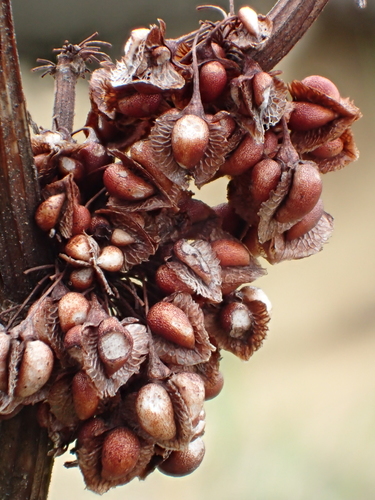
(c) Karen, some rights reserved (CC BY-NC-SA)
iNaturalist· cc-by-nc
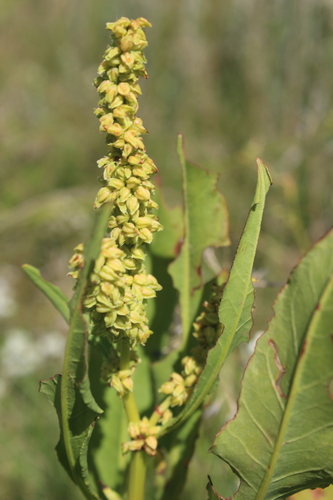
(c) Keith Bradley, some rights reserved (CC BY-NC)
Summary
Source: WikipediaCoccoloba diversifolia, known as pigeonplum or tietongue, is a species of the genus Coccoloba native to coastal areas of the Caribbean, Central America (Belize, Guatemala), southern Mexico, southern Florida (coastal regions from Cape Canaveral to the Florida Keys) and the Bahamas.
Description
A shrub or small tree. It grows 3-10 m tall. It often has several trunks. The crown is compact and oval. The bark has several colours. It keeps its leaves throughout the year. The leaves vary in shape. The fruit are dark purple They are juicy and acid.
Edible Uses
Fruit - raw or made into jelly or wine. The dark purple fruit is juicy and acid to subacid. When stored for a few days after harvesting, the fruits lose their astringency and dehydrate somewhat, but do not spoil. The pear-shaped fruit is about 15mm long.
Traditional Uses
The fruit need to be very ripe then they are sweet. They can be eaten raw or made into jelly or wine.
This uses section is brief — help expand it
Distribution
It is a tropical plant. It grows along the sea coasts. It can tolerate salt. It is best in light, well-drained soils. It needs a sunny position. It is damaged by drought and frost. It suits hardiness zones 10-11.
Where It Grows
Australia, Bahamas, Belize, Caribbean, Central America, Colombia, Cuba, Dominican Republic, Guatemala, Haiti, Hispaniola, Honduras, Leeward Island, Mexico, North America, Puerto Rico, South America, St. Kitts and Nevis, USA, Venezuela, West Indies,
Cultivation
Plants can be grown from cuttings.
Propagation
Seed - sow in containers at 20c. Greenwood cuttings Layering.
Other Uses
The heartwood is dark reddish-brown; the sapwood whitish to light brown. The wood is very hard, heavy, brittle, strong, close-grained. Employed mainly for posts and poles, it is sometimes used for cabinet making.
Production
It is slow growing.
Other Information
They are sold in local markets. They are occasionally cultivated. The fruit are especially eaten by children.
Notes
There are between 120-200 Coccoloba species in tropical America.
Synonyms
Also Known As
Amansaguapo, Fruta de paloma, Guayabillo, Guayabon, Guaya caneja, Lemare, Mevis, Pigeon seagrape, Rezen, Rezen bouzen, Uvilla, Uva de paloma, Uverillo, Uvero, Uvilla, Zamon mawon
References (16)
- Barwick, M., 2004, Tropical and Subtropical Trees. A Worldwide Encyclopedic Guide. Thames and Hudson p 123
- Bodkin, F., 1991, Encyclopedia Botanica. Cornstalk publishing, p 268
- Elias, T.S. & Dykeman P.A., 1990, Edible Wild Plants. A North American Field guide. Sterling, New York p 197
- Enum. syst. pl. 19. 1760 (Select. stirp. amer. hist. 14, t. 76. 1763)
- Facciola, S., 1998, Cornucopia 2: a Source Book of Edible Plants. Kampong Publications, p 184
Show all 16 references Hide references
- Fouqué, A.. 1972, Espèces fruitières d'Amérique tropicale. Institut français de recherches fruitierès outre-mer (As Coccoloba laurifolia)
- Grandtner, M. M., 2008, World Dictionary of Trees. Wood and Forest Science Department. Laval University, Quebec, Qc Canada. (Internet database http://www.WDT.QC.ca)
- Grandtner, M. M. & Chevrette, J., 2013, Dictionary of Trees, Volume 2: South America: Nomenclature, Taxonomy and Ecology. Academic Press p 147
- Kermath, B. M., et al, 2014, Food Plants in the Americas: A survey of the domesticated, cultivated and wild plants used for Human food in North, Central and South America and the Caribbean. On line draft. p 249
- Kiple, K.F. & Ornelas, K.C., (eds), 2000, The Cambridge World History of Food. CUP p 1834
- McLaughlin, J., Woody and Herbaceus Plants Native to Haiti. University of Florida. p 15
- Miguel, E., et al, 1989, A checklist of the cultivated plants of Cuba. Kulturpflanze 37. 1989, 211-357 (As Coccoloba laurifolia)
- Morton,
- Plants of Haiti Smithsonian Institute http://botany.si.edu/antilles/West Indies
- Reis, S. V. and Lipp, F. L., 1982, New Plant Sources for Drugs and Foods from the New York Botanical Garden herbarium. Harvard. p 51
- Segura, S., et al, 2018, The edible fruit species in Mexico. Genet Resour Crop Evol (2018) 65:1767–1793