Rumex lanceolatus
Thunb.
Smaller dock
iNaturalist· cc-by-nc
(c) Erwin Sieben, some rights reserved (CC BY-NC), uploaded by Erwin Sieben
iNaturalist· cc-by-nc
(c) Jane Trembath, some rights reserved (CC BY-NC)
Description
A herb. It is erect and grows 90 cm high. It is broad-leaved and keeps growing from year to year. The leaves are simple and alternate. They are broadly sword shaped. The flowers are in dense groups at the top of the plant. The flowers are small and 3-4 mm long. They are yellow. The fruit is an oval 3-sided nut. It is wrapped in the inner flower segments.
Edible Uses
The leaves are cooked and eaten with maize porridge.
Traditional Uses
The leaves are cooked and eaten with maize porridge.
This uses section is brief — help expand it
Distribution
It is a subtropical plant. It grows in seasonally wet places where the dry season can be 6-11 months. It grows in hot arid regions. It grows between 85-2,800 m above sea level. It can grow in arid places.
Where It Grows
Africa, Angola, Asia, Bangladesh, Botswana, Central Africa, East Africa, Eswatini, Lesotho, Namibia, South Africa, Southern Africa, Swaziland, Zimbabwe,
Other Information
Occasionally it is a cultivated food plant.
Notes
There are about 200 Rumex species.
Nutrition
| Part | Moisture | kJ | kcal | Protein | Vit A | Vit C | Iron | Zinc |
|---|---|---|---|---|---|---|---|---|
| Leaves | 82.8 | 242 | 58 | 4.6 | — | — | 9.7 | 2.4 |
Synonyms
Also Known As
Dolonyana, Idololenkonyane, Kgamane, Tongblaar
References (10)
- FAO, 1988, Traditional Food Plants, FAO Food and Nutrition Paper 42. FAO Rome p 433
- Fox, F. W. & Young, M. E. N., 1982, Food from the Veld. Delta Books. p 307
- Royal Botanic Gardens, Kew (1999). Survey of Economic Plants for Arid and Semi-Arid Lands (SEPASAL) database. Published on the Internet; http://www.rbgkew.org.uk/ceb/sepasal/internet [Accessed 6th June 2011]
- Ruiters-Welcome, A. K., 2019, Food plants of southern Africa. Ph.D. thesis. Univ. of Johannesburg p 91
- Shaheen, N., et al, 2013, Food Composition Table for Bangladesh. University of Daka. p 33
Show all 10 references Hide references
- van Wyk, Be., & Gericke, N., 2007, People's plants. A Guide to Useful Plants of Southern Africa. Briza. p 74
- van Wyk, B-E., 2011, The potential of South African plants in the development of new food and beverage products. South African Journal of Botany 77 (2011) 857–868
- Wehmeyer, A. S, 1986, Edible Wild Plants of Southern Africa. Data on the Nutrient Contents of over 300 species
- Welcome, A. K. & Van Wyk, B.-E., 2019, An inventory and analysis of the food plants of southern Africa. South African Journal of Botany 122 (2019) 136–179
- World Checklist of Useful Plant Species 2020. Royal Botanic Gardens, Kew
More from Polygonaceae
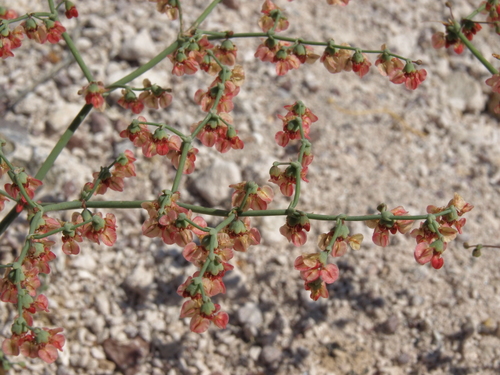
Eriogonum hookeri
Hooker's buckwheat
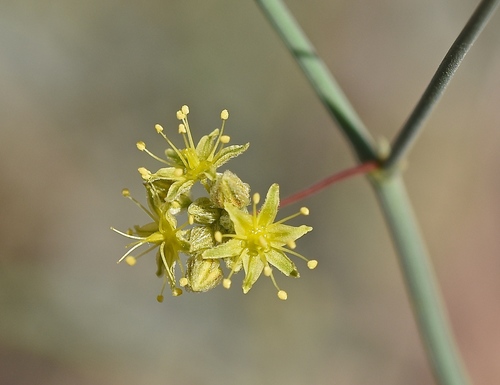
Eriogonum inflatum
American pipeweed, Desert trumpet
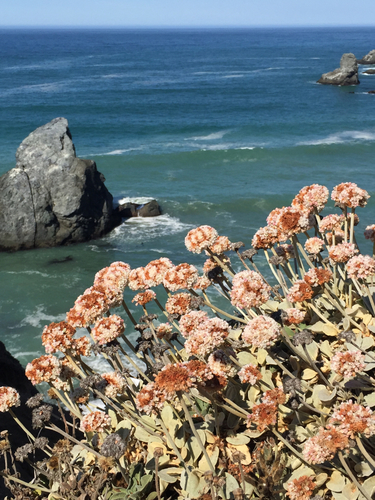
Eriogonum latifolium
Seaside buckwheat
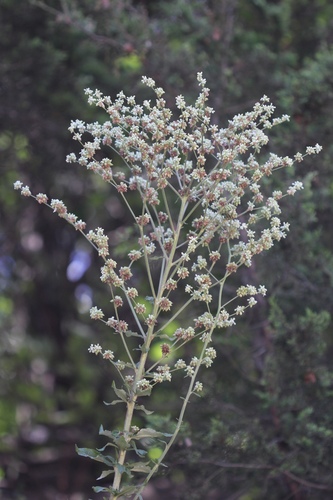
Eriogonum longifolium
Longleaf buckwheat
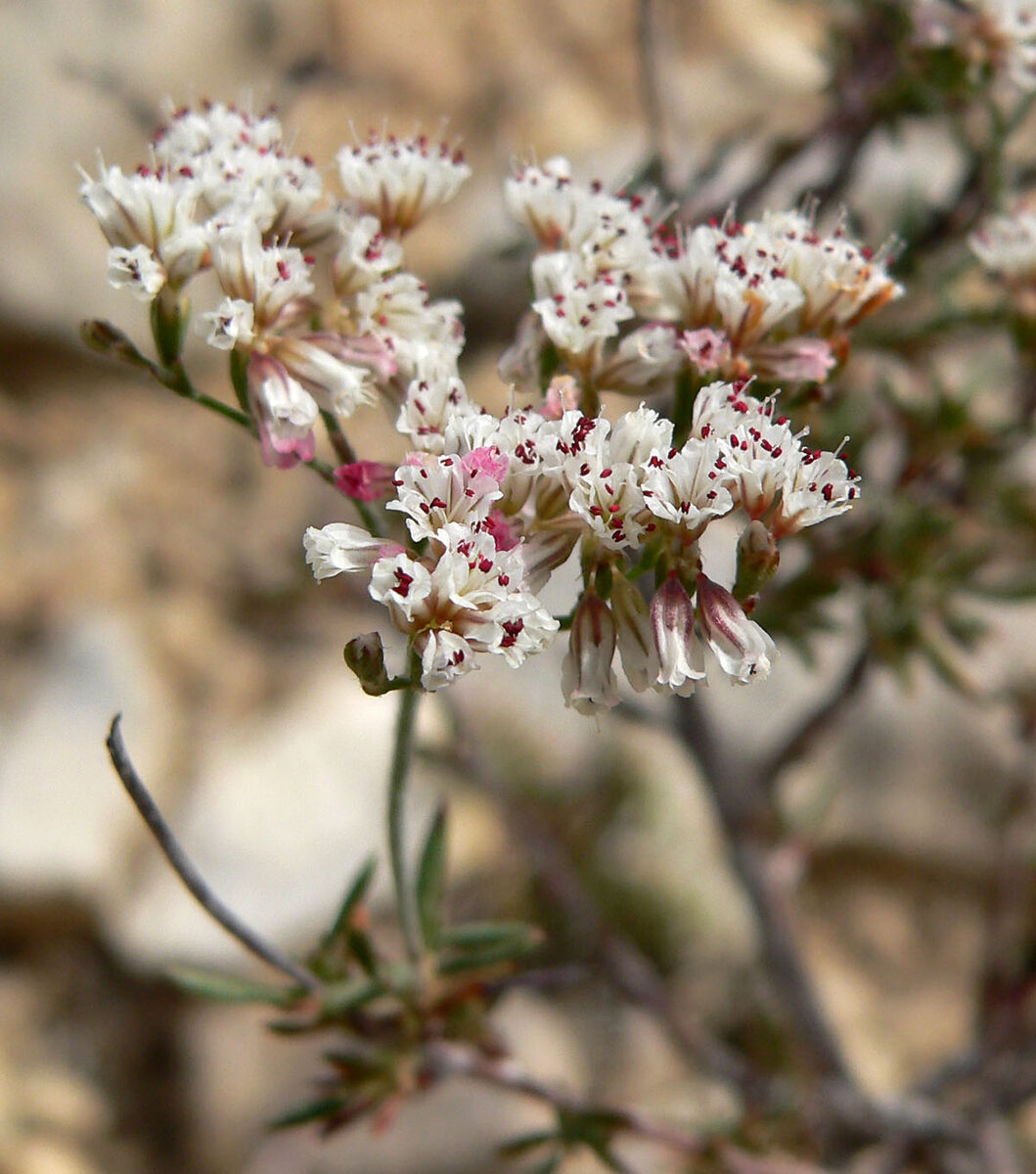
Eriogonum microthecum
Slender Buckwheat, Alpine slender buckwheat, San Bernardino buckwheat, Johnston's buckwheat, Panamin
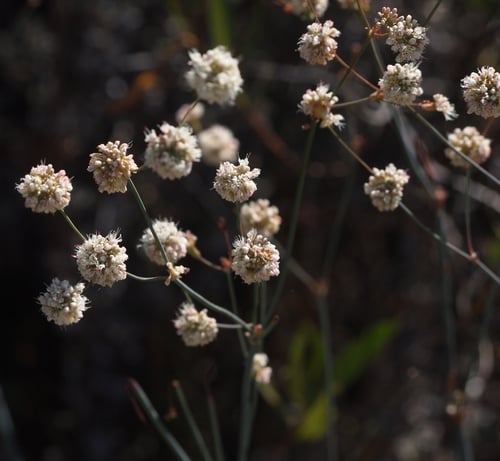
Eriogonum nudum var. oblongifolium
Naked buckwheat