Cnestis palala
(Lour.) Merr.
Palala vines
iNaturalist· cc-by-nc-nd
(c) loupok, some rights reserved (CC BY-NC-ND)
iNaturalist· cc-by-nc
(c) Stan van Remmerden, some rights reserved (CC BY-NC)
iNaturalist· cc-by-nc
(c) Stan van Remmerden, some rights reserved (CC BY-NC)
Description
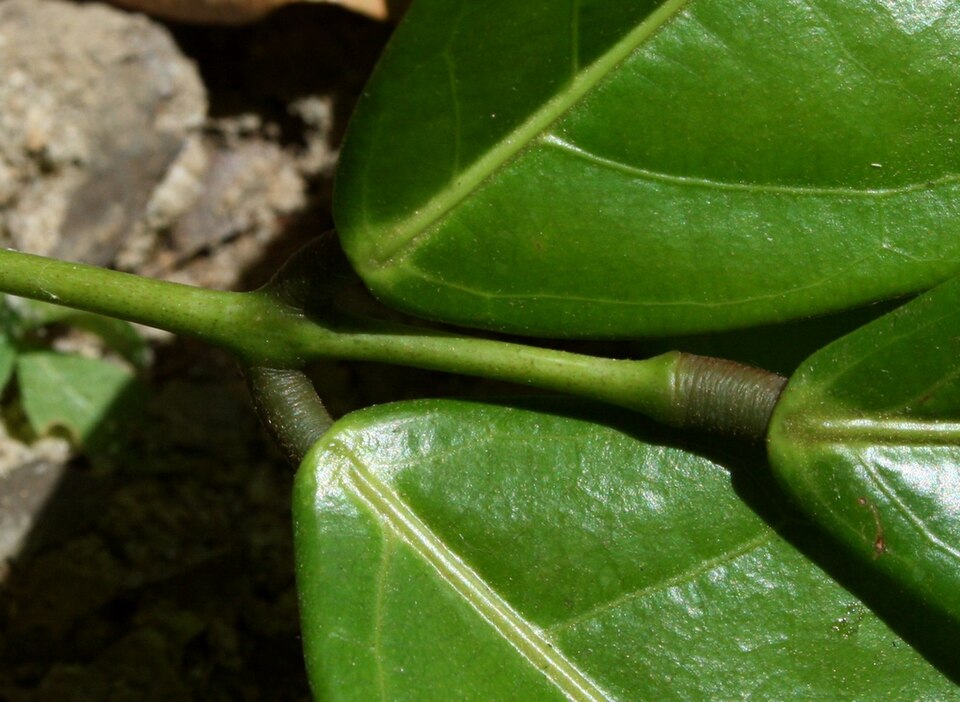
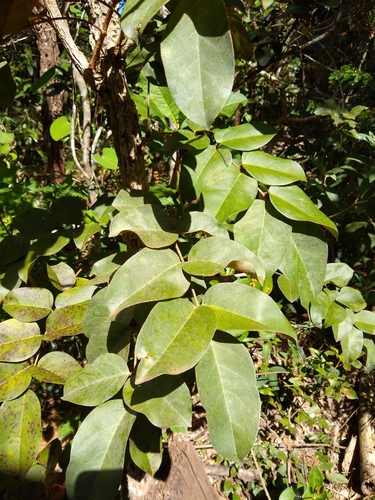
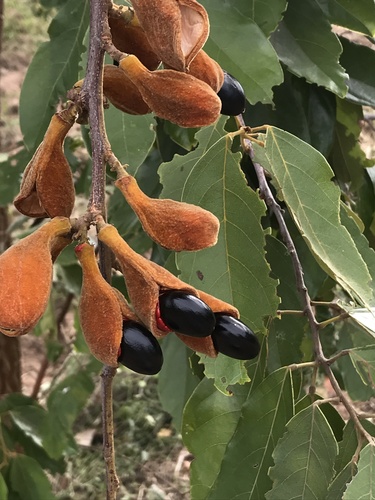
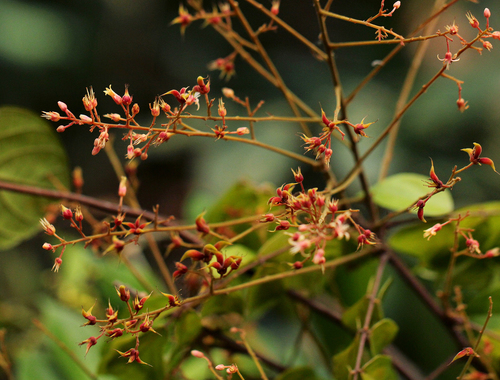
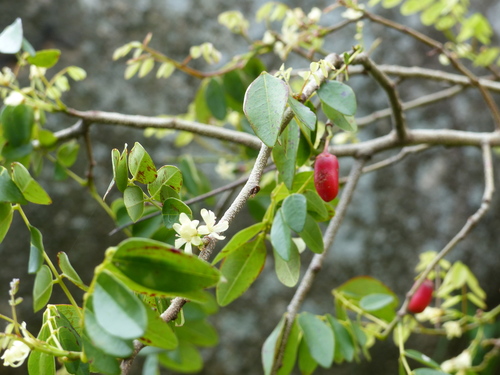
A large shrub. It lies over and can be a creeper. It can be 2-10 m tall. The younger parts are hairy. The leaves have leaflets along the stalk. The leaflets are in pairs but with odd ones among them. The leaflets are 3-8 cm long. The flowers are small and yellow. They have a scent. The fruit is a dry pod with a velvety covering on the outside and bright red inside.
Edible Uses
Seeds. Fruit - possibly eaten. The pear-shaped fruit is sinuously curved, slender, around 35 - 70mm long and 15 - 25mm wide.
Medicinal Uses
The paste of the young leaf is warmed and applied to the body to treat fever during flu.
Distribution
It is a tropical plant. In Hainan in China it grows between 200-300 m above sea level.
Where It Grows
Andamans, Asia, China, India, Indochina, Indonesia, Laos, Malaysia, Myanmar, Philippines, SE Asia, Singapore, Thailand, Vietnam,
Cultivation
Plants can be grown from seeds or cuttings.
Notes
There are 13 Cnestis species. 12 are in Africa.
Synonyms
Also Known As
Andor balimbing, Pinan keroh, Semilat padang, Taw-kyet-louk, Truongkhe
References (4)
- Kurz, S., 1877, The Forest Flora of British Burma. Vol. 1 p 354 (As Cnestis platantha)
- Leenhouts, P.W., 1958, Connaraceae in Flora Malesiana 5(4) p 498
- Sukarya, D. G., (Ed.) 2013, 3,500 Plant Species of the Botanic Gardens of Indonesia. LIPI p 912
- www.efloras.org Flora of China Volume 9