Clausena lansium
(Lour.) Skeels
Wampi, Wampee
iNaturalist· cc-by-nc
(c) davidchiu7, some rights reserved (CC BY-NC)
iNaturalist· cc-by-nc
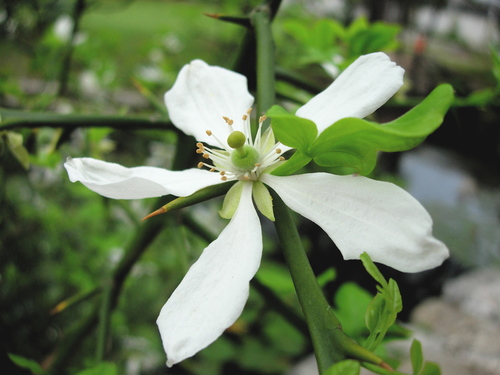
(c) Maria Sze, some rights reserved (CC BY-NC)
iNaturalist· cc-by-nc
(c) José G. Martínez-Fonseca, some rights reserved (CC BY-NC), uploaded by José G. Martínez-Fonseca
Summary
Source: WikipediaClausena lansium is a species of flowering plant in the family Rutaceae. This strongly scented evergreen tree reaches 3–8 m tall in height and is sometimes referred to by the common names wampee or wampi (from Cantonese 黃皮; 黄皮; wong4 pei4-2; 'yellow skin'),
Description
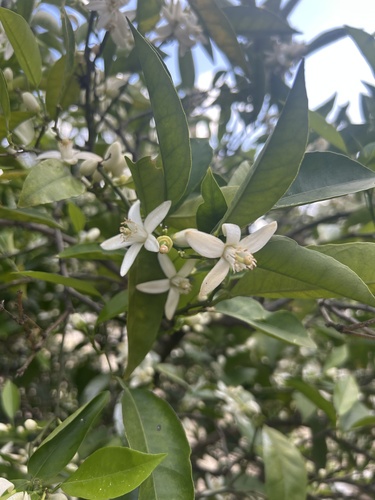
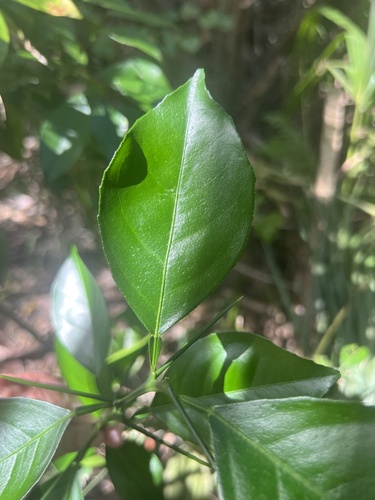
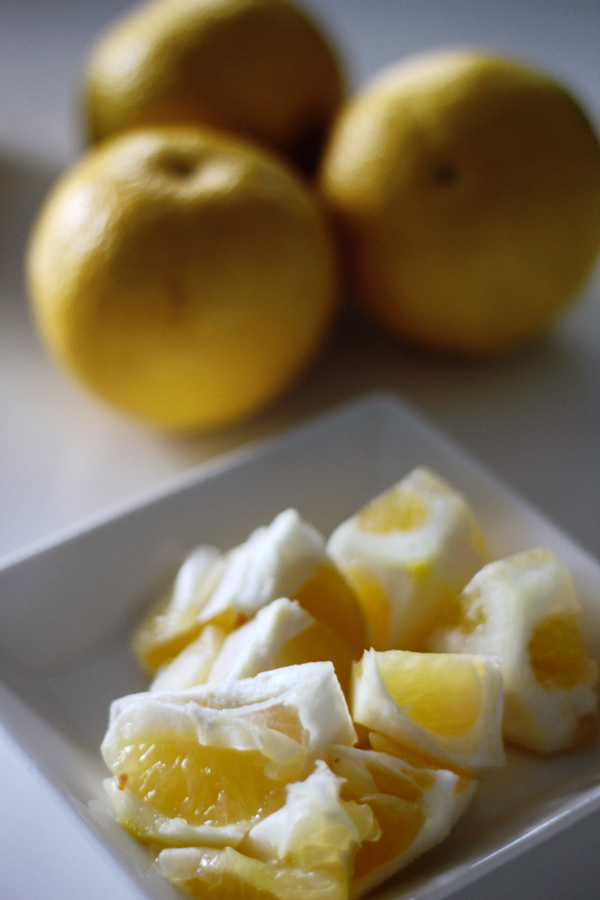
A small evergreen tree. It grows up to 6-10 m high. The leaves are 10-30 cm long and with leaflets along the stalk. There are 7-15 pairs of leaflets which are 7-10 cm long. The flowers are in open flower stalk arrangements on the ends of branches. The fruit is small, round and yellow-green. It has a sweet smell. Fruit are 2.5 cm across. The skin is thin and easily peeled off. It is pliable and leathery. The flesh has five segments which are colourless. There are 1-3 flat green seeds. There are some named cultivated varieties.
Edible Uses
The wampee is cultivated for its fruit, which is grape-sized and fragrant. Its skin and seeds are often eaten alongside the pulp, much like kumquat. The tree is popular in China, Vietnam, the Philippines, Malaysia, and Indonesia. Less frequently, it is grown in India, Sri Lanka, and Queensland; occasionally, it is cultivated even in Florida and Hawaii. It is grown extensively in the New Territories of Hong Kong, and is a popular fruit among the indigenous Hakka villagers.
Traditional Uses
The fruit is eaten fresh or used in jellies. The skin and seeds are not eaten. The fruit can be preserved, dried, made into jams, pies or drinks. The leaves are used in curries. The juice is used for making a fermented champagne like drink.
Medicinal Uses
The leaves, fruits or seeds are all widely employed in China and Vietnam for the treatment of gastro-intestinal problems, including acute and chronic inflammation and ulcers. The fruit is said to have stomachic and cooling effects and to act as a vermifuge. The Chinese say that if one has eaten too many lychees, eating this fruit will counteract the bad effects. The halved, sun dried, immature fruit is a Vietnamese and Chinese remedy for bronchitis. Thin slices of the dried roots are a remedy for bronchitis. The leaves are used in traditional medicine to treat coughs, asthma, hepatitis and dermatological diseases. A decoction of the leaves is used as a hair wash to remove dandruff and preserve the colour of the hair.
Distribution
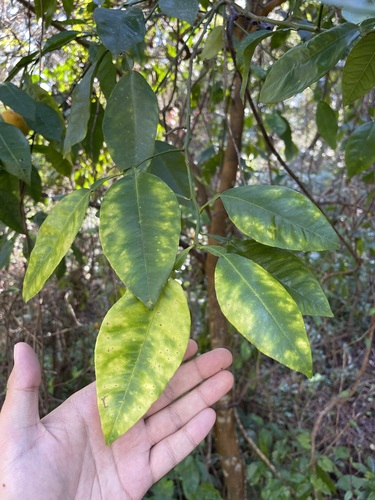
It is native to S. China. A subtropical fruit. It can withstand light frosts. They can grow in dry situations. It can grow on a range of well drained soils. It can grow in acid and alkaline soils. Iron chlorosis occurs on alkaline soils. In the Cairns Botanical Gardens. It suits hardiness zones 10-12. In Sichuan and Yunnan.
Where It Grows
Asia, Australia, Brazil, Cambodia, China*, Cook Islands, Cuba, Hawaii, India, Indochina, Indonesia, Laos, Malaysia, Myanmar, Pacific, Philippines, SE Asia, Singapore, South America, Sri Lanka, Thailand, USA, Vietnam, West Indies,
Cultivation
Plants can be grown from seed. Trees can easily be grown from softwood cuttings, air layering or grafting. As fruit occur near the tips of the branches pruning must only be done carefully.
Propagation
Seed - germination occurs in a few days. Greenwood cuttings Semi-ripe cuttings Air layering Veneer-grafted onto seedlings of the same species. The plant can be grafted onto some citrus rootstock, but long-term survivability is questionable.
Other Uses
The plant can be used as a rootstock for Citrus, provided a few twigs are left growing below the graft. Wood - white and close-grained. Resembles boxwood. The plant's dense growth makes it a good hedge plant.
Production
It is fast growing. Trees start to produce fruit after 3-6 years. It can grow in moderately cool and dry places. Plants fruit in about 6 years. A mature tree can yield 45-50 kg of fruit in a year.
Other Information
It is widely grown in southern China. It is a cultivated food plant.
Notes
There are about 23-30 Clausena species.
Nutrition
| Part | Moisture | kJ | kcal | Protein | Vit A | Vit C | Iron | Zinc |
|---|---|---|---|---|---|---|---|---|
| Fruit | 88.2 | 144 | 34 | 1.4 | 0 | 24 | 0.4 | — |
Synonyms
Also Known As
Huangpi, Lansio, Mafai-jean, Pohon wampi, Song fa dong, Wong Pay, Yellow skin
References (40)
- Ambasta, S.P. (Ed.), 2000, The Useful Plants of India. CSIR India. p 130
- Arora, R. K., 2014, Diversity in Underutilized Plant Species - An Asia-Pacific Perspective. Bioversity International. p 64, p 102
- Barwick, M., 2004, Tropical and Subtropical Trees. A Worldwide Encyclopedic Guide. Thames and Hudson p 119
- Burkill, I.H., 1966, A Dictionary of the Economic Products of the Malay Peninsula. Ministry of Agriculture and Cooperatives, Kuala Lumpur, Malaysia. Vol 1 (A-H) p 585
- Chandrashekara, U. M., 2009, Tree species yielding edible fruit in the coffee-based homegardens of Kerala, India: their diversity, uses and management. Food Sec. 1:361-370 (As Clausena wampi)
Show all 40 references Hide references
- Coronel, R.E., 1982, Fruit Collections in the Philippines. IBPGR Newsletter p 6
- Cull, B.W., 1995, Fruit Growing in Warm Climates. Reed. p 188
- Darley, J.J., 1993, Know and Enjoy Tropical Fruit. P & S Publishers. p 122
- Etherington, K., & Imwold, D., (Eds), 2001, Botanica's Trees & Shrubs. The illustrated A-Z of over 8500 trees and shrubs. Random House, Australia. p 215
- Facciola, S., 1998, Cornucopia 2: a Source Book of Edible Plants. Kampong Publications, p 219
- Food Composition Tables for use in East Asia FAO http://www.fao.org/infoods/directory No. 1010
- Gouldstone, S., 1983, Growing your own Food-bearing Plants in Australia. Macmillan p 132
- Hibbert, M., 2002, The Aussie Plant Finder 2002, Florilegium. p 68
- Hu, Shiu-ying, 2005, Food Plants of China. The Chinese University Press. p 500
- John, L., & Stevenson, V., 1979, The Complete Book of Fruit. Angus & Robertson p 277
- Kiple, K.F. & Ornelas, K.C., (eds), 2000, The Cambridge World History of Food. CUP p 1876
- Lorenzi, H., Bacher, L., Lacerda, M. & Sartori, S., 2006, Brazilian Fruits & Cultivated Exotics. Sao Paulo, Instituto Plantarum de Estuados da Flora Ltda. p 597
- Lyle, S., 2006, Discovering fruit and nuts. Land Links. p 146
- Macmillan, H.F. (Revised Barlow, H.S., et al) 1991, Tropical Planting and Gardening. Sixth edition. Malayan Nature Society. Kuala Lumpur. p 297
- Martin, F. W., et al, 1987, Perennial Edible Fruits of the Tropics. USDA Handbook 642 p 74
- Miguel, E., et al, 1989, A checklist of the cultivated plants of Cuba. Kulturpflanze 37. 1989, 211-357
- Morton, J. F., 1987, Fruits of Warm Climates. Wipf & Stock Publishers p 197
- PROSEA handbook Volume 9 Plants yielding non-seed carbohydrates. p 188
- Purseglove, J.W., 1968, Tropical Crops Dicotyledons, Longmans. p 493
- Recher, P, 2001, Fruit Spirit Botanical Gardens Plant Index. www.nrg.com.au/~recher/ seedlist.html p 1
- Seidemann J., 2005, World Spice Plants. Economic Usage, Botany, Taxonomy. Springer. p 111
- Staples, G.W. and Herbst, D.R., 2005, A tropical Garden Flora. Bishop Museum Press, Honolulu, Hawaii. p 509
- Sukarya, D. G., (Ed.) 2013, 3,500 Plant Species of the Botanic Gardens of Indonesia. LIPI p 203
- Tanaka,
- Tankard, G., 1990, Tropical fruit. An Australian Guide to Growing and using exotic fruit. Viking p 116
- Thitiprasert, W., et al, 2007, Country report on the State of Plant Genetic Resources for Food and Agriculture in Thailand (1997-2004). FAO p 95
- TodaFruta.com.br
- USDA, ARS, National Genetic Resources Program. Germplasm Resources Information Network - (GRIN). [Online Database] National Germplasm Resources Laboratory, Beltsville, Maryland. Available: www.ars-grin.gov/cgi-bin/npgs/html/econ.pl (10 April 2000)
- U.S.D.A. Bur. Pl. Industr. Bull. 168:31. 1909
- Valder, P., 1999, The Garden Plants of China. Florilegium. p 276
- Van Sam, H. et al, 2008, Uses and Conservation of Plant Species in a National Park. A case study of Ben En, Vietnam. Economic Botany 62:574-593
- http://cookislands.bishopmuseum.org
- Wiersema, J. H. & Leon, B., 2013, World Economic Plants. A Standard Reference CRC Press. 2nd Ed. p 182
- World Checklist of Useful Plant Species 2020. Royal Botanic Gardens, Kew
- Zeven, A. C. & de West, J. M. J., 1982, Dictionary of cultivated plants and their regions of diversity. Wageningen. p 41