Clausena anisata
(Willd.) Hook.f. ex Benth
Horsewood, Clausena
iNaturalist· cc-by-nc
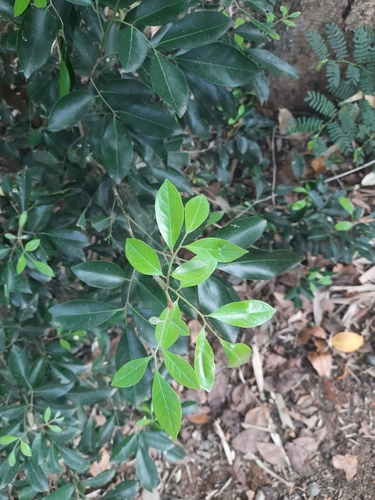
(c) Sharon Louw, some rights reserved (CC BY-NC), uploaded by Sharon Louw
iNaturalist· cc-by-nc
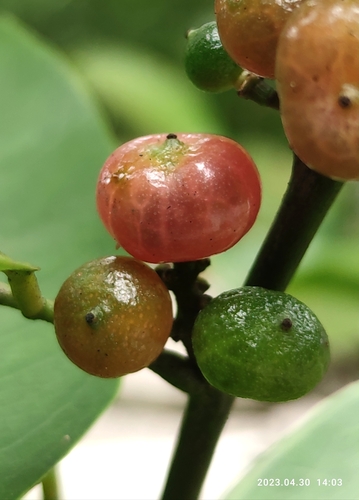
(c) David Maphisa, some rights reserved (CC BY-NC)
iNaturalist· cc-by-nc
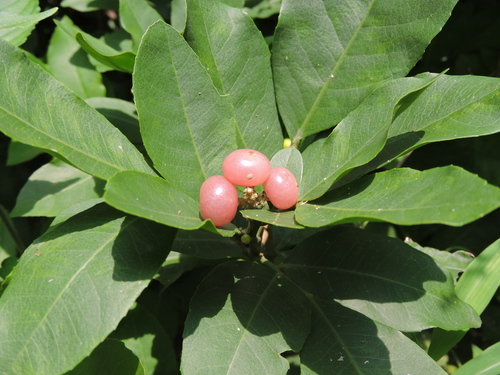
(c) Troos van der Merwe, some rights reserved (CC BY-NC)
Summary
Source: WikipediaClausena anisata is a deciduous shrub or small tree, belonging to the Rutaceae (citrus) family, and widespread in the Sub-Saharan Africa, but absent from drier regions. It is also found in tropical and South-East Asia, India and Sri Lanka. It is cultivated in Malaysia and Indonesia. As with other plants useful to mankind its large range of medicinal properties has led to a global distribution and its growth wherever the climate is suitable. It grows in higher-rainfall regions in savanna, thickets, riverine forest, disturbed areas and secondary forest, up to an altitude of 3000 m. The leaves, which are foetid when bruised, give rise to the common name horsewood or the more descriptive Afrikaans common name perdepis, meaning 'horse urine'. This species is one of 25 in the genus Clausena, first described in 1768 by the Dutch botanist Nicolaas Laurens Burman, and named for the Norwegian clergyman, Peder Claussøn Friis (1545–1614), the translator of the Icelandic historian and poet, Snorri Sturluson.
Description
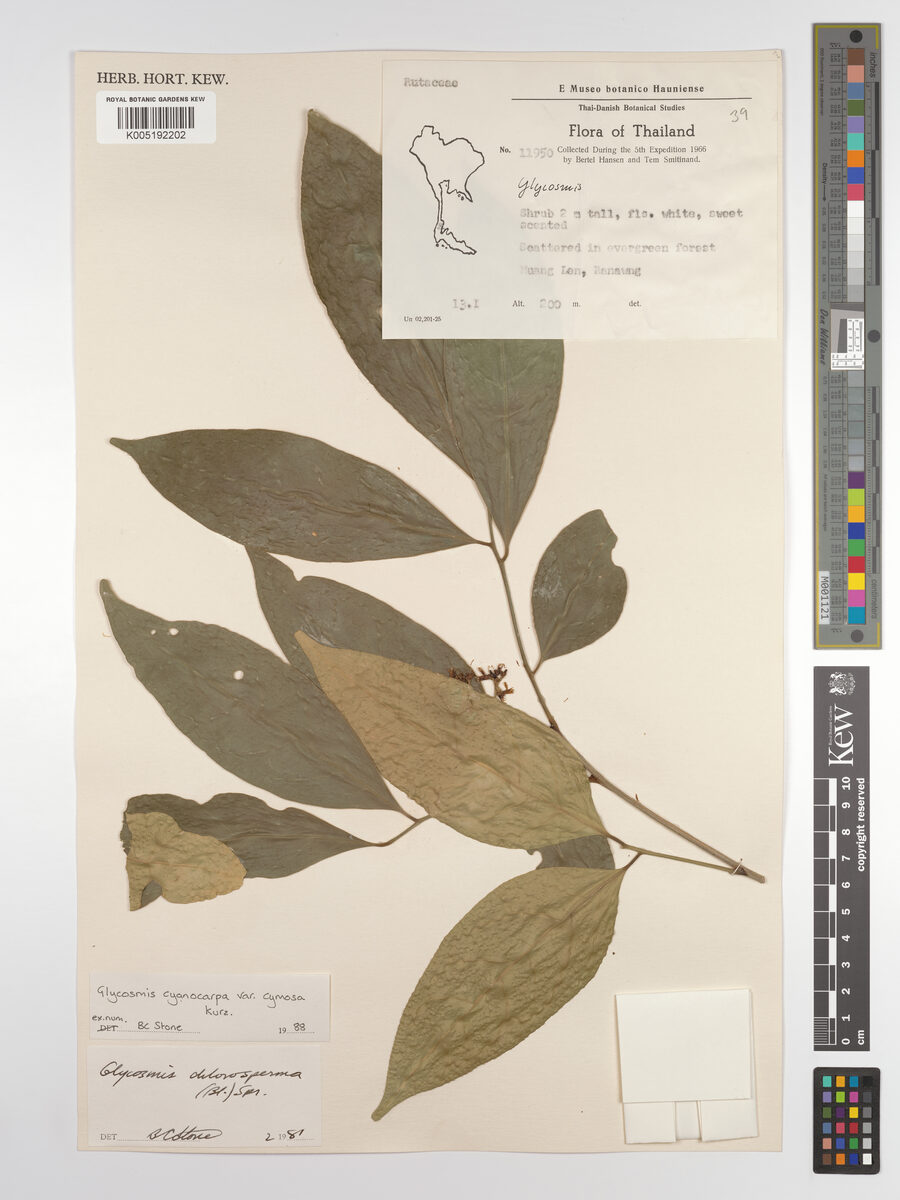
A shrub or small tree. It grows 3-5 m high. It can reach 10 m. The trunk is 20 cm across. The trunk is straight and branches early. The crown is dense and round. The bark is greyish-brown and mottled. The leaves are alternate and compound. There are 10-17 pairs of leaflets and one at the end. The leaflets are 1-6 cm long by 0.6-2.5 cm wide. They are dark green and densely covered with gland dots. The flowers are small and white or yellow. They are 10 mm across. They occur in branched sprays. These can be 16 cm long. The fruit is round and fleshy. They are 7 mm across. They become red to black when mature.
Edible Uses
The fruits have a sweet taste and are eaten locally. Fleshy, with a pleasant flavour, they are the size of a cherry. The red to purple-black, round to ovoid fruits can be 8 - 15mm in diameter, containing 1 - 3 seeds
Traditional Uses
The fruit are eaten fresh. The leaves are used as a spice.
This uses section is brief — help expand it
Medicinal Uses
This species is used in treating an uncommonly wide range of ailments and conditions. Decoctions of the leaves or roots are taken for gastro-intestinal disorders, fever, pneumonia, headache, hypotension, sore throat and sinusitis, venereal diseases, as an aphrodisiac and anthelmintic, as a tonic for pregnant women, and as a tonic for infants to prevent rickets and to control convulsions. Root decoctions and infusions are also taken for whooping cough, malaria, syphilis and kidney ailments, irregular menses, threatening abortion, skin diseases and epilepsy, and given to women before and after parturition to ease delivery and to expel blood from the uterus, and later to boost milk production. Roots are chewed to combat indigestion. Crushed leaves are used as an antiseptic and analgesic, and are applied to open wounds, mouth infections, otitis and abscesses, also burns, haemorrhoids, rheumatism and general body pains. Crushed leaves are also used to treat wounds in domestic animals, and as a snake-bite antidote. Dried leaves are widely used as an arthropod repellent, such as a filling material for mattresses and pillows against fleas, lice and bedbugs. The fruits are sweet and readily eaten by people and other animals. Stem bark is pounded and used as rope.
Distribution
A tropical plant. It grows in evergreen forest. It is in low altitude woodland and palm groves near streams. It suits high rainfall areas. In South Africa it grows from sea level to 2200 m altitude. It is a light demanding and drought tolerant tree. It grows in open land and around villages. In Sikkim it grows between 900-1,700 m above sea level.
Where It Grows
Africa, Angola, Asia, Benin, Burundi, Cameroon, Central Africa, Central African Republic, CAR, China, Congo, East Africa, Eswatini, Ethiopia, Guinea, Guinée, Himalayas, India, Indian Ocean islands, Indochina, Indonesia, Malawi, Mozambique, Nigeria, Northeastern India, Philippines, Rwanda, Sao Tome and Principe, SE Asia, Sikkim, South Africa, Southern Africa, Swaziland, Thailand, Vietnam, West Africa, Zambia, Zimbabwe,
Cultivation
The flowers are sweet-scented and that the leaves have a strong and not unpleasant smell which, however, scarcely resembles aniseed.
Other Uses
Bundles of the plant are widely used as an insect repellent. The powdered root is known to be lethal to snails. The twigs are widely used for toothbrushes. The stems are used for walking sticks.
Notes
There are about 30 Clausena species.
Synonyms
Also Known As
Azizinma, Ewe kikani, Funata, Gbozohouin, Hong bi rung, Kaattminthiri, Hirmachayi, Limich, Limicho, Mkangano, Mokolokale, Muvengahonye, Muvhunambezo, Sanga, Sidemyok, Tchakatouma, Thapata chedi, Ulmayi, Umbangadloti, Umnikalampimba, Xirdhoo
References (30)
- Avouhou, H. T., et al, 2012, Ethnobotanical Factors Influencing the Use and Management of Wild Edible Plants in Agricultural Environments in Benin. Ethnobotany Research & Applications Vol 10:571-592
- Balemie, K., & Kebebew, F., 2006, Ethnobotanical study of wild edible plants in Derashe and Kucha Districts, South Ethiopia. Journal of Ethnobiology and Ethnomedicine.
- Chapman, J. D. & Chapman, H. M., 2001, The Forest Flora of Taraba and Andamawa States, Nigeria. WWF & University of Canterbury. p 201
- Chandrashekara, U. M., 2009, Tree species yielding edible fruit in the coffee-based homegardens of Kerala, India: their diversity, uses and management. Food Sec. 1:361-370 (As Clausena willdenowii)
- Emire, A., et al, 2021, Ethnobotanical Study of Wild Edible Fruit Tree and Shrub Species in Adola Rede and Odo Shakiso Midland Districts of Guji Zone, Southern Ethiopia. Int. J. Adv. Res. Biol. Sci. (2021). 8(12): 96-109
Show all 30 references Hide references
- Exell, A.W. et al, (Ed), 1963, Flora Zambesiaca Vol 2 Part 1 Crown Agents, London. p 191, 192
- Forest Inventory and Planning Institute, 1996, Vietnam Forest Trees. Agriculture Publishing House p 635 (As Clausena duniana)
- Fowler, D. G., 2007, Zambian Plants: Their Vernacular Names and Uses. Kew. p 59
- J. D. Hooker & G. Bentham in W. J. Hooker, Niger Fl. 256. 1849 "Claussena"
- Jardin, C., 1970, List of Foods Used In Africa, FAO Nutrition Information Document Series No 2.p 129
- Kafoutchoni, K. M., et al, 2018, Species richness, cultural importance, and prioritization of wild spices for conservation in the Sudano-Guinean zone of Benin (West Africa). Journal of Ethnobiology and Ethnomedicine. 14:67
- Kannan, M., et al, 2015, Ethnobotanical survey on wild edible plants of Kalrayan Hills, Salem District, Tamil Nadu, India. Global J. Res. Med Plants & Indigen. med. 4(12): 236-246
- Long, C., 2005, Swaziland's Flora - siSwati names and Uses http://www.sntc.org.sz/flora/
- Lulekal, E., et al, 2011, Wild edible plants in Ethiopia: a review on their potential to combat food insecurity. Afrika Focus - Vol. 24, No 2. pp 71-121
- Malaisse, F., 1997, Se nourrir en floret claire africaine. Approche ecologique et nutritionnelle. CTA., p 91.
- Martin, F. W., et al, 1987, Perennial Edible Fruits of the Tropics. USDA Handbook 642 p 73
- Molla, A., Ethiopian Plant Names. http://www.ethiopic.com/aplants.htm
- Ogle & Grivetti, 1985,
- Palgrave, K.C., 1996, Trees of Southern Africa. Struik Publishers. p 351
- Peters, C. R., O'Brien, E. M., and Drummond, R.B., 1992, Edible Wild plants of Sub-saharan Africa. Kew. p 178
- Reis, S. V. and Lipp, F. L., 1982, New Plant Sources for Drugs and Foods from the New York Botanical Garden herbarium. Harvard. p 144
- Ruiters-Welcome, A. K., 2019, Food plants of southern Africa. Ph.D. thesis. Univ. of Johannesburg p 98
- Senbeta, F., et al, 2013, Diversity of Useful Plants in the Coffee Forests of Ethiopia. Ethnobotany Research & Applications 11:049-069
- Sundriyal, M., et al, 1998, Wild edibles and other useful plants from the Sikkim Himalaya, India. Oecologia Montana 7:43-54 (As Clausena willdenowii)
- Sundriyal, M., et al, 2004, Dietary Use of Wild Plant Resources in the Sikkim Himalaya, India. Economic Botany 58(4) pp 626-638 (As Clausena willdenowii)
- Swaziland's Flora Database http://www.sntc.org.sz/flora
- Welcome, A. K. & Van Wyk, B.-E., 2019, An inventory and analysis of the food plants of southern Africa. South African Journal of Botany 122 (2019) 136–179
- White, F., Dowsett-Lemaire, F. and Chapman, J. D., 2001, Evergreen Forest Flora of Malawi. Kew. p 511
- World Checklist of Useful Plant Species 2020. Royal Botanic Gardens, Kew
- www.zimbabweflora.co.zw 2011