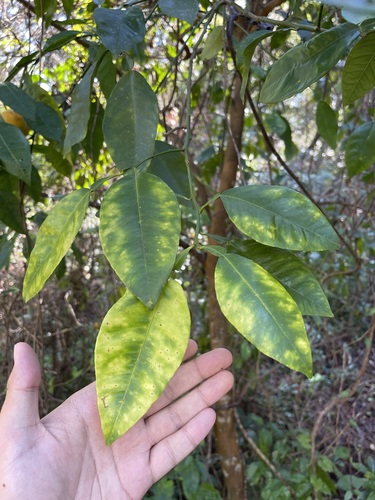
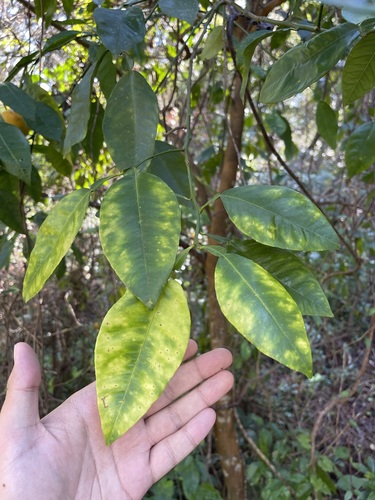
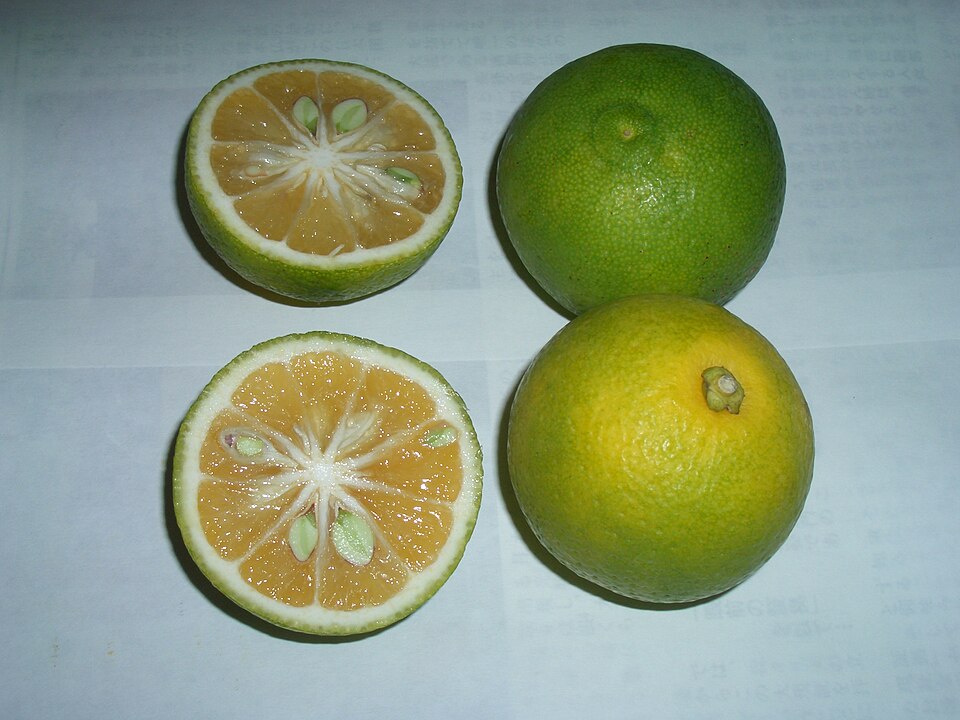
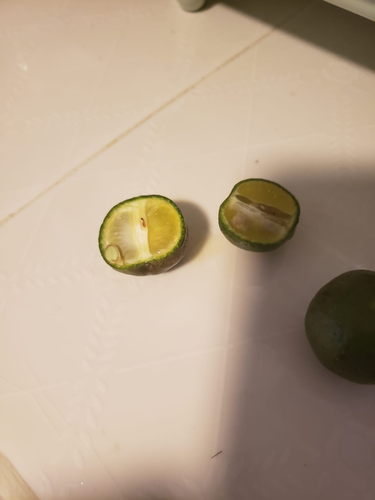
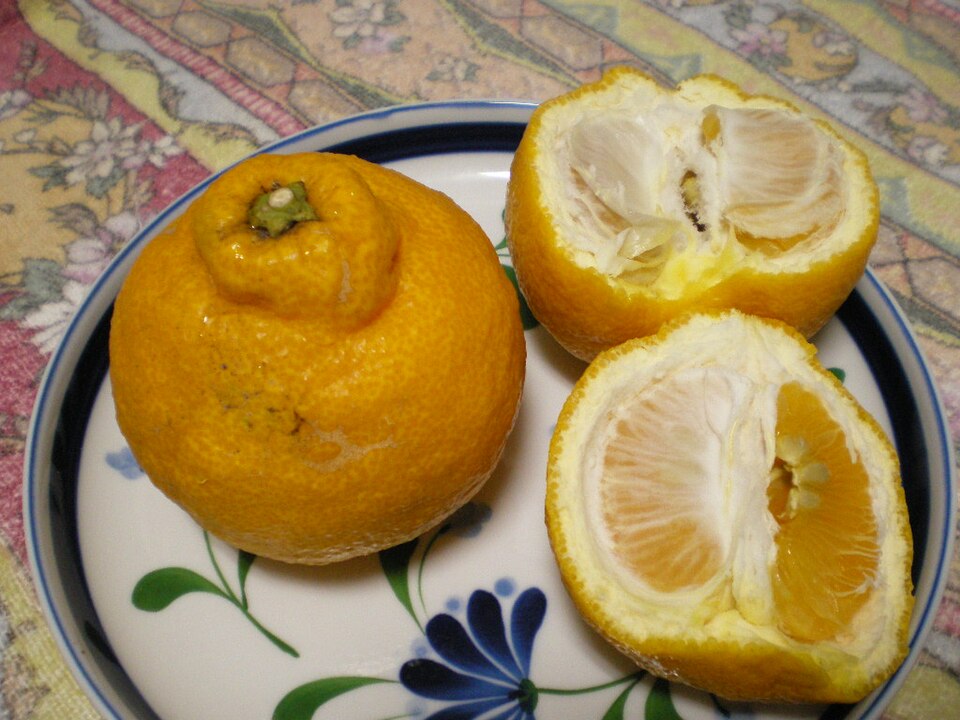
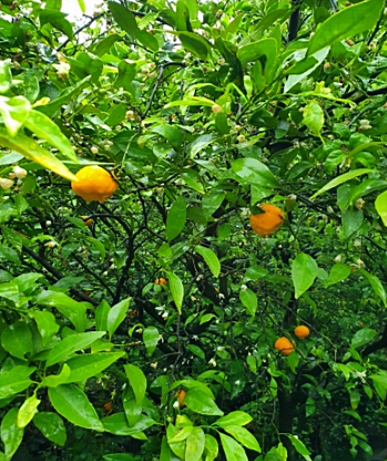
Citrus nobilis
Lour. non Auct.Al.
King orange, Tangor
wikimedia· cc-by-sa
Wikimedia Commons - 阿橋 HQ
wikimedia· cc-by-sa
Wikimedia Commons - James Steakley
Description
Possibly a natural hybrid between mandarin and sweet orange. There are several named cultivated varieties.
This description is brief — help expand it
Edible Uses
The fruit are eaten raw.
Traditional Uses
The fruit are eaten raw.
This uses section is brief — help expand it
Distribution
A subtropical plant.
Where It Grows
Africa, Asia, Australia, Indonesia, Japan, Madagascar, Malaysia, Mediterranean, North America, Pacific, Philippines, Sao Tome and Principe, SE Asia, South Africa, Southern Africa, USA,
Cultivation
Three main climates are suitable for commercial citrus production - tropical climates, subtropical with winter rain such as in the Mediterranean and semitropical with summer rainfall as found in Florida and southern Brazil. The optimal temperatures for citrus cultivation range between 25 - 30°c, with the coldest month having an average minimum of at least 15°c. Growth generally ceases below 13°c and above 38°c. If there are dry periods of more than three months, then irrigation will be necessary. Prefers a deep, well-drained but moisture-retentive loamy soil in full sun. Prefers a pH in the range 5 - 6.
Propagation
The seed is best sown in containers as soon as it is ripe, after thoroughly rinsing it. Sow stored seed in containers as soon as possible]. Germination usually takes place within 2 - 3 weeks at 13°c. Seedlings are liable to damp off so they must be watered with care and kept well ventilated. The seed is usually polyembryonic, two or more seedlings arise from each seed and they are genetically identical to the parent but they do not usually carry any virus that might be present in the parent plant. When large enough to handle, prick the seedlings out into individual pots and grow them on until they are 10cm or more tall before planting out into their permanent positions. Cuttings of half-ripe wood, July/August in a frame. This species grows easily from cuttings. Layering in October.
Notes
There are 20 Citrus species. Several hybrids have been formed.
Nutrition
| Part | Moisture | kJ | kcal | Protein | Vit A | Vit C | Iron | Zinc |
|---|---|---|---|---|---|---|---|---|
| Fruit | 85.9 | 209 | 50 | 0.9 | — | — | — | 0.1 |
Synonyms
Also Known As
Kunenbo, Mandarina
References (16)
- AAK, 1994, Jeruk, Penerbit Kanisius, Jogyakarta. p 191
- Bodkin, F., 1991, Encyclopedia Botanica. Cornstalk publishing, p 262
- Burkill, I.H., 1966, A Dictionary of the Economic Products of the Malay Peninsula. Ministry of Agriculture and Cooperatives, Kuala Lumpur, Malaysia. Vol 1 (A-H) p 580
- Chin, H.F., & Yong, H.S., 1996, Malaysian Fruits in Colour. Tropical press, Kuala Lumpur p 50
- Coronel, R.E., 1982, Fruit Collections in the Philippines. IBPGR Newsletter p 9
Show all 16 references Hide references
- Facciola, S., 1998, Cornucopia 2: a Source Book of Edible Plants. Kampong Publications, p 218
- Fl. cochinch. 2:466. 1790
- Hibbert, M., 2002, The Aussie Plant Finder 2002, Florilegium. p 68
- Jardin, C., 1970, List of Foods Used In Africa, FAO Nutrition Information Document Series No 2.p 128
- Lazarides, M. & Hince, B., 1993, Handbook of Economic Plants of Australia, CSIRO. p 61
- Lembaga Biologi Nasional, 1977, Buah-Buahan, Balai Pustaka, Jakarta. p 50
- Morton,
- Priyadi, H., et al, Five hundred plant species in Gunung Halimun Salak National Park West Java. A checklist including Sundanese names, distribution and use. CIFOR, FFPRI, SLU p 64
- USDA, ARS, National Genetic Resources Program. Germplasm Resources Information Network - (GRIN). [Online Database] National Germplasm Resources Laboratory, Beltsville, Maryland. Available: www.ars-grin.gov/cgi-bin/npgs/html/econ.pl (10 April 2000)
- Wiersema, J. H. & Leon, B., 2013, World Economic Plants. A Standard Reference CRC Press. 2nd Ed. p 180
- Yamamoto, Masashi, 2014, Citrus Genetic Resources Grown on the Ryuku Uslands, Japan. Kagoshima University Research Center for the Pacific Islands. Occasional Papers No. 54 p 9