Claoxylon longifolium
(Blume) Engl. ex Hassk
Langa tree
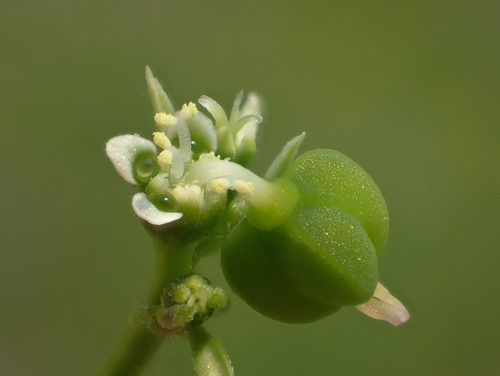
iNaturalist· cc-by-nc-sa
(c) Smithsonian Institution, National Museum of Natural History, Department of Botany, some rights reserved (CC BY-NC-SA)
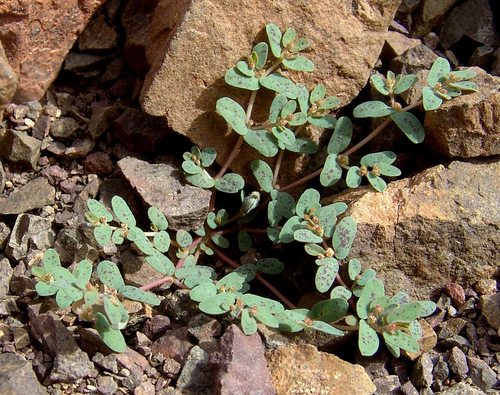
iNaturalist· cc-by
(c) pbsg, some rights reserved (CC BY)
Summary
Source: WikipediaClaoxylon longifolium is a species of flowering plants in the family Euphorbiaceae. It is found in Assam, South-East Asia, New Guinea and Caroline Islands.
Description
A shrub or small tree 8-10 m tall. It can be 20 m tall. The small branches are slender and angular. The twigs are hollow. The leaves are alternate and simple. The leaves are rough to touch. The flowers are 4 mm across. They are white to yellow and in groups. The fruit are 1 cm long and green to brown. They are 3 lobed capsules.
Edible Uses
The young leaves are cooked and eaten, and are sold in local markets.
Traditional Uses
The young leaves are cooked and eaten.
This uses section is brief — help expand it
Distribution
A tropical plant. It grows on the edge of forest. It prefers wet, deep, rich and well-drained soil. It grows up to 1,500 m above sea level. It can be on limestone. In Yunnan.
Where It Grows
Africa, Asia, Brunei, Cambodia, China, India, Indochina, Indonesia, Laos, Malaysia, Myanmar, Pacific, Papua New Guinea, PNG, Philippines, SE Asia, Solomon Islands, Thailand, Vietnam,
Cultivation
Plants can be grown from seeds or cuttings.
Other Information
The leaves are sold in markets.
Notes
There are about 75-80 Claoxylon species.
Synonyms
Also Known As
Daun manis, Gisap, Kayu langa, Kesepang, Ketupuk kuyam, Ki lehat, Loc mai la dai, Oropor, Pohon kayulanga, Sayor salang, Sepang, Sepupang, Sitapu, Sitopu
References (10)
- Burkill, I.H., 1966, A Dictionary of the Economic Products of the Malay Peninsula. Ministry of Agriculture and Cooperatives, Kuala Lumpur, Malaysia. Vol 1 (A-H) p 583
- Chai, P. P. K. (Ed), et al, 2000, A checklist of Flora, Fauna, Food and Medicinal Plants. Lanjak Entimau Wildlife Sanctuary, Sarawak. Forestry Malaysia & ITTO. p 159
- Forest Inventory and Planning Institute, 1996, Vietnam Forest Trees. Agriculture Publishing House p 201
- Martin, F.W. & Ruberte, R.M., 1979, Edible Leaves of the Tropics. Antillian College Press, Mayaguez, Puerto Rico. p 88, 191
- Ochse, J.J. et al, 1931, Vegetables of the Dutch East Indies. Asher reprint. p 265
Show all 10 references Hide references
- Okigbo, B.N., Vegetables in Tropical Africa, in Opena, R.T. & Kyomo, M.L., 1990, Vegetable Research and development in SADCC countries. Asian Vegetable Research and development Centre. Taiwan. p 38
- Pawera, L., et al, 2020, Wild Food Plants and Trends in Their Use: From Knowledge and Perceptions to Drivers of Change in West Sumatra, Indonesia, Foods. 2020, 9, 1240
- Slik, F., www.asianplant.net
- Sukarya, D. G., (Ed.) 2013, 3,500 Plant Species of the Botanic Gardens of Indonesia. LIPI p 202
- World Checklist of Useful Plant Species 2020. Royal Botanic Gardens, Kew