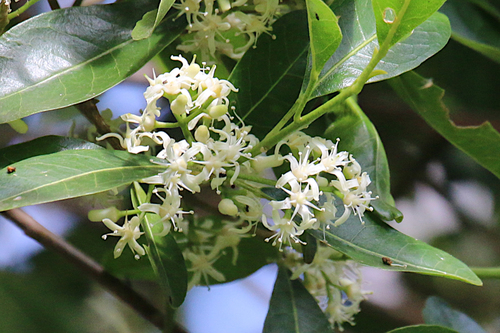
Citrofortunella microcarpa x
(Bunge) Wijnands
Calamondin orange, Panama orange
iNaturalist· cc-by-nc
(c) Steve Gallagher, some rights reserved (CC BY-NC)
iNaturalist· cc-by-nc
(c) Steve Gallagher, some rights reserved (CC BY-NC)
iNaturalist· cc-by-nc
(c) Steve Gallagher, some rights reserved (CC BY-NC)
Description
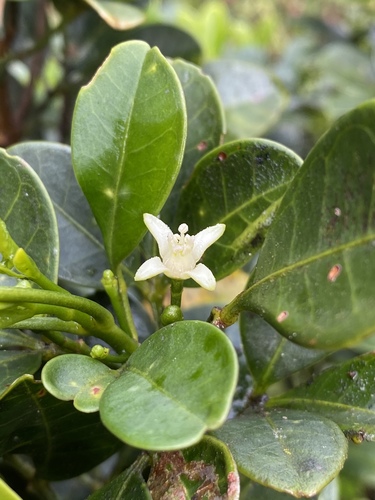
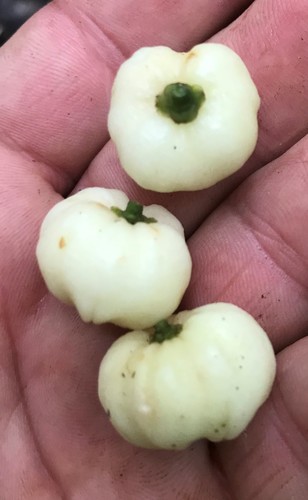
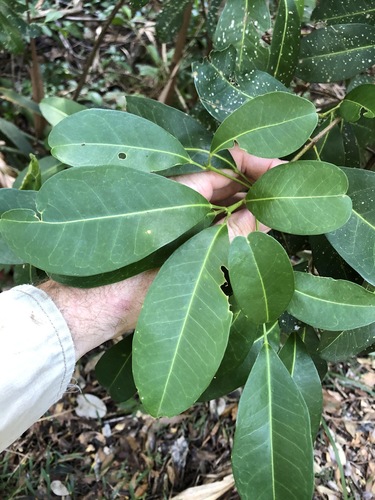
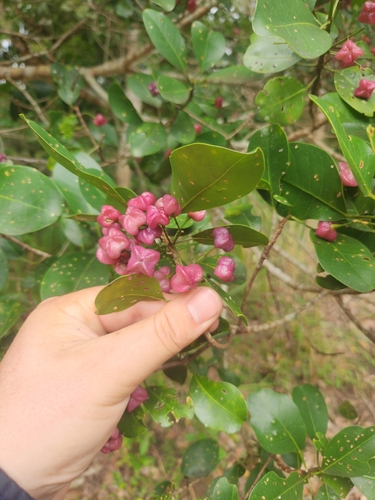
Probably a natural hybrid of Citrus reticulata and Fortunella sp. A small citrus tree. It is 2-8 m tall. It is slightly thorny. The leaves are smaller than most citrus. They are 4-7 cm long. They are evergreen and alternate. They are broadly oval and dark green and glossy on the upper surface and yellowish-green underneath. The flowers have five oval and pure white petals. They are 2.5 cm across. The flowers occur singly or on small clusters or 2-3 in the axils of leaves near the ends of stems. The fruit resemble a tangerine. They are about 4 cm across. Fruit are sweet, juicy and acidic. There are 6-10 segments and the pulp is orange. They can be seedless or have small, greenish, oval and pointed seeds.
Edible Uses
The fruits are sour and are often used for preserves or cooking. The calamansi bears a small citrus fruit that is used to flavor foods and drinks. Despite its outer appearance and its aroma, the taste of the fruit itself is quite sour, although the peel is sweet. Calamansi marmalade can be made in the same way as orange marmalade. The fruit is a source of vitamin C. The fruit can be frozen whole and used as ice cubes in beverages such as tea, soft drinks, water, and cocktails. The juice can be used in place of that of the common Persian lime (also called Bearss lime). The juice is extracted by crushing the whole fruit, and makes a flavorful drink similar to lemonade. A liqueur can be made from the whole fruits, in combination with vodka and sugar.
Traditional Uses
The fruit can be eaten raw. They are acid. They are pickled, preserved and used in sauces, chutneys, and flavouring. They are also used for drinks and jellies. The whole fruit fried in coconut oil with various seasonings are eaten in curries. The preserved peel is used to flavour other foods.
Distribution
It grows in tropical places. It is best grown in full sun but can tolerate light shade. They can tolerate some salty and seaside conditions. They have little tolerance of frost. They can grow on a range of soils. Plants need adequate fertility and sometimes need micronutrients. At MARDI.
Where It Grows
Asia, Brazil, China*, Colombia, Hawaii, Malaysia, North America, Pacific, Philippines, SE Asia, South America, USA,
Cultivation
Plants are grown from seed. Seeds can produce 3-5 seedlings. Often seedlings produce true to type. Seeds are washed and usually germinate in 21 days. Cuttings can be used. These root easily. Plants need to be 3-6 m apart.
Production
Plants from cuttings produce fruit is 2 years. Fruit take 8-12 months to mature. Fruit can be produced year round in warmer climates. Fruit should be picked when fully ripe.
Notes
There are 20 Citrus species. Several hybrids have been formed.
Synonyms
Also Known As
Golden lime, Kalamansi, Musk lime, Scarlet lime
References (10)
- Burkill, I.H., 1966, A Dictionary of the Economic Products of the Malay Peninsula. Ministry of Agriculture and Cooperatives, Kuala Lumpur, Malaysia. Vol 1 (A-H) p 580
- Call, C. A., et al, 2004, Participatory Rural Appraisal in the Upland Ecosystem of Mt Malindang, Misamis Occidental, Philippines. Biodiversity Research Programme for Development in Mindanao. p 60
- Elevitch, C.R.(ed.), 2006, Traditional Trees of the Pacific Islands: Their Culture, Environment and Use. Permanent Agriculture Resources, Holualoa, Hawaii. p 245
- John, L., & Stevenson, V., 1979, The Complete Book of Fruit. Angus & Robertson p 92
- Kiple, K.F. & Ornelas, K.C., (eds), 2000, The Cambridge World History of Food. CUP p 1743
Show all 10 references Hide references
- Lyle, S., 2006, Discovering fruit and nuts. Land Links. p 123
- Milow, P., et al, 2013, Malaysian species of plants with edible fruits or seeds and their evaluation. International Journal of Fruit Science. 14:1, 1-27
- Roa, J. A. G. & Boada, D. S. G., 2018, Fundación para el Fortalecimiento de la Fruticultura y Plantas Alimenticias no Convencionales en Colombia.
- Staples, G.W. and Herbst, D.R., 2005, A tropical Garden Flora. Bishop Museum Press, Honolulu, Hawaii. p 501 (Drawing)
- Zawiah, N. & Othaman, H., 2012, 99 Spesies Buah di FRIM. Institut Penyelidikan Perhutanan Malaysia. p 80