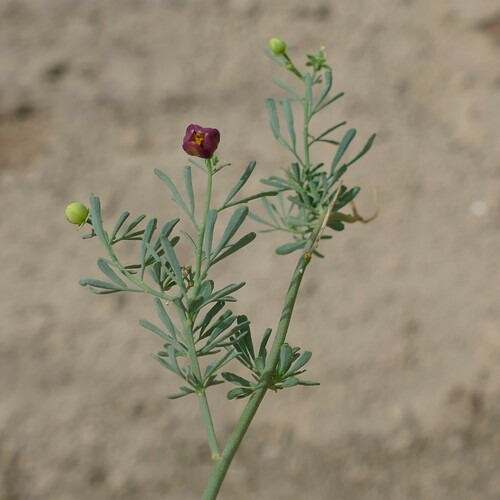
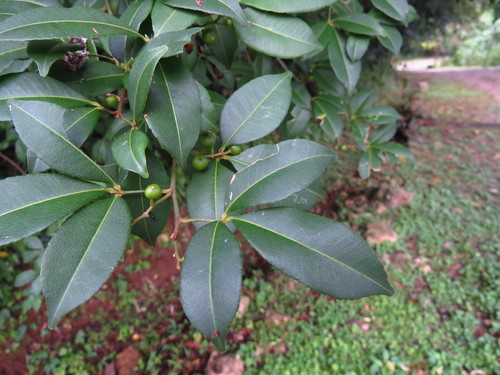
Citrus medica
L.
Citron
iNaturalist· cc-by
(c) Peter A. Mansfeld, some rights reserved (CC BY)
iNaturalist· cc-by-sa
(c) Johann Werfring, some rights reserved (CC BY-SA)
iNaturalist· cc-by
(c) Amada44, some rights reserved (CC BY)
Summary
Evergreen shrub growing 4 m tall by 3 m wide at a medium rate. Hardy to UK zone 10, frost tender. Flowers are insect and bee-pollinated; self-fertile. Notable for attracting wildlife. Tolerates light sandy, medium loamy, and heavy clay soils with good drainage. Grows in mildly acidic and neutral soils. Requires full sun and accepts either dry or moist soil.
Description
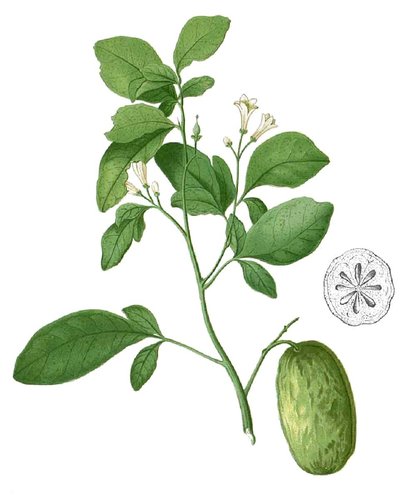
A small evergreen tree. It grows up to 3-5 m high and spreads to 2 m across. The stem is stout, erect and thorny. The leaves are green and 20 cm x 10 cm. The tree has fat spines. The leaves have teeth along the edge. The leaf stalk does not have wings. The flowers are white, star shaped and with 5 petals. They have a scent. The fruit are large and long, with a rough skin. The fruit grows to 15-25 cm long by 10-15 cm wide. The flesh is white. The fruit does not have a lot of juice. There are several named cultivated varieties.
Edible Uses
The fruits are made into marmalade, used in salads, or incorporated into liqueurs. The thick rind can be sliced and added to salads or candied for use as a flavouring in cakes, puddings, and confectionery; it is a commercial source of candied peel and is traditionally candied after being cleaned by seawater fermentation. Juice from improved cultivars can be extracted to make beverages and desserts. The lemon-shaped fruit measures 10–20cm long and is used in Asian and Mediterranean cuisine, traditional medicines, perfumery, and religious rituals. Citrus fruits are generally harvested from late autumn to early spring, depending on variety and local climate.
Traditional Uses
The thick layer of inner white skin is used as candied peel. It is also added to salads and used in fruit cakes. The juice of some kinds is used for drinks. The fruit are used for marmalade. Caution: The fruit contain coumarin that with sunlight can cause dermatitis in some people.
Medicinal Uses
Fresh shoots, leaves, flowers, fruits, and seeds have all been used in traditional medicinal preparations to treat asthma, arthritis, headache, stomachache, intestinal parasites, and certain psychological disturbances. Root decoctions are reportedly used in China to treat respiratory problems and backache. The fruits are used to treat malaria, coughs, and colds, and the stem is used in febrifuge pills. Contemporary research has shown that various parts of the plant exhibit anti-catarrhal, capillary-protective, anti-hypertensive, diuretic, antibacterial, antifungal, anthelmintic, antimicrobial, analgesic, antioxidant, anticancerous, antidiabetic, estrogenic, antiulcer, cardioprotective, and antihyperglycemic properties. A nanoemulsion of essential oil from Citrus medica var. sarcodactylis has demonstrated antioxidant, antibacterial, and antibiofilm activity. Properties of specific cultivars have been recognised as relevant in treating cancer, diabetes, and Alzheimer's disease.
Distribution
A subtropical plant. It prefers rich, moist soils. The soils need to be well aerated and not waterlogged. They should be in a protected sunny position. They are drought and frost tender. It needs temperatures between 12°C and 35°C. It suits hardiness zones 9-11. In Yunnan.
Where It Grows
Africa, Andamans, Asia, Australia, Bangladesh, Bhutan, Brazil, Cambodia, Cameroon, Cape Verde, Central Africa, Central America, China, Colombia, Congo DR, Cook Islands, Costa Rica, Côte d'Ivoire, Cuba, Dominican Republic, East Africa, Ecuador, Ethiopia, Europe, Fiji, Greece, Guinea, Guinée, Guyana, Haiti, Hawaii, Himalayas, India, Indochina, Indonesia, Iran, Iraq, Israel, Italy, Ivory Coast, Japan, Korea, Laos, Madagascar, Malaysia, Maldives, Mediterranean, Mexico, Middle East, Myanmar, Nepal, Nicaragua, North Africa, North America, Northeastern India, Pacific, Pakistan, Papua New Guinea, PNG, Peru, Philippines, Samoa, SE Asia, Senegal, Serbia, Slovenia, Solomon Islands, South Africa, Southern Africa, South America, Spain, Sri Lanka, Suriname, Taiwan, Tanzania, Thailand, Tibet, Tonga, Turkey, Türkiye, USA, Vanuatu, Vietnam, West Africa, West Indies,
Cultivation
Three main climates are suitable for commercial citrus production - tropical climates, subtropical with winter rain, such as in the Mediterranean and semitropical with summer rainfall, as found in Florida and southern Brazil. Prefers a deep, well-drained but moisture-retentive loamy soil in full sun. Prefers a pH of 6.5 - 7, tolerating 5.5 - 8. Prefers a position sheltered from strong winds. In the tropics, citron grows very well at elevations below 1,300 metres. The optimal temperatures for cultivation range between 15 - 27°c, with the coldest month having an average minimum of at least 15°c. Growth generally ceases below 13°c and above 35°c. Fruits are killed if the temperature falls to -2°c, whilst the leaves are killed at -9°c. Irrigation will be necessary if there are more than three months of dry periods. Citron is very sensitive to frost, intense heat, and drought; it is the tenderest of all Citrus species. The tree has a short life cycle compared with other citrus species. It starts producing when 2 - 3 years old, reaches a maximum in 8 - 15 years and has an economical life of 25 - 30 years. Mature trees produce about 40 kg of fruit per year, but yields of up to 100 kg per year per tree have been obtained. Citron cultivars are divided into two groups:- Acid cultivars. These have pinkish floral buds and shoots, acid pulp, a dark inner seed coat, and a chalazal spot. Non-acid cultivars. These are without pinkish floral buds and shoots, with non-acid pulp, a colourless inner seed coat and a pale-yellow chalazal spot; in China, Japan, Indo-China and India, Citrus medica L. Var. Sarcodactylis (Noot.) Swingle is widely cultivated. It is the fingered citron or Buddha's Hand Citron, whose fruit is split into several finger-like sections without or with very scanty pulp. It is highly esteemed for its fragrance and beauty and is used in perfume rooms and clothing. Grown as a dwarf plant, it is also a valued ornament throughout the Far East. The native range of this species is W. Central Himalaya to Myanmar. It is a shrub or tree and grows primarily in the subtropical biome. It is used as animal food, poison, and medicine and has environmental and social uses for food. Citron is a straggly evergreen shrub or small tree, ranging in height from 3 to 5 m, with fruit borne on thorny branches. Compared to other Citrus species with a life expectancy of 15–18 years, a short-lived plant is very sensitive to frost, intense heat and drought; citron is considered the tenderest of all Citrus species. Citron flowers are borne in clusters of 5–20 blooms throughout the year. The fruit is fragrant and typically oblong but demonstrates considerable phenotypic plasticity, with various shapes and smooth or rough fruits sometimes occurring on the same branch (Morton 1987). The fruit ripens from green to yellow or even orange. Soil Texture: Prefers light (sandy) or medium soils. It can tolerate some heavier soils as long as they are well-drained. Soil Moisture: Requires moist soil but not waterlogged conditions. Irrigation is necessary during dry periods. Drainage: Needs well-drained soil to prevent root rot and fungal issues. Soil pH: Grows best in neutral to slightly acidic soils (pH 6.0–7.5). It can tolerate slightly alkaline conditions but thrives in mildly acidic environments. Saline Tolerance: Moderately sensitive to saline soils and irrigation water with high salt content. Tolerance of Poor Soil: Prefers fertile, well-amended soils. It does not thrive in poor soils unless amended with organic matter. Light Requirements: Requires full sun for optimal growth and fruit production. It can tolerate very light shade but may result in reduced fruit yield. Height: Typically grows to about 2.5–5 meters (8–16 feet) tall, though it can be pruned to a smaller size for cultivation. Pollination: Pollinated by insects, particularly bees. It is self-fertile and does not require cross-pollination. Temperature: Prefers warm climates and is sensitive to frost. Ideal for USDA zones 9–11. Protect from cold winds and frost in cooler regions. Watering: Regular watering is required during dry spells, but overwatering should be avoided. Nutrient Needs: Benefits from regular fertilisation with citrus-specific fertilisers containing nitrogen, phosphorus, potassium, and micronutrients like magnesium and iron. Flowering and Fruiting: Produces fragrant white flowers followed by large, bumpy yellow fruits. Citron fruits are prized for their thick rind, often candied or used for flavouring. Pests and Diseases: Susceptible to common citrus pests such as aphids, scale insects, and citrus leaf miners. Diseases include root rot, citrus canker, and greening disease. Pruning: Regular pruning helps maintain shape, remove deadwood, and encourage air circulation to prevent fungal diseases. It has been introduced into Alabama, Algeria, Andaman Is., Benin, Borneo, Canary Is., China South-Central, China Southeast, Comoros, Cuba, Dominican Republic, Ecuador, Fiji, Florida, Haiti, India, Jamaica, Laos, Leeward Is., Madeira, Mauritania, Mexico Central, Mexico Southeast, Morocco, Nicobar Is., Oman, Peru, Puerto Rico, Society Is., Sri Lanka, Tibet, Trinidad-Tobago, Tunisia, and Vietnam. Citrus trees are generally medium-growing, taking about 3 to 5 years to start producing fruit after planting, depending on the species and growing conditions. They can reach a height of 10 to 30 feet (3 to 9 meters), with some dwarf varieties available for smaller spaces. Most Citrus species are self-fertile, meaning they can produce fruit without needing another plant for cross-pollination, though cross-pollination can improve fruit sets in some varieties. Citrus fruits are generally harvested in late autumn to early spring, depending on the specific variety and local climate. Citrus trees usually flower in the spring. Some species may have a second flowering period in late summer.
Propagation
Sow fresh seed in containers as soon as ripe after thoroughly rinsing. Sow stored seed in containers as soon as possible. Germination usually takes place within 2–3 weeks at 13°C. Seedlings are prone to damping off and must be watered carefully and kept well ventilated. Seed is usually polyembryonic — two or more seedlings arise from each seed, genetically identical to the parent and typically free of any virus present in the parent. Prick out into individual pots when large enough to handle and grow on until at least 10cm tall before planting into permanent positions. Half-ripe wood cuttings can be taken in a frame; this species roots easily from cuttings, and is typically propagated from leafy cuttings taken from 2–4-year-old branches. Layering in October. Most Citrus species are self-fertile and can set fruit without cross-pollination, though cross-pollination can improve fruit set in some varieties.
Other Uses
Citron has been used since Roman times as a perfume and moth repellent. Citron juice is used in an eco-friendly method of synthesising copper nanoparticles. The fruit plays an important role in Jewish ritual during the autumn harvest festival of Sukkot. In East Asia, it is prized for its fragrance and the essential oil was formerly used in perfumery. Ripe fruits are used to air rooms; dried fruits placed with stored clothes act as an insect repellent; and the juice is used to wash linens. In India, branches of the tree are used as walking sticks.
Production
It is slow growing. It is fairly short lived. Trees begin to bear when 3 years old. Trees reach peak production when 15 years old and may live for 25 years. Trees can produce 2,000 fruit in a year.
Other Information
Fruit are sold in markets. It is common in some Mediterranean countries. Trees and fruit are only occasionally seen in Papua New Guinea. It is cultivated.
Notes
There are 20 Citrus species. Several hybrids have been formed.
Nutrition
| Part | Moisture | kJ | kcal | Protein | Vit A | Vit C | Iron | Zinc |
|---|---|---|---|---|---|---|---|---|
| Leaves | 81.8 | 234 | 56 | 3.2 | — | — | 2.5 | — |
| Fruit | 90.2 | 170 | 41 | 0.7 | — | 53 | 0.5 | 0.1 |
Synonyms
Also Known As
Bara nibu, Bara nimbu, Begpura, Bibira, Bijaira, Bijoru, Bimiro, Bodu lunboa, Cedrat, Cidra, Cidron, Fragrant citrus, Gargal, Gilam, Hingkom, Jamir, Jara tenga, Jeruk bodong, Kadaranarathai, Kebbat, Kogilacham, Lapnaram, Lima, Limau susu, Lungamu, Madala, Mahalunga, Mahaphala, Maha-ratadehi, Matalanarakam, Mavalung, Nanya sepen, Nareng, asi, Narthangai, Palsak, Pat lebu, Reak sa'reak kraha'm, Rusaka, Rusakam, Satkora, Shauk-thakwa, Sideran, Siderang, So-manong, Sucade, Taw-shauk, Tipolo, Tume han thar, Turanj, Voamandina, Voasary gasy, Voatonlongo, Wichilla limon, Xiang Yuan, Yuzu
References (100)
- AAK, 1980, Bertanam Pohon Buah-buahan. Penerbitan Yayasan Kanisius, Jogyakarta. p 33
- AAK, 1994, Jeruk, Penerbit Kanisius, Jogyakarta. p 201
- Ambasta, S.P. (Ed.), 2000, The Useful Plants of India. CSIR India. p 129
- Anderson, E. F., 1993, Plants and people of the Golden Triangle. Dioscorides Press. p 206
- Arora, R. K., 2014, Diversity in Underutilized Plant Species - An Asia-Pacific Perspective. Bioversity International. p 62 (Also as Citrus hassaku)
Show all 100 references Hide references
- Ashton, M. S., et al 1997, A Field Guide to the Common Trees and Shrubs of Sri Lanka. WHT Publications Ltd. pdf p 346
- Bajpai, O., et al, 2015, Tree species of the Himalayan Terai region of Uttar Pradesh, India: a checklist. Check List 11(4): 1718
- Balkrishna, A., et al, 2022, Indigenous Uses of Plants among Forest-dependent Communities of Seijosa, Arunachal Pradesh. International Journal of Economic Plants 2022, 9(1):064-080
- Barwick, M., 2004, Tropical and Subtropical Trees. A Worldwide Encyclopedic Guide. Thames and Hudson p 118
- Bekele-Tesemma A., Birnie, A., & Tengnas, B., 1993, Useful Trees and Shrubs for Ethiopia. Regional Soil Conservation Unit. Technical Handbook No 5. p 152
- Bernal, R., et al, (Eds), 2016, Catalogo de Plantas y Liquenes de Colombia, Volumen 2, Magnoliaceae a Zygophyllaceae. Universidad Nacional de Colombia. p 2558
- Bhatia, H., et al, 2018, Traditionally used wild edible plants of district Udhampur, J&K, India. Journal of Ethnobiology and Ethnomedicine (2018) 14:73
- Blamey, M and Grey-Wilson, C., 2005, Wild flowers of the Mediterranean. A & C Black London. p 123
- Bodkin, F., 1991, Encyclopedia Botanica. Cornstalk publishing, p 261
- Brahma, S., et al, 2013, Wild edible fruits of Kokrajhar district of Assam, North-East India, Asian Journal of Plant Science and Research 3(6):95-100
- Brouk, B., 1975, Plants Consumed by Man. Academic Press, London. p 294
- Brown, D., 2002, The Royal Horticultural Society encyclopedia of Herbs and their uses. DK Books. p 172
- Burkill, H. M., 1985, The useful plants of west tropical Africa, Vol. 4. Kew.
- Burkill, I.H., 1966, A Dictionary of the Economic Products of the Malay Peninsula. Ministry of Agriculture and Cooperatives, Kuala Lumpur, Malaysia. Vol 1 (A-H) p 578
- Caballero-Serrano, V., et al, 2019, Traditional ecological knowledge and medicinal plant diversity in Ecuadorian Amazon home gardens. Global Ecology and Conservation 17 (2019) e00524 p 13
- Cameron, J.W. & Soost, R.K., 1979, Citrus, in Simmonds, N.W., (ed), Crop Plant Evolution. Longmans. London. p 261
- Chandrashekara, U. M., 2009, Tree species yielding edible fruit in the coffee-based homegardens of Kerala, India: their diversity, uses and management. Food Sec. 1:361-370
- Cheifetz, A., (ed), 1999, 500 popular vegetables, herbs, fruits and nuts for Australian Gardeners. Random House p 181
- Coronel, R.E., 1982, Fruit Collections in the Philippines. IBPGR Newsletter p 6
- Cundall, P., (ed.), 2004, Gardening Australia: flora: the gardener's bible. ABC Books. p 384
- Duarte, M. C., et al, 2022, Diversity of Useful Plants in Cabo Verde Islands: A Biogeographic and Conservation Perspective. Plants 2022, 11, 1313 p 16
- Elevitch, C.R.(ed.), 2006, Traditional Trees of the Pacific Islands: Their Culture, Environment and Use. Permanent Agriculture Resources, Holualoa, Hawaii. p 245
- Etherington, K., & Imwold, D., (Eds), 2001, Botanica's Trees & Shrubs. The illustrated A-Z of over 8500 trees and shrubs. Random House, Australia. p 215
- Facciola, S., 1998, Cornucopia 2: a Source Book of Edible Plants. Kampong Publications, p 217
- Flora of Pakistan. www.eFloras.org
- Franklin, J., Keppel, G., & Whistler, W., 2008, The vegetation and flora of Lakeba, Nayau and Aiwa Islands, Central Lau Group, Fiji. Micronesica 40(1/2): 169–225, 2008
- French, B.R., 1986, Food Plants of Papua New Guinea, A Compendium. Asia Pacific Science Foundation p 228
- Gangwar, A. K. & Ramakrishnan, P. S., 1990, Ethnobotanical Notes on Some Tribes of Arunachal Pradesh, Northeastern India. Economic Botany, Vol. 44, No. 1 pp. 94-105
- Hani Medicine of Xishuangbanna, 1999, p 651
- Hedrick, U.P., 1919, (Ed.), Sturtevant's edible plants of the world. p 201
- Hibbert, M., 2002, The Aussie Plant Finder 2002, Florilegium. p 68
- Hu, Shiu-ying, 2005, Food Plants of China. The Chinese University Press. p 494
- Jardin, C., 1970, List of Foods Used In Africa, FAO Nutrition Information Document Series No 2.p 128
- Jeeva, S., 2009, Horticultural potential of wild edible fruits used by the Khasi tribes of Meghalaya. Journal or Horticulture and Forestry Vol. 1(9) pp. 182-192
- John, L., & Stevenson, V., 1979, The Complete Book of Fruit. Angus & Robertson p 115
- Kaya, O. M., et al, 2020, An ethnobotanical research in Sanhurfa central district and attached Villages (Turkey). Indian Journal of Traditional Knowledge. Vol. 19(1) pp 7-23
- Khan, D. & Shaukat, S.S., 2006, The Fruits of Pakistan: Diversity, Distribution, Trends of Production and Use. Int. J. Biol. Biotech., 3(3):463-499 (As Citrus limetta)
- Kiple, K.F. & Ornelas, K.C., (eds), 2000, The Cambridge World History of Food. CUP p 432, 1757, 1886
- Klein, J. D., et al, 2014, Citron Cultivation, Production and Uses in the Mediterranean Region, in Z. Yaniv, N. Dudai (eds.), Medicinal and Aromatic Plants of the Middle-East, Springer
- Kohila, A. & Kensa, V. M., 2019, Survey of Wild Edible Plants of Dhanakarkulam Panchayath, Tirunelveli District, Tamil Nadu, India. Kong. Res. J. 6(2): 20-27, 2019
- Kuo, W. H. J., (Ed.) Taiwan's Ethnobotanical Database (1900-2000), http://tk.agron.ntu.edu.tw/ethnobot/DB1.htm
- Lazarides, M. & Hince, B., 1993, Handbook of Economic Plants of Australia, CSIRO. p 61
- Lembaga Biologi Nasional, 1977, Buah-Buahan, Balai Pustaka, Jakarta. p 54
- Liefting, A., et al, Samoan plant names. http://en.wikipedia.org
- Llamas, K.A., 2003, Tropical Flowering Plants. Timber Press. p 339
- Lorenzi, H., Bacher, L., Lacerda, M. & Sartori, S., 2006, Brazilian Fruits & Cultivated Exotics. Sao Paulo, Instituto Plantarum de Estuados da Flora Ltda. p 545
- Lyle, S., 2006, Discovering fruit and nuts. Land Links. p 138
- Macmillan, H.F. (Revised Barlow, H.S., et al) 1991, Tropical Planting and Gardening. Sixth edition. Malayan Nature Society. Kuala Lumpur. p 314
- Majumdar, K and Datta, N., 2009, Traditional wild edible fruits for the forest dwellers of Tripura, India. Pleione 3(2) 167-178
- Manandhar, N.P., 2002, Plants and People of Nepal. Timber Press. Portland, Oregon. p 157
- Mbuya, L.P., Msanga, H.P., Ruffo, C.K., Birnie, A & Tengnas, B., 1994, Useful Trees and Shrubs for Tanzania. Regional Soil Conservation Unit. Technical Handbook No 6. p 180
- Miya, M. S. & Gautum, D., 2021, Checklist of floral species at the Institute of Forestry, Pokhara Campus, Pokhara, Nepal. Journal of Institute of Forestry, Nepal 18 (2021) 133-177
- Morton, J. F., 1987, Fruits of Warm Climates. Wipf & Stock Publishers p 179
- Mulherin, J., 1994, Spices and natural flavourings. Tiger Books, London. p 104
- Mukhia, P.K., et al, 2013, Wild plants as Non Wood Forest Products used by the rural community of Dagana, a southern foothill district of Bhutan, SAARC Journal, 27 pages
- Murtem, G. & Chaudhrey, P., 2016, An ethnobotanical note on wild edible plants of Upper Eastern Himalaya, India. Brazilian Journal of Biological Sciences, 2016, v. 3, no. 5, p. 63-81.
- NYBG Herbarium "edible"
- Ochse, J. J. et al, 1931, Vegetables of the Dutch East Indies. Asher reprint. p 648
- Omawale, 1973, Guyana's edible plants. Guyana University, Georgetown p 14
- Patiri, B. & Borah, A., 2007, Wild Edible Plants of Assam. Geethaki Publishers. p 21
- Peekel, P.G., 1984, (Translation E.E.Henty), Flora of the Bismarck Archipelago for Naturalists, Division of Botany, Lae, PNG. p 272, 273
- Pegu, R., et al, 2013, Ethnobotanical study of Wild Edible Plants in Poba Reserved Forest, Assam, India. Research Journal of Agriculture and Forestry Sciences 1(3):1-10
- Penafield Anchundia, D. D., 2017, Traditional food consumption and its nutritional contribution in Guasaganda, Central Ecuador. PhD Ghent University p 72
- Phon, P., 2000, Plants used in Cambodia. © Pauline Dy Phon, Phnom Penh, Cambodia. p 159
- Plants of Haiti Smithsonian Institute http://botany.si.edu/antilles/West Indies
- PROSEA handbook Volume 13 Spices. p 275
- PROSEA (Plant Resources of South East Asia) handbook, Volume 2, 1991, Edible fruits and nuts.
- Purseglove, J.W., 1968, Tropical Crops Dicotyledons, Longmans. p 504
- Rajapaksha, U., 1998, Traditional Food Plants in Sri Lanka. HARTI, Sri Lanka. p 430
- Roa, J. A. G. & Boada, D. S. G., 2018, Fundación para el Fortalecimiento de la Fruticultura y Plantas Alimenticias no Convencionales en Colombia.
- Sawian, J. T., et al, 2007, Wild edible plants of Meghalaya, North-east India. Natural Product Radiance Vol. 6(5): p 414
- Segura, S., et al, 2018, The edible fruit species in Mexico. Genet Resour Crop Evol (2018) 65:1767–1793
- Seidemann J., 2005, World Spice Plants. Economic Usage, Botany, Taxonomy. Springer. p 108
- Selvam, V., 2007, Trees and shrubs of the Maldives. RAP Publication No. 2007/12 p 70
- Singh, H.B., Arora R.K.,1978, Wild edible Plants of India. Indian Council of Agricultural Research, New Delhi. p 53
- Singh, P.K., Singh, N.I., and Singh, L.J., 1988, Ethnobotanical Studies on Wild Edible Plants in the Markets of Manipur - 2. J. Econ. Tax. Bot. Vol. 12 No. 1 pp 113-119
- Solomon, C., 2001, Encyclopedia of Asian Food. New Holland. p 98
- Solomon Islands Ministry of Agriculture, 1996, Solomon Islands: Country report to the FAO International Technical Report of Plant Genetic Resources. Leipzig. p 23
- Song, M., et al, 2013, Traditional knowledge of wild edible plants in Jeju Island, Korea. Indian Journal of Traditional Knowledge. 12(2) pp 177-194 (As Citrus hassaku)
- Sp. pl. 2:782. 1753
- Staples, G.W. and Herbst, D.R., 2005, A tropical Garden Flora. Bishop Museum Press, Honolulu, Hawaii. p 505
- Styger, E., et al, 1999, Indigenous fruit trees of Madagascar: potential components of agroforestry systems to improve human nutrition and restore biological diversity. Agroforestry Systems 46: 289-310
- Sujanapal, P., & Sankaran, K. V., 2016, Common Plants of Maldives. FAO & Kerala FRI, p 87
- Taram, M., et al, 2018, Wild Food Plant Resources of Komkar Adi Tribe of Upper Siang District in Arunachal Pradesh, India. Bulletin of Arunachal Forest Research, Vol. 33(2), 27-35
- Torre, de la, L., et al, 2008, Enciclopedia de las Plantas Útiles del Ecuador. Herbario QCA. Pontificia Universidad Católica del Ecuador. p 558
- Thaman, R.R., 1976, The Tongan Agricultural System, University of the South Pacific, Suva, Fiji. p 389
- USDA, ARS, National Genetic Resources Program. Germplasm Resources Information Network - (GRIN). [Online Database] National Germplasm Resources Laboratory, Beltsville, Maryland. Available: www.ars-grin.gov/cgi-bin/npgs/html/econ.pl (10 April 2000)
- Valder, P., 1999, The Garden Plants of China. Florilegium. p 253
- van Wyk, B., 2005, Food Plants of the World. An illustrated guide. Timber press. p 142
- Vasquez, R. and Gentry, A. H., 1989, Use and Misuse of Forest-harvested Fruits in the Iquitos Area. Conservation Biology 3(4): 350f
- Vickery, M.L. and Vickery, B., 1979, Plant Products of Tropical Africa, Macmillan. p 43
- Walter, A. & Lebot, V., 2007, Gardens of Oceania. ACIAR Monograph No. 122. CD-ROM minor species p 8
- Wiersema, J. H. & Leon, B., 2013, World Economic Plants. A Standard Reference CRC Press. 2nd Ed. p 180
- World Checklist of Useful Plant Species 2020. Royal Botanic Gardens, Kew
- Zeven, A. C. & de West, J. M. J., 1982, Dictionary of cultivated plants and their regions of diversity. Wageningen. p 62, 101