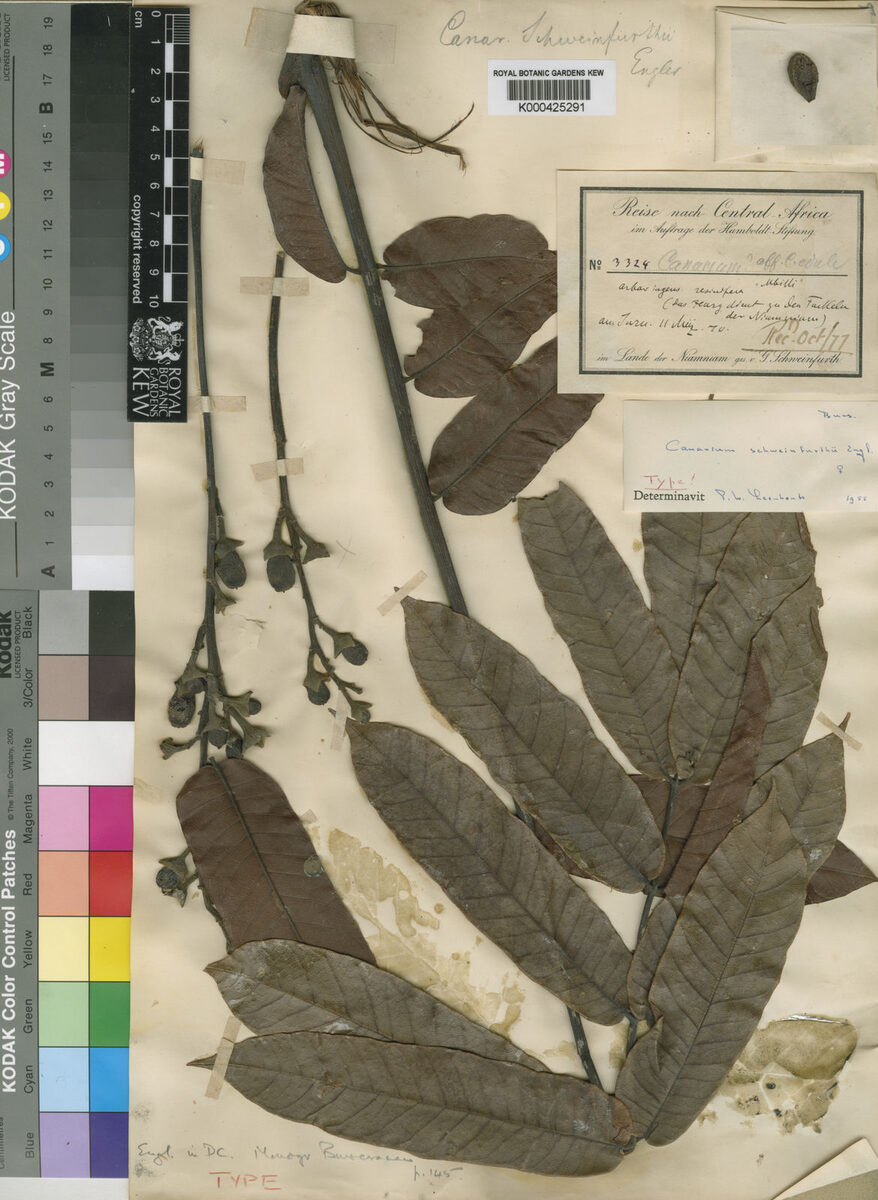
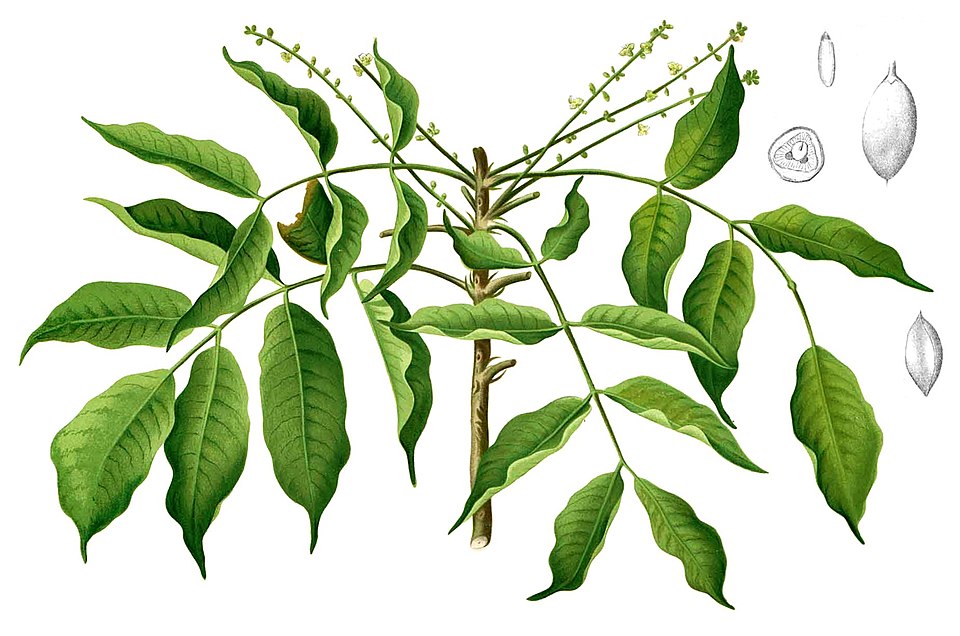
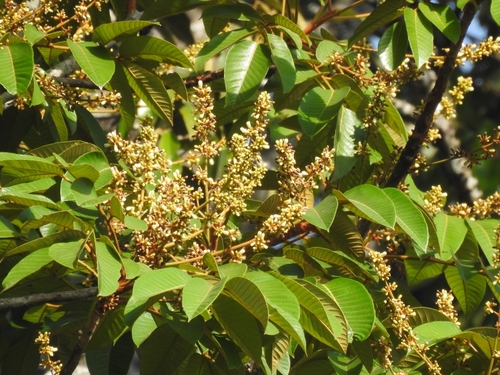
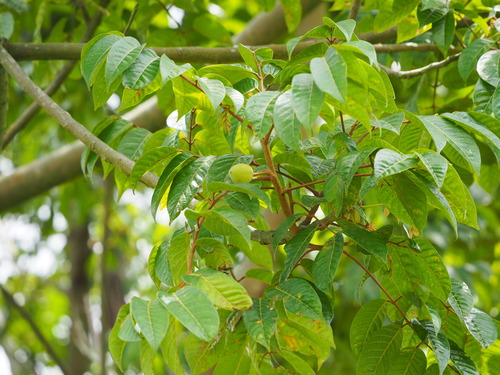
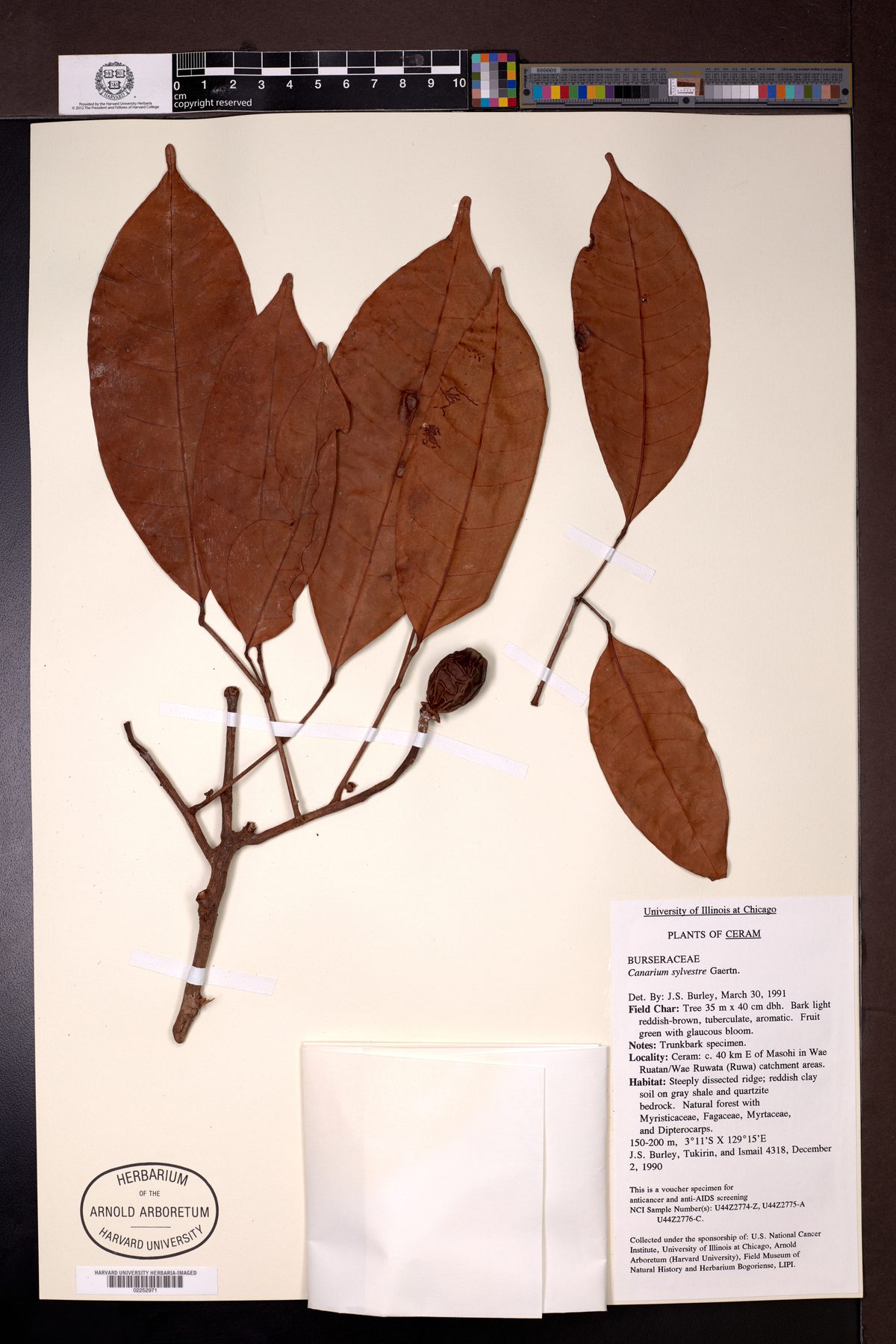
Protium tenuifolium
(Engl.) Engl.
Slenderleaf resintree
iNaturalist· cc-by-nc
(c) Riley Fortier, some rights reserved (CC BY-NC), uploaded by Riley Fortier
iNaturalist· cc-by-nc
(c) Letizia Weichgrebe, some rights reserved (CC BY-NC)
iNaturalist· cc-by-nc
(c) Letizia Weichgrebe, some rights reserved (CC BY-NC)
Description
A tropical tree in the Burseraceae family with edible fruit.
This description is brief — help expand it
Edible Uses
The fruit are eaten.
Distribution
It is a tropical plant.
Where It Grows
Amazon, Bolivia, Brazil, Central America, Colombia, Costa Rica, Ecuador, Guianas, Nicaragua, Panama, Peru, South America, Venezuela,
Cultivation
Most, if not all, species in this genus are dioecious, both male and female forms need to be grown if fruit and seed are required.
Other Uses
The round, reddish-pink, mature fruit yields an abundance of white, astringent resin with a strong odour suggesting turpentine. The resin obtained from the bark is used for kindling fires. The heartwood is reddish brown; it is clearly demarcated from the thin band of pinkish-brown sapwood that has fine, darker brown streaks. The texture is uniformly fine; the grain straight or irregular. The wood is rather heavy, moderately hard, dense, strong, tough and durable. It is not easy to work; takes a smooth, lustrous polish. It is used locally. The wood is not considered good for construction or other purposes of utility. The wood is used for fuel.
Synonyms
Also Known As
Aracho, Azucarito blanco, Breu, Carano blanco, Carano negro, Carano rosado, Fosforo, Guitagemo, Kandeiape'y, Minimunca, Morano negro, Sacha mango
References (3)
- Grandtner, M. M. & Chevrette, J., 2013, Dictionary of Trees, Volume 2: South America: Nomenclature, Taxonomy and Ecology. Academic Press p 539
- Kermath, B. M., et al, 2014, Food Plants in the Americas: A survey of the domesticated, cultivated and wild plants used for Human food in North, Central and South America and the Caribbean. On line draft. p 708
- Roa, J. A. G. & Boada, D. S. G., 2018, Fundación para el Fortalecimiento de la Fruticultura y Plantas Alimenticias no Convencionales en Colombia.