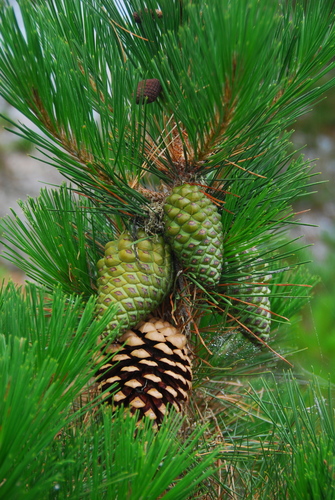
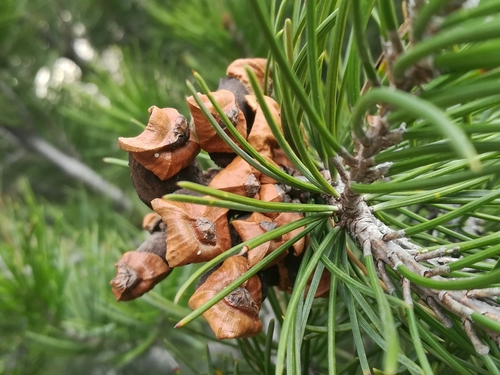
Pinus elliottii
Engelm.
Slash pine
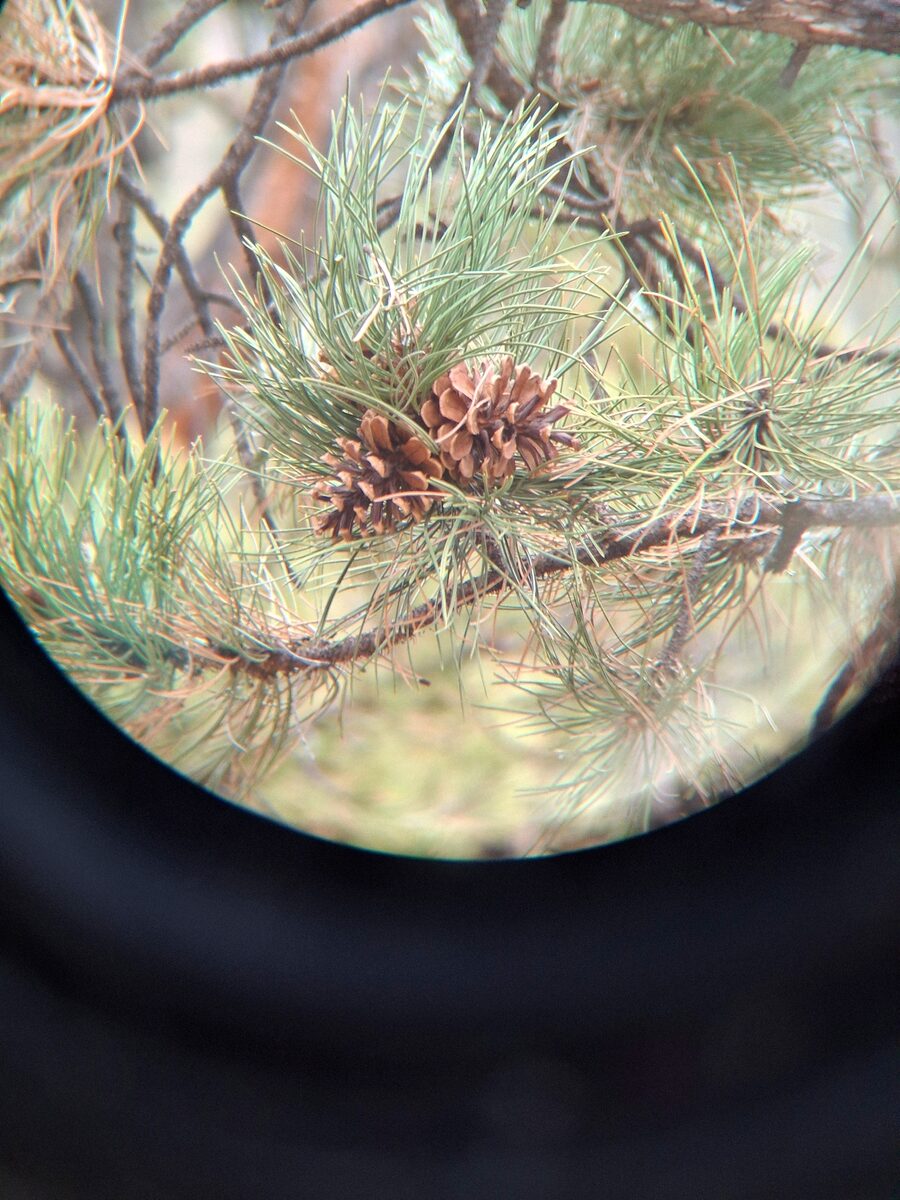
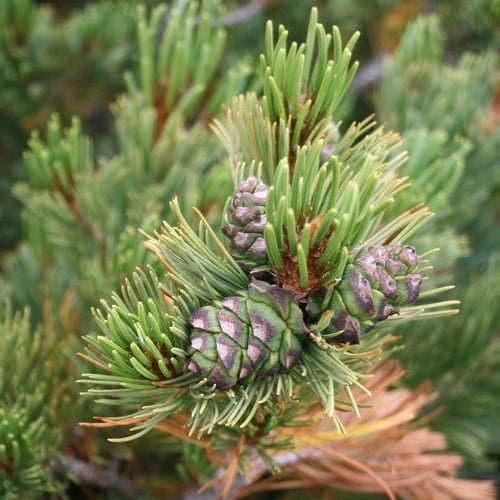
wikimedia· cc-by-sa
Wikimedia Commons - a.dombrowski
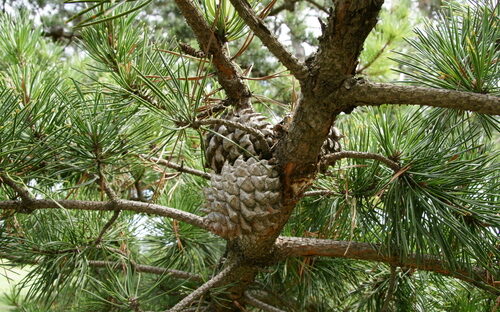
wikimedia· cc-by-sa
Wikimedia Commons - Slyronit
Summary
Source: WikipediaFast-growing evergreen tree reaching 25m tall by 18m wide. Hardy to UK zone 10. Wind-pollinated. Requires full sun; tolerates light sandy, medium loamy, and heavy clay soils. Adapts to mildly acid, neutral, and very acid pH. Prefers moist or wet soil but tolerates drought.
Description
Fast-growing evergreen tree reaching 25m tall by 18m wide. Hardy to UK zone 10. Wind-pollinated. Requires full sun; tolerates light sandy, medium loamy, and heavy clay soils. Adapts to mildly acid, neutral, and very acid pH. Prefers moist or wet soil but tolerates drought.
Edible Uses
Seeds of all Pinus species are edible to varying degrees. This species has small dark brown seeds measuring 6-7mm long (including shell), making them less desirable to eat despite general edibility of pine seeds.
Traditional Uses
The seeds or nuts are eaten raw or roasted. The needles can be use to make tea. The inner bark can be used as an emergency flour.
This uses section is brief — help expand it
Medicinal Uses
Without regular fire intervals in slash pine forests, the ecosystem can change over time. For example, in the northern range for slash pine, forests can convert from mesic flatwoods to denser mixed-hardwood canopies with trees such as oaks, hickory, and southern magnolia. In South Florida, the pine rocklands can convert to a rockland hammock dominated by woody shrubs and invasive plants. Invasive species are a major management issue in the South. Many pine trees and native plants are adapted to fire, meaning they require fire disturbance to open their pine cones, germinate seeds, and cue other metabolic processes. Fire can be a good management strategy for invasive species because many invasive plants are not adapted to fire. Therefore, fire can eliminate the parental plant or reduce seed viability. Controlled burning is also used to help reduce pathogen load in an ecosystem. For example, fire can eliminate pest populations or resting fungal spores that could infect new seedlings. Low-intensity burns can also clear space in the understory and provide nutrient pulses that benefit the understory vegetation. Fire is also used to prevent "fuel" buildup, the highly flammable plants such as grasses and scrub under the canopy that could burn easily in a wildfire. Most prescribed burn intervals are about every 2–5 years, which allows the ecosystem to regenerate after the burn. Much of the South Florida pine rockland ecosystem is highly fragmented and has not been burned because of the proximity to buildings. Risks such as smoke, air quality, and residual particulate matter in the environment pose safety issues for controlled burns near homes and businesses.
Known Hazards
The wood, sawdust and resins from various species of pine can cause dermatitis in sensitive people.
Distribution
It is a temperate plant.
Where It Grows
North America, St Helena, USA,
Cultivation
It grows best in areas where annual daytime temperatures are within the range 23 - 32°c, but can tolerate 8 - 36°c. When dormant, the plant can survive temperatures down to about -5°c, but young growth can be severely damaged at 0°c. It prefers a mean annual rainfall in the range 1,000 - 2,000mm, but tolerates 650 - 2,500mm. Grows best in a sunny position. Succeeds in a wide range of soils, growing best on mesic flatwood sites and on pond or stream margins where soil moisture is ample but not excessive, and drainage is poor. Established stands grow well on flooded sites, but flooding restricts seedling establishment. Established plants are drought tolerant. Prefers a pH in the range 4.5 - 5.5, but tolerant of 4 - 6.5. Tolerant of maritime exposure. Widely planted for timber outside its native range, it has sometimes escaped and become naturalized. It can establish dense stands that shade out native plants and prevent their regeneration. Invaded grasslands are transformed over time into species poor shrublands and forests A fast growing tree when young, it can live about 200 years. Trees commence producing seed when around 7 - 8 years old. Some seeds are produced each year, with good crops about every third year. Individual cones take about 3 years to mature. Annual oleoresin yields of 3 kilos per tree have been recorded from Zimbabwe. Young trees are quite susceptible to fire injury until they are 3 - 4.5 metres tall, but then the bark becomes thick enough to insulate the cambium from high temperatures. The tree has an extensive lateral root system and a moderate taproot. Two geographic varieties exist for this species. The typical Pinus elliottii elliottii is found in the northern part of the range whilst Pinus elliottii densa is only found in southern Florida. Both Pinus elliottii and Pinus elliottii x caribea are good Carbon Farming plants and have been partially domesticated to increase yields and other traits. They can be used as an industrial crop - hydrocarbon and for agroforestry services as a windbreak.
Propagation
Seed germinates in 15-20 days with 80-95% germination rate for fresh seed. Mycorrhizae presence highly beneficial; inoculate with spores or add soil from established trees. Plant seedlings 4-8 months after germination when approximately 30cm tall. Seeds store for years in dry, cold, airtight conditions.
Other Uses
Oleoresin tapped and distilled to obtain 12-13% turpentine and rosin. Turpentine used in paint industry. Rosin used in paper, soap, and glue production. Essential oil distilled from needles yielding approximately 0.3% balsam-scented oil with main components: alpha-pinene (43.0%), beta-pinene (27.1%), and alpha-terpineol (9.6%). Heartwood yellow to red-brown with 5-15cm sapwood band. Straight grain, medium texture, distinct growth rings. Heavy, hard, tough wood with moderate to poor durability; susceptible to Anobium borers, marine borers, and termites. High resin content. Dries with minimal degrade though surface checking and center splitting possible. Difficult to work; long-pitched sawteeth reduce resin adhesion. Holds nails and screws well; glues and finishes satisfactorily. Younger tree wood used for pulping; older tree wood for timber, poles, piles, solid products, construction, flooring, frames, joinery, trim, furniture, cabinetry, ships, boats, vehicles, toys, turnery, boxes, crates, veneer, plywood, and particle board. Used as fuel.
Synonyms
Also Known As
English: swamp pine. Spanish: pino amarillo; pino macho. French: pin d'Elliott. Chinese: shi di song. Local Common Names: Brazil: pinheiro. Germany: Elliotts Kiefer. Italy: pino di Elliott. South Africa: basden. USA: Cuban pine; longleaf pitch pine; pitch pine; swamp pine; yellow slash pine.
References (2)
- Kermath, B. M., et al, 2014, Food Plants in the Americas: A survey of the domesticated, cultivated and wild plants used for Human food in North, Central and South America and the Caribbean. On line draft. p 660
- World Checklist of Useful Plant Species 2020. Royal Botanic Gardens, Kew