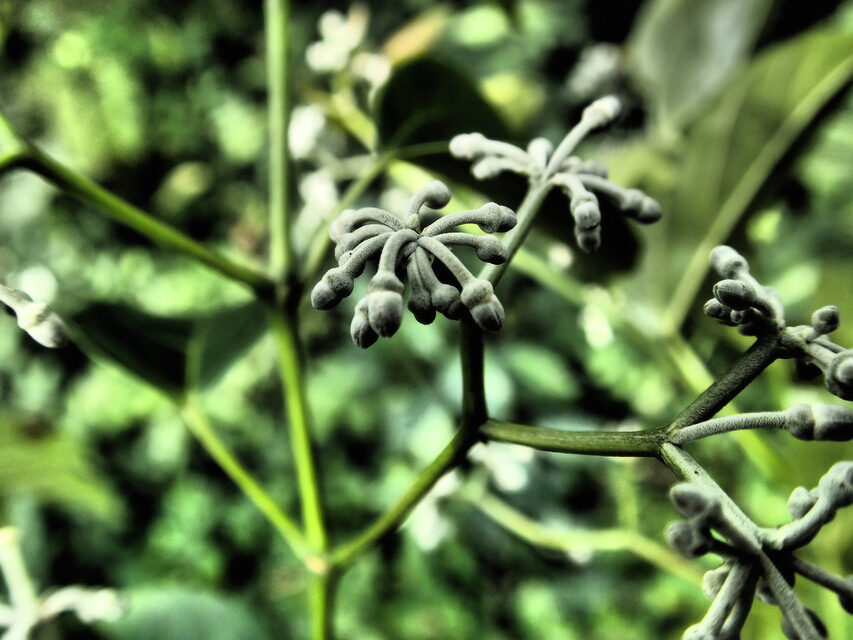
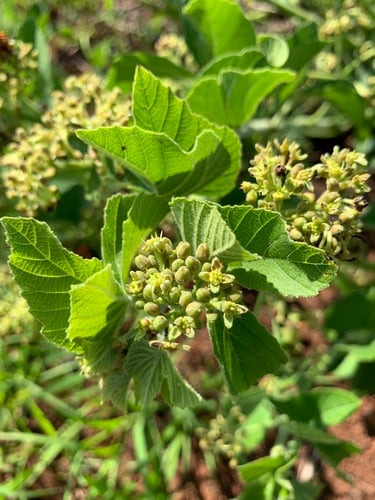
Cissus cornifolia
(Baker) Planch.
Ivy-grape
iNaturalist· cc-by
(c) Jens-Christian Svenning, some rights reserved (CC BY), uploaded by Jens-Christian Svenning
iNaturalist· cc-by
(c) Shedron Mukhumo, some rights reserved (CC BY), uploaded by Shedron Mukhumo
iNaturalist· cc-by-nc
(c) Bart Wursten, some rights reserved (CC BY-NC), uploaded by Bart Wursten
Summary
Source: WikipediaCissus cornifolia is a species of flowering plant in the Vitaceae family. It is an erect or semi-scandent woody shrub up to 3 meters in height, and found from sub-Saharan Africa and Tropical Africa south to Botswana, Mozambique and South Africa. It is one of more than 300 species forming the genus Cissus. Growing from a large tuberous rootstock and found up to 2000m, in open woodland and grassland, often on granite outcrops, it occasionally develops tendrils. Branch nodes are conspicuously swollen and new parts of the plant have a ferruginous, floccose covering, persisting on the bracts.
Description
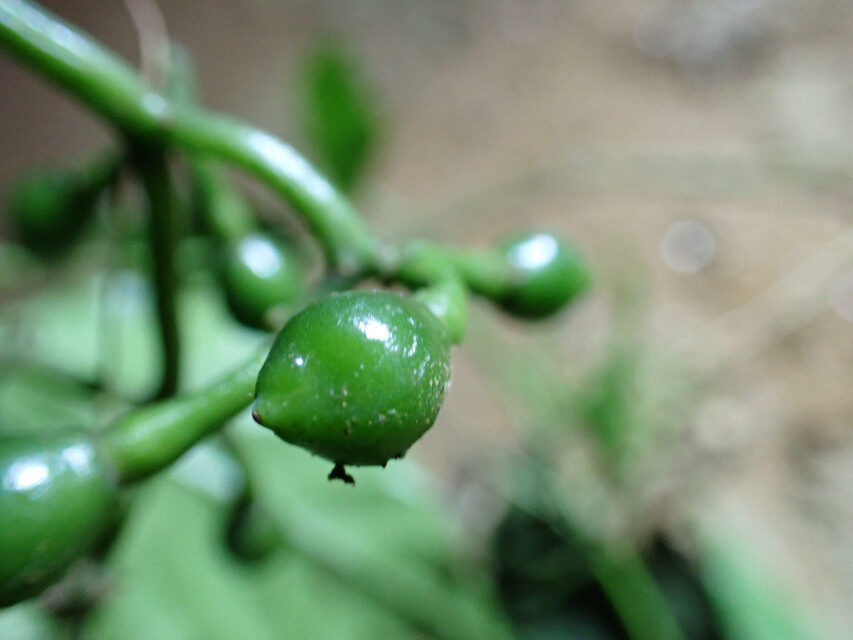
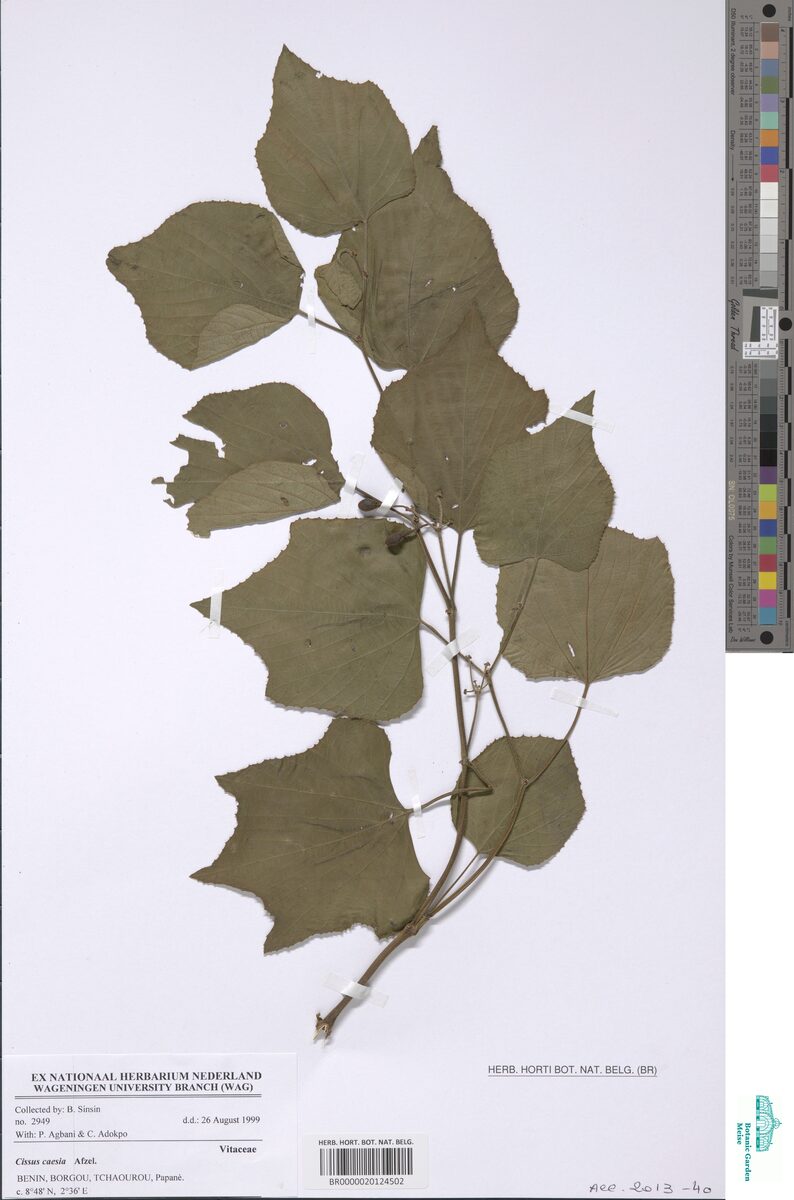
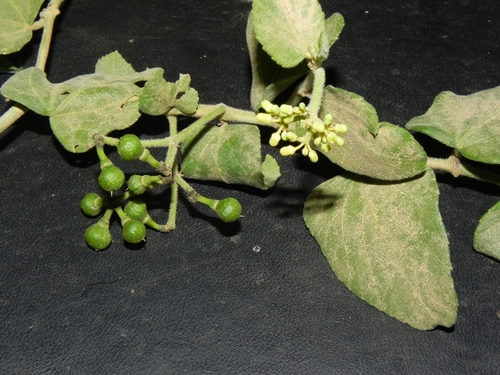
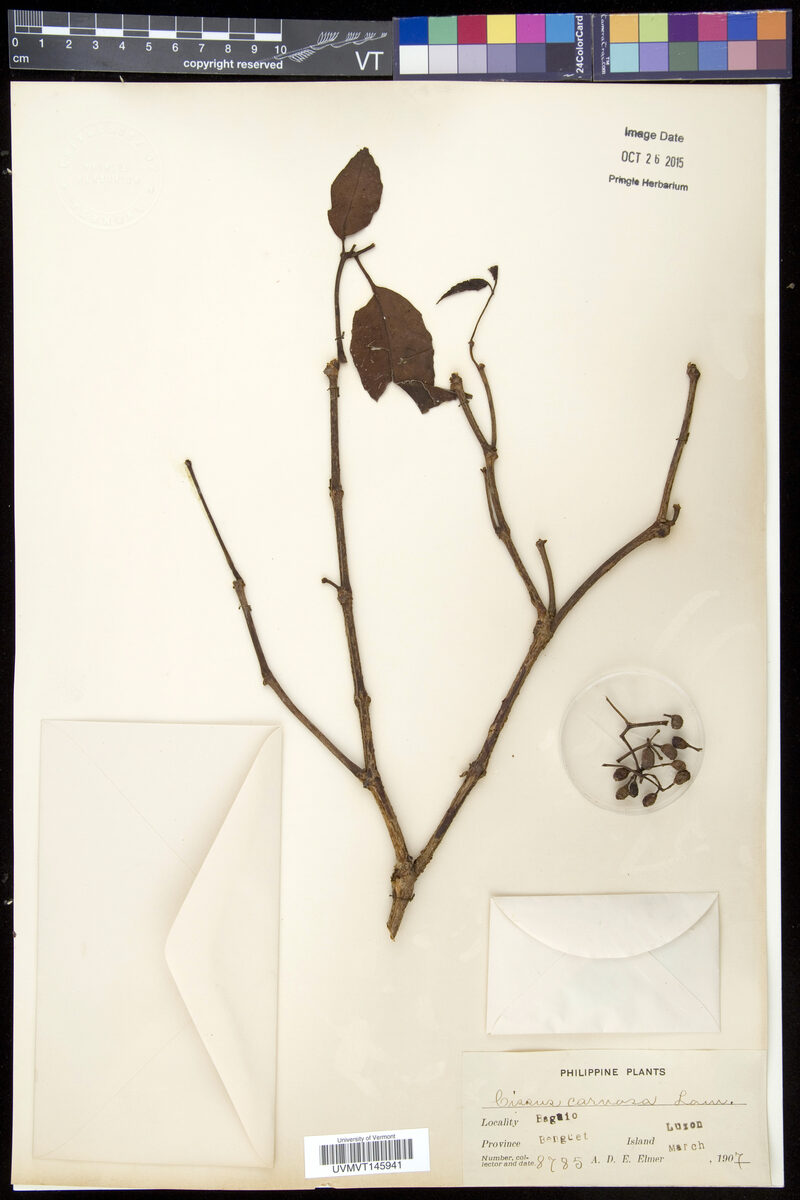
A shrub up to 2 m high. The shoots are stout and rusty coloured. The nodes are swollen. The shoots arise from a woody base. It can be a scrambler. The leaves are simple and oval and 6 cm long. There are teeth along the edge. The leaves have red hairs underneath. The flowers are small and yellow. They are in stalked clusters and appear before the leaves. The clusters are 2-10 cm across. The fruit are oval and 10 mm long. They are purple black. They are juicy when ripe and contain one seed. The fruit occur in large clusters.
Edible Uses
The ripe fruit are edible and sweet, eaten especially by children. The seeds are eaten but the skin is discarded.
Traditional Uses
The fruit are edible and sweet and eaten especially by children. The seeds are eaten but the skin is discarded.
This uses section is brief — help expand it
Medicinal Uses
Roots or tubers are powdered or a decoction is prepared and used to treat venereal diseases, naso-pharyngeal infections, fevers and malaria. The plant is traditionally used as a sedative. Tubers and fruits are eaten and used for flavouring in sauces.
Distribution
A tropical plant. It occurs in open woodland. It grows after fire. In Zimbabwe it grows up to 1,800 m above sea level. It grows in Miombo woodland.
Where It Grows
Africa, Botswana, Burkina Faso, Central Africa, Côte d'Ivoire, East Africa, Ethiopia, Ghana, Ivory Coast, Kenya, Malawi, Mozambique, Nigeria, South Africa, Southern Africa, Sudan, Tanzania, Uganda, West Africa, Zambia, Zimbabwe,
Cultivation
Plants can be grown by seeds or suckers.
Propagation
Seed - Suckers
Production
The fruit are collected in the dry season from September to December in Tanzania.
Other Information
The fruit are eaten especially by children.
Notes
The roots are pounded and the juice used to coagulate milk by the Fulani. There are about 200-350 Cissus species. There are about 75 species in tropical America.
Nutrition
| Part | Moisture | kJ | kcal | Protein | Vit A | Vit C | Iron | Zinc |
|---|---|---|---|---|---|---|---|---|
| Fruit | 80 | 301 | 72 | 1.3 | — | — | — | — |
Synonyms
Also Known As
Amajambe, Asinsidhi, Cituzi, Idebelebe, Mbulunbunji, Moganza, Mpangamwaka, Mtandamwaka, Mudzambiringa, Mungingue, Mutula-mbamba, Puma-puma, Shisurudza, Sintanatora, Tchele
References (23)
- Abbiw, D.K., 1990, Useful Plants of Ghana. West African uses of wild and cultivated plants. Intermediate Technology Publications and the Royal Botanic Gardens, Kew. p 46
- Asfaw, Z. and Tadesse, M., 2001, Prospects for Sustainable Use and Development of Wild Food Plants in Ethiopia. Economic Botany, Vol. 55, No. 1, pp. 47-62
- Burkill, H. M., 1985, The useful plants of west tropical Africa, Vol. 5. Kew.
- Busson, 1965,
- Dalziel, J. M., 1937, The Useful plants of west tropical Africa. Crown Agents for the Colonies London.
Show all 23 references Hide references
- FAO, 1988, Traditional Food Plants, FAO Food and Nutrition Paper 42. FAO Rome p 182
- Food Composition Tables for use in Africa FAO http://www.fao.org/infoods/directory No. 802
- Fowler, D. G., 2007, Zambian Plants: Their Vernacular Names and Uses. Kew. p 63
- Fox, F. W. & Young, M. E. N., 1982, Food from the Veld. Delta Books. p 368
- Grivetti, L. E., 1980, Agricultural development: present and potential role of edible wild plants. Part 2: Sub-Saharan Africa, Report to the Department of State Agency for International Development. p 66
- Jardin, C., 1970, List of Foods Used In Africa, FAO Nutrition Information Document Series No 2.p 127
- Lulekal, E., et al, 2011, Wild edible plants in Ethiopia: a review on their potential to combat food insecurity. Afrika Focus - Vol. 24, No 2. pp 71-121
- Malaisse, F., 1997, Se nourrir en floret claire africaine. Approche ecologique et nutritionnelle. CTA., p 59
- Malaisse, F., 2010, How to live and survive in Zambezian open forest (Miombo Ecoregion). Les Presses Agronomiques de Gembloux.
- Njana, M. A., et al, 2013, Are miombo woodlands vital to livelihoods of rural households? Evidence from Urumwa and surrounding communities, Tabora, Tanzania. Forests, Trees and Livelihoods, 22:2, 124-140
- Peters, C. R., O'Brien, E. M., and Drummond, R.B., 1992, Edible Wild plants of Sub-saharan Africa. Kew. p 201
- Ruffo, C. K., Birnie, A. & Tengnas, B., 2002, Edible Wild Plants of Tanzania. RELMA p 202
- Schmidt, E., Lotter, M., & McCleland, W., 2007, Trees and shrubs of Mpumalanga and Kruger National Park. Jacana Media p 386
- Tredgold, M.H., 1986, Food Plants of Zimbabwe. Mambo Press. p 2
- Williamson, J., 2005, Useful Plants of Malawi. 3rd. Edition. Mdadzi Book Trust. p 65
- Wild, 1975,
- World Checklist of Useful Plant Species 2020. Royal Botanic Gardens, Kew
- www.zimbabweflora.co.zw 2011