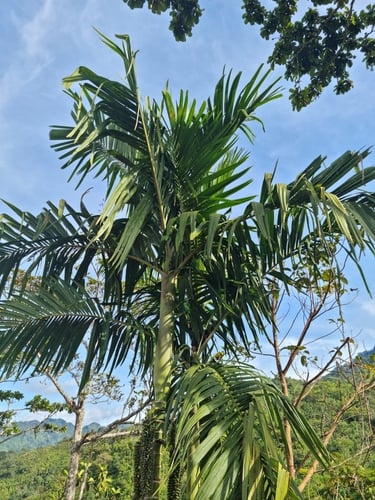
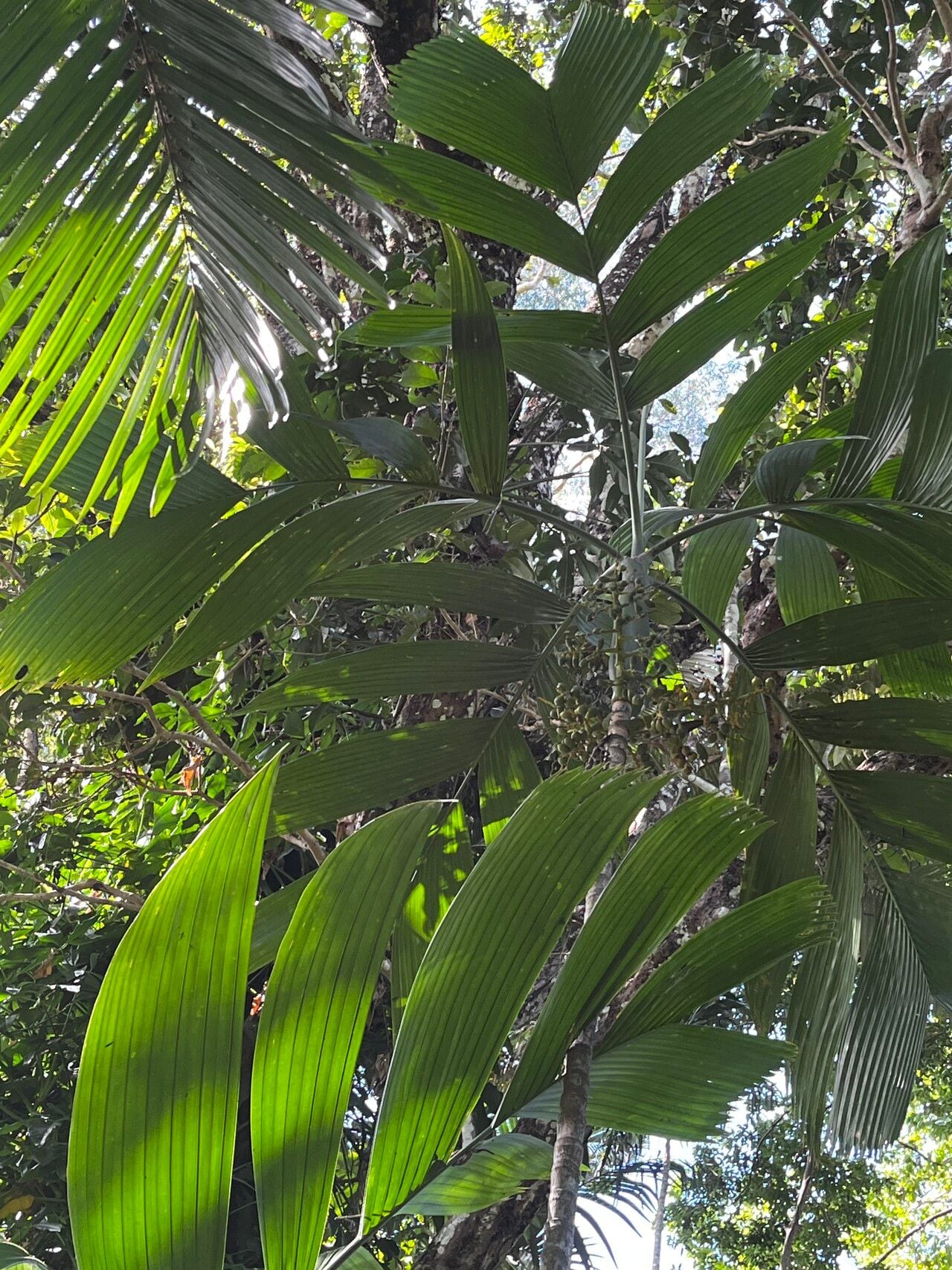
Leopoldinia pulchra
Mart.
iNaturalist· cc-by-nc
(c) Nelson Wisnik, some rights reserved (CC BY-NC), uploaded by Nelson Wisnik
iNaturalist· cc-by-nc
(c) Nelson Wisnik, some rights reserved (CC BY-NC)
Description
A tropical palm of the Arecaceae family.
This description is brief — help expand it
Edible Uses
An ash made from the fruits is used as a salt substitute. Local people sometimes collect the fruit in large quantities, then by burning and washing it extract a floury substance, which is used as a substitute for salt when that substance is not available. It is more bitter than saline in flavour.
Traditional Uses
The liquid sap of the fruit is drunk.
This uses section is brief — help expand it
Medicinal Uses
The ash from the burned fruits is applied directly to the site of injury as a treatment for curare poisoning.
Distribution
It is a tropical plant.
Where It Grows
Amazon, Brazil, Colombia, South America, Venezuela,
Also Known As
Cucurito, Jara, Yara
References (3)
- Kermath, B. M., et al, 2014, Food Plants in the Americas: A survey of the domesticated, cultivated and wild plants used for Human food in North, Central and South America and the Caribbean. On line draft. p 480
- Lopez-Diago, D. & Garcia, N., 2021, Wild edible fruits of Colombia. Biota ColomBiana 22 (2) p 32
- Roa, J. A. G. & Boada, D. S. G., 2018, Fundación para el Fortalecimiento de la Fruticultura y Plantas Alimenticias no Convencionales en Colombia.