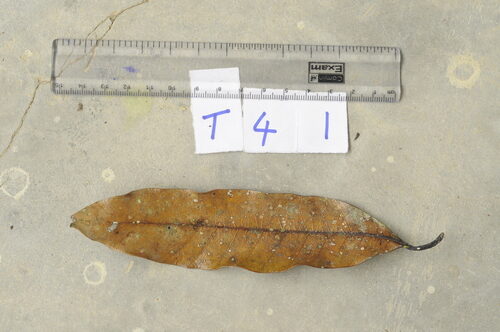
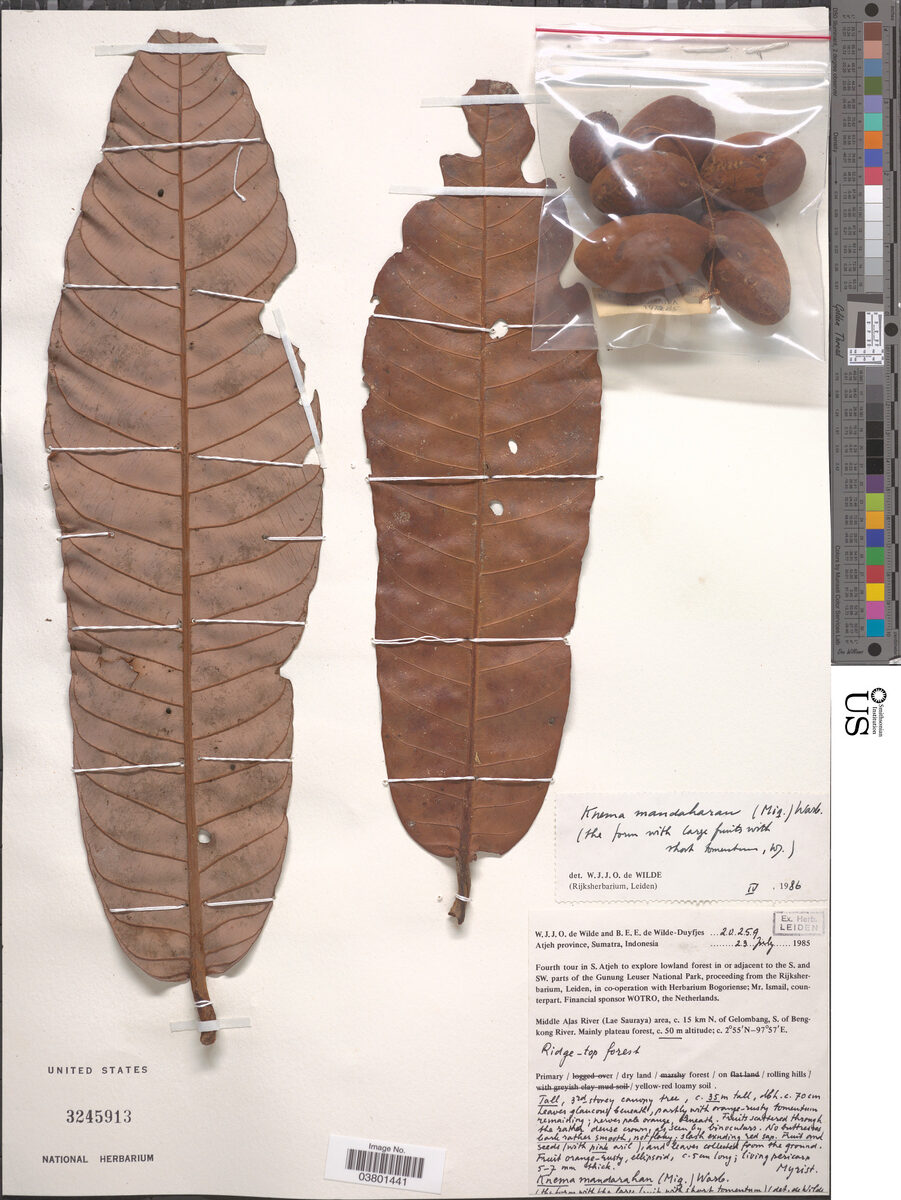
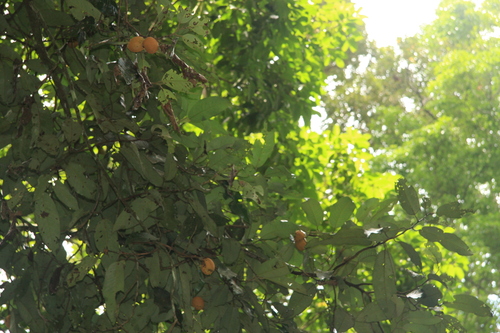
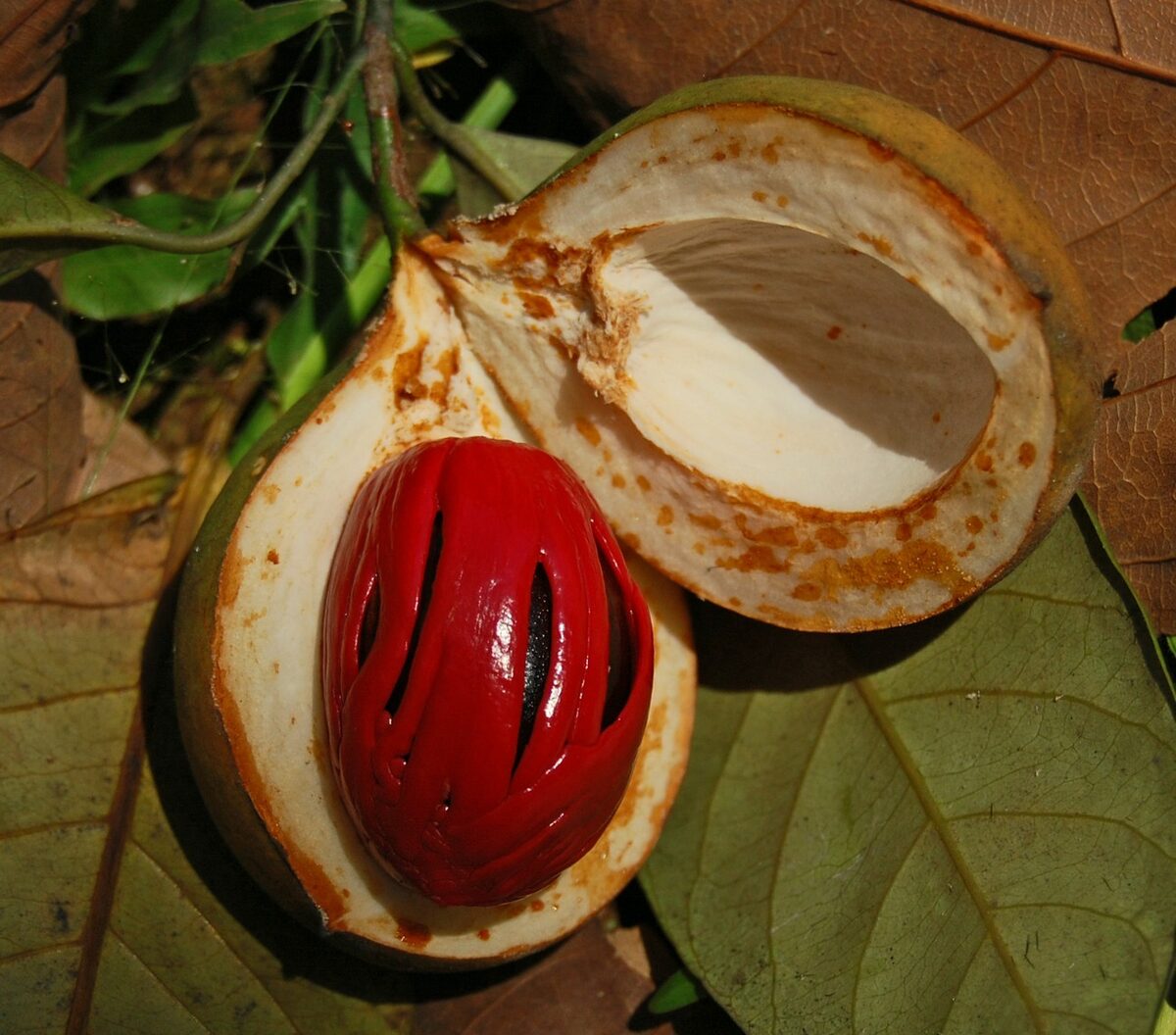
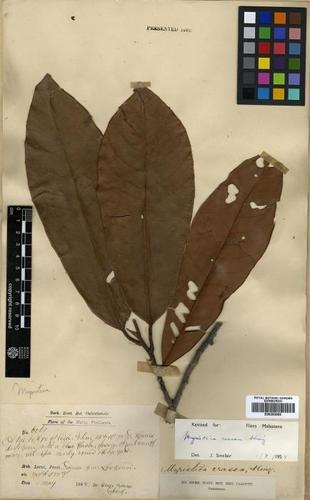
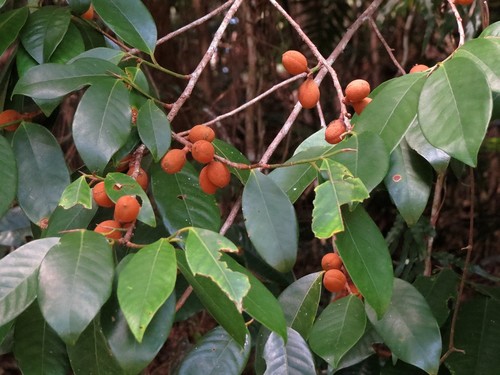
Iryanthera lancifolia
Ducke
Lanceolate leaf iryanthera
gbif· cc-by-nc-sa
MBG
gbif· cc-by-nc-sa
MBG
gbif· cc-by-nc
Arizona State University Vascular Plant Herbarium (ASU-Plants)
Description
A tropical tree in the Myristicaceae family found in tropical regions.
This description is brief — help expand it
Edible Uses
The fruit aril is eaten.
Distribution
It is a tropical plant.
Where It Grows
Amazon, Bolivia, Brazil, Colombia, Ecuador, Guyana, Peru, South America*, Suriname, Venezuela,
Other Uses
The heartwood is variable, light pinkish cinnamon to dull oatmeal; it is often not very clearly demarcated from the 2 - 12cm wide band of pale brown sapwood. The texture is fine to medium; the grain mostly straight, slightly interlocked; lustre is medium to fairly high; without distinctive odour or taste. The wood is moderately hard, moderately heavy, susceptible to insect attack. It can be air-dried with little or only moderate difficulty; slight to moderate checking and warp may develop. All of the species in this genus have very good machining properties and produce smooth surfaces on the normally straight-grained material. The wood is easily peeled for veneer. A substitute for European Birch (Betula verrucosa), it is used for purposes such as millwork, turnery, furniture, boxes and crates, veneer and plywood, general construction, fiberboard, and particleboard.
Synonyms
Also Known As
Akodek, Awamoncawe, Awamonkawe, Cacaguaru, Carne gallina, Cuajo grande, Cuajo sabanero, Cuangare, Cumala, Gueguewudu, Guiejudo, Kirikua, Macairicao, Sacha kaspi wapa, Tigedewe, Ucuuba, Wekaiwe
References (6)
- Grandtner, M. M. & Chevrette, J., 2013, Dictionary of Trees, Volume 2: South America: Nomenclature, Taxonomy and Ecology. Academic Press p 329
- Kermath, B. M., et al, 2014, Food Plants in the Americas: A survey of the domesticated, cultivated and wild plants used for Human food in North, Central and South America and the Caribbean. On line draft. p 451
- Kew Plants of the World Online
- Lopez-Diago, D. & Garcia, N., 2021, Wild edible fruits of Colombia. Biota ColomBiana 22 (2) p 44
- Roa, J. A. G. & Boada, D. S. G., 2018, Fundación para el Fortalecimiento de la Fruticultura y Plantas Alimenticias no Convencionales en Colombia.
Show all 6 references Hide references
- Torre, de la, L., et al, 2008, Enciclopedia de las Plantas Útiles del Ecuador. Herbario QCA. Pontificia Universidad Católica del Ecuador. p 459