Horsfieldia amygdalina
(Wall.) Warb.
iNaturalist· cc-by-nc
(c) eec, some rights reserved (CC BY-NC), uploaded by eec
Description
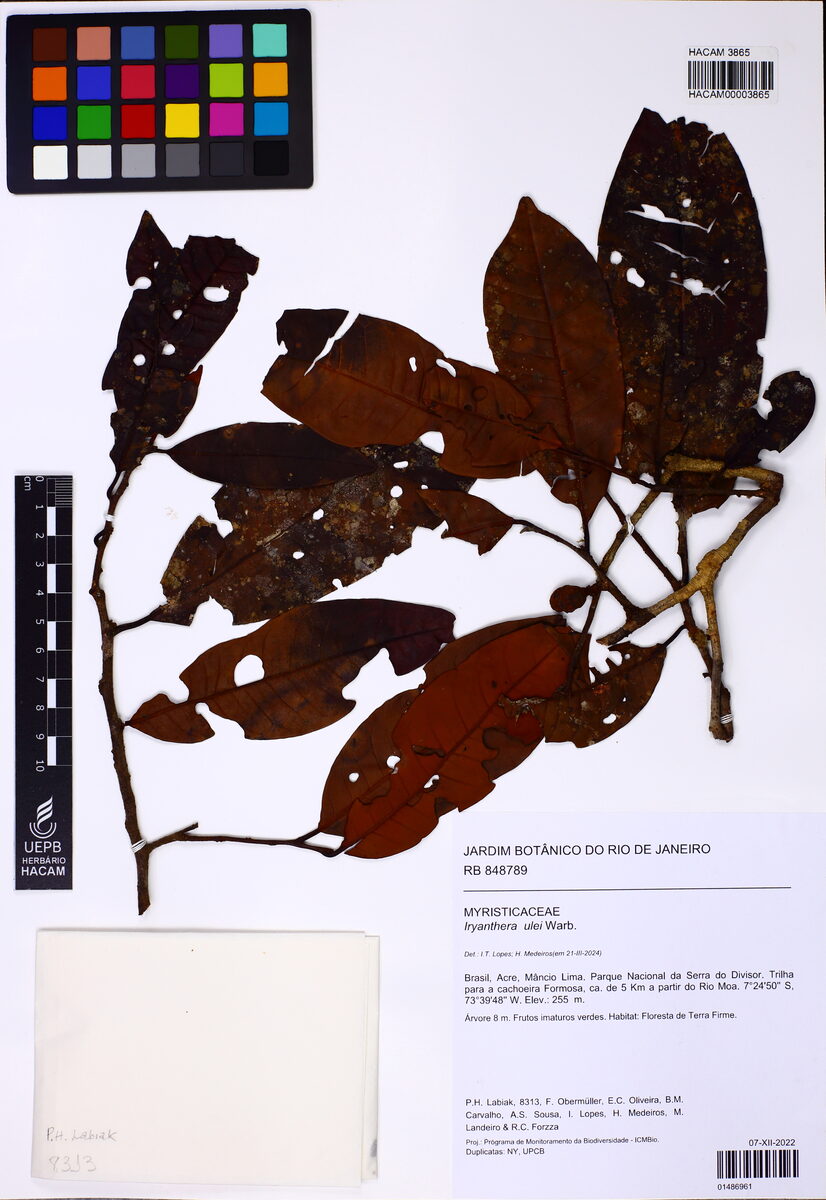
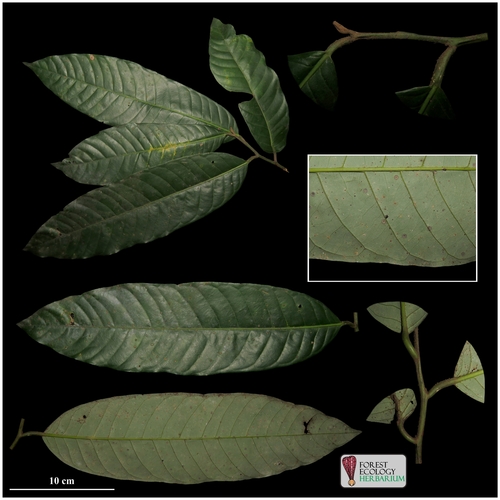
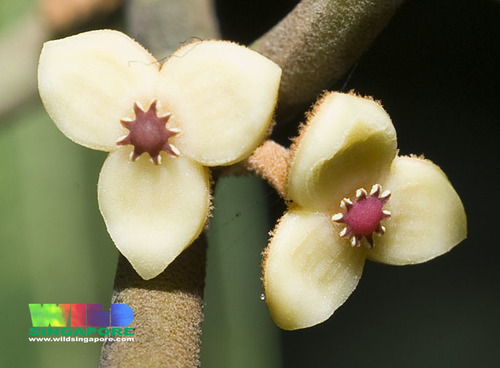
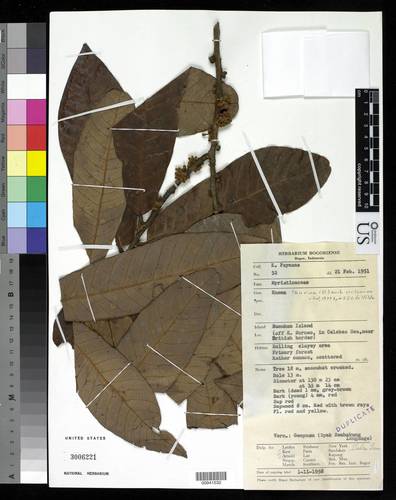
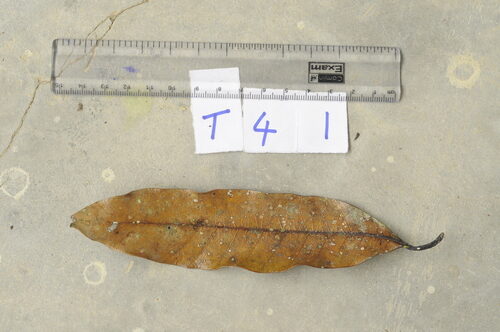
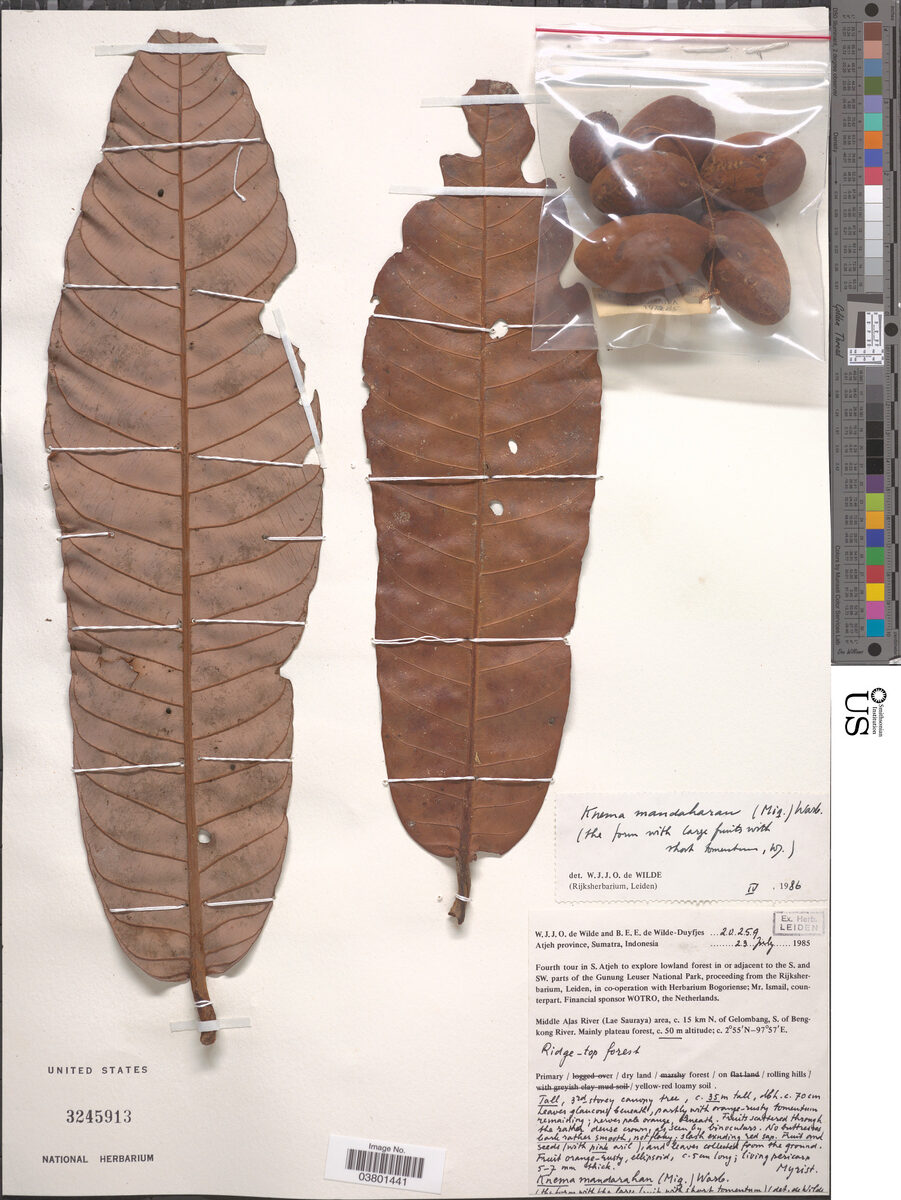
A large tree. It can grow 5-30 m tall. The bark is reddish brown inside and has reddish sap. The leaves are broadly oval and 9-23 cm long by 3-9 cm wide. The leaves smell like mango. They are narrowly oval and shiny above. The flower buds are yellow and in branched groups. The fruit are oval and 3 sided. They have ridges along the back. The layer around the seed is fleshy and yellow.
Edible Uses
The fleshy yellow aril around the seed and the seeds themselves are eaten. Fruit are sold in local markets.
Traditional Uses
The layer around the seeds (aril) is eaten. The seeds are eaten.
This uses section is brief — help expand it
Medicinal Uses
Traditional uses indicate the fruit has medicinal applications.
Distribution
A tropical plant. It grows in dense forests on mountain slopes. It grows between 100-1,200 m above sea level in southern China.
Where It Grows
Asia, Bangladesh, China, India, Indochina, Laos, Myanmar, Northeastern India, SE Asia, Thailand, Vietnam,
Cultivation
A plant of the moist tropics, where it can be found at elevations up to 1,200 metres. A fast-growing tree. A dioecious species, both male and female forms need to be grown if fruit and seed are required.
Propagation
Seed - dries out easily, loses its viability rapidly, and cannot be stored. It is best sown in a shaded position in a nursery seedbed - germination is usually fairly quick with the seed of most species sprouting within 2 - 17 weeks. Grow the young plants on in a shady position, planting them out in their permanent positions when large enough.
Other Uses
The seeds contain a solid oil used for industrial purposes. The wood is used for temporary construction and general furniture.. The tree is planted as a pioneer species in northern Thailand in reforestation projects to restore native woodland - it is planted in degraded woodland and open areas in a mix with various other species that all have the ability to grow fast; produce dense, weed-suppressing crowns; and attract seed-dispersing wildlife, particularly birds and bats.
Production
In southern China plants flower in August to October and fruit in March to May.
Other Information
Fruit are sold in local markets.
Notes
The Myristicaceae are a family of tropical trees. There are about 105 Horsfieldia species.
Synonyms
Also Known As
Amol, Bolchokpok, Ching-liang-pai, Dettak, Dettakarong, Dieng-ja-lyntep, Dieng-soh-jodao, Han, Hant, Lueat nok, Mau cho la lon, Nonganghei, Pakhona kala, Prandang-arong, Sang mau, Xangmau hanhnhan
References (8)
- Ambasta, S.P. (Ed.), 2000, The Useful Plants of India. CSIR India. p 274
- Devi, O.S., P. Komor & D. Das, 2010, A checklist of traditional edible bio-resources from Ima markets of Imphal Valley, Manipur, India. Journal of Threatened Taxa 2(11): 1291-1296
- Dobriyal, M. J. R. & Dobriyal, R., 2014, Non Wood Forest Produce an Option for Ethnic Food and Nutritional Security in India. Int. J. of Usuf. Mngt. 15(1):17-37
- Patiri, B. & Borah, A., 2007, Wild Edible Plants of Assam. Geethaki Publishers. p 120
- Sarma, H., et al, 2010, Updated Estimates of Wild Edible and Threatened Plants of Assam: A Meta-analysis. International Journal of Botany 6(4): 414-423
Show all 8 references Hide references
- Sawian, J. T., et al, 2007, Wild edible plants of Meghalaya, North-east India. Natural Product Radiance Vol. 6(5): p 418
- Singh, H.B., Arora R.K.,1978, Wild edible Plants of India. Indian Council of Agricultural Research, New Delhi. p 65
- Van Sam, H. et al, 2004, Trees of Laos and Vietnam: A Field Guide to 100 Economically or Ecologically Important Species. Blumea 29 (2004) 201-349