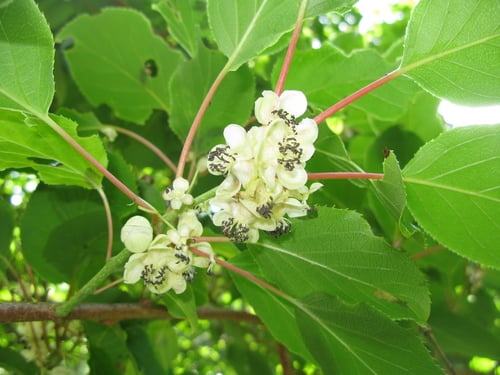
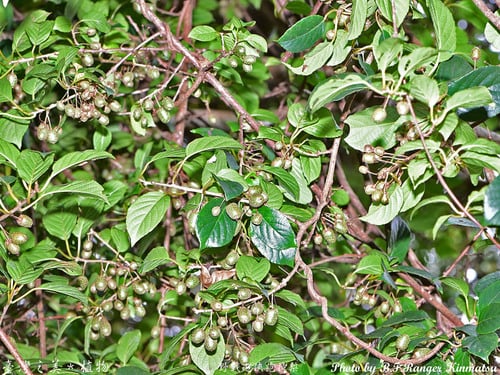
Actinidia callosa var. callosa
Hayata
gbif· cc0
Royal Botanic Garden Edinburgh
gbif· cc0
Conveyor Belt
gbif· cc0
Conveyor Belt
Summary
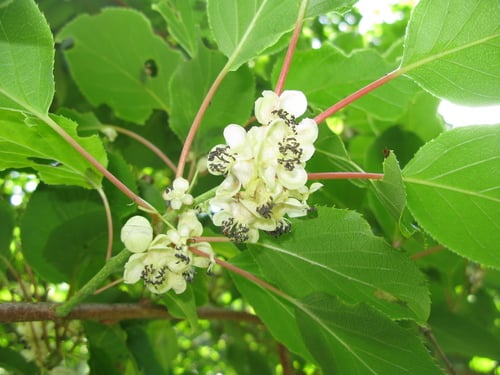
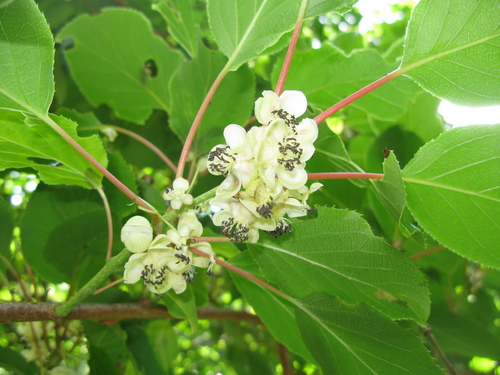
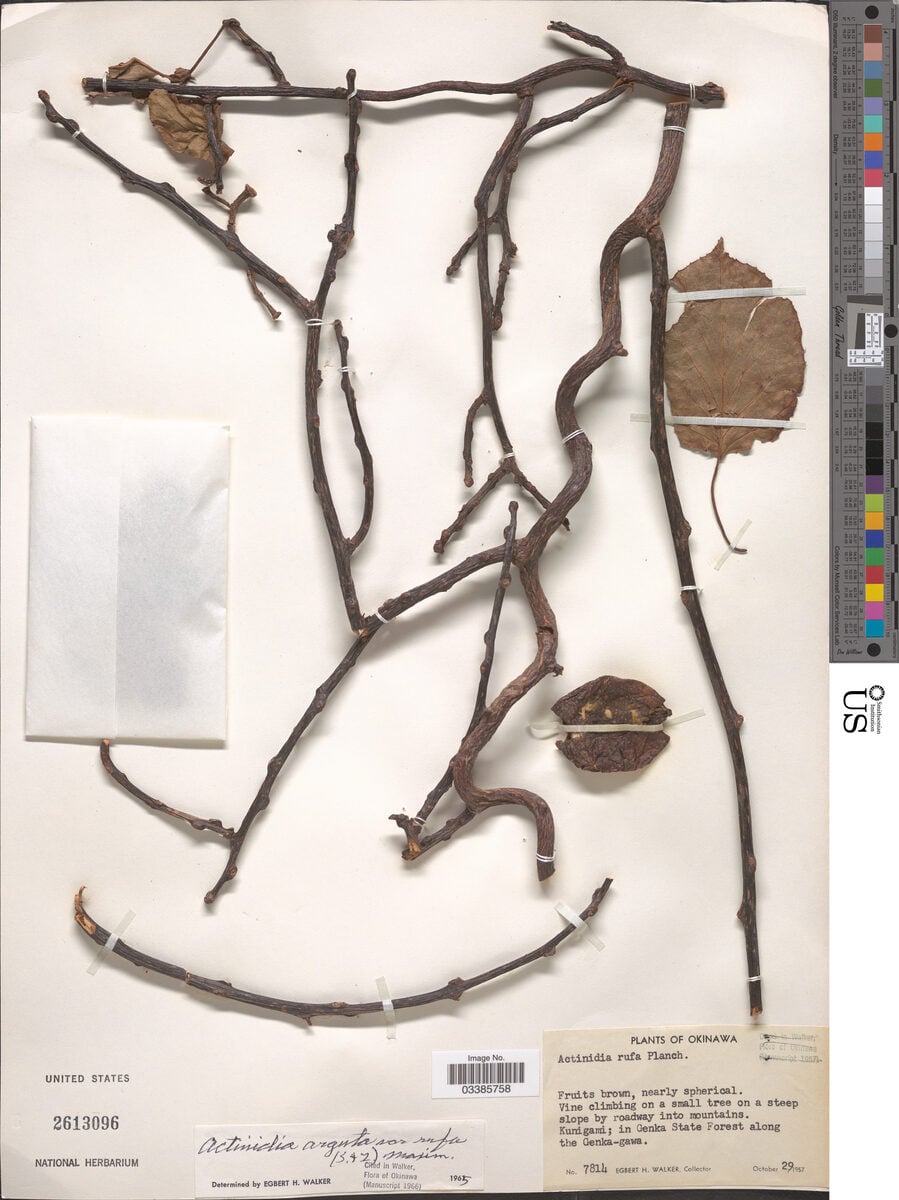
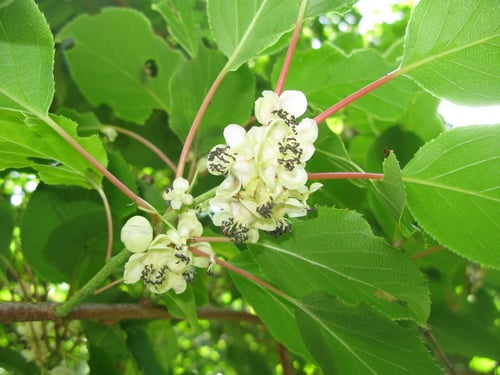
Source: WikipediaActinidia callosa, the Himalayan kiwi vine, is a species of flowering plant in the Chinese gooseberry family Actinidiaceae. A deciduous climber reaching 30 m (98 ft), it is found in a wide variety of habitats at elevations from 400 to 2,600 m (1,300 to 8,500 ft). Cultivated for its fruit, there is considerable doubt that it is a good species given vagrancies in the distributions of its varieties and its variable chromosome numbers.
Description
A climber to 5 m long. Fruit are 2.5-3.5 cm long and contain many small seeds.
This description is brief — help expand it
Edible Uses
The fruits are eaten raw or cooked.
Traditional Uses
Fruit are eaten raw or cooked.
This uses section is brief — help expand it
Distribution
It grows naturally in forests at 1160 - 2260 metres altitude in Taiwan. It prefers a loamy neutral soil. Although it can grow in light shade it fruits best in full sun. During the dormant stage it can tolerate temperatures down to -30°C. Young growth is damaged by frosts.
Where It Grows
Asia, China, Indochina, Taiwan,
Cultivation
Male and female plants must be grown if seed is required. Plants can be grown from seed. Fresh seed germinates in 2 - 3 months at 10°C and stored seed can take longer. Seedlings should be transplanted out when 30 cm tall and after the last frosts. (Most seedlings are male.) Plants can be grown from cuttings.
Notes
There are 55 Actinidia species. The Actinidiaceae are a mainly tropical family.
Synonyms
References (3)
- Bull. Soc. Bot. France 52(Mem. 4):20. 1906 (As Actinidia callosa var. formosana)
- Plants for a Future database, The Field, Penpol, Lostwithiel, Cornwall, PL22 0NG, UK. http://www.scs.leeds.ac.uk/pfaf/ (As Actinidia arisanensis)
- Plants for a Future database, The Field, Penpol, Lostwithiel, Cornwall, PL22 0NG, UK. http://www.scs.leeds.ac.uk/pfaf/ (As Actinidia callosa var. formosana)