Inga sertulifera
DC.
iNaturalist· cc-by-nc-sa
(c) Andres Hernandez S., some rights reserved (CC BY-NC-SA)
iNaturalist· cc-by-nc-sa
(c) Reinaldo Aguilar, some rights reserved (CC BY-NC-SA)
wikimedia· cc-by-sa
Wikimedia Commons - Vojtěch Zavadil
Summary
Source: WikipediaInga sertulifera is a species of plant in the family Fabaceae. It is found from Costa Rica through Peru and Bolivia.
Description
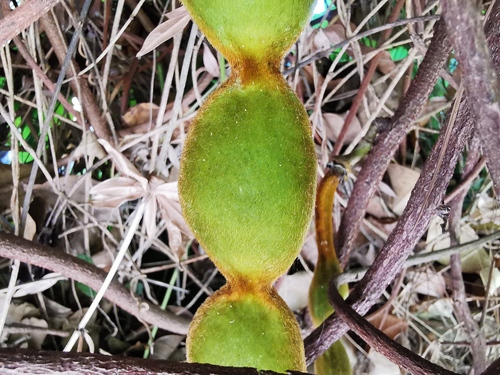
A tree. It grows 5-15 m tall. The crown is round and spreading. The trunk is 10-30 cm across. It branches low down. The fruit are seed pods 7-13 cm long and 2.5 cm wide.
Edible Uses
Fruit - raw. The white flesh surrounding the seeds is eaten. A sweet taste, with a slimy texture. The yellow seedpods are 7 - 13cm long and up to 2.5cm wide.
Traditional Uses
The flesh around the seeds is eaten raw.
This uses section is brief — help expand it
Distribution
It is a tropical plant. It grows in rainforests.
Where It Grows
Amazon, Bolivia, Brazil, Central America, Colombia, Costa Rica, Ecuador, Guianas, Guyana, Panama, Peru, South America, Venezuela,
Cultivation
Plants grow easily from fresh seeds. Seeds germinate in 1-2 weeks given moisture and shade.
Other Uses
The wood of Inga species is generally attractive, but it has a coarse texture, is susceptible to attack by dry-wood termites and is not durable in the soil. The wood is used for fuel.
Notes
Also as Mimosaceae.
Also Known As
Abira, Abira-yek, Ao, Awe, Chipero, Guamo
References (5)
- Fern, K., 2012, Tropical Species Database http://theferns.info/tropical/
- Grandtner, M. M. & Chevrette, J., 2013, Dictionary of Trees, Volume 2: South America: Nomenclature, Taxonomy and Ecology. Academic Press p 326
- Lopez-Diago, D. & Garcia, N., 2021, Wild edible fruits of Colombia. Biota ColomBiana 22 (2) p 39
- NYBG Herbarium "edible"
- Torre, de la, L., et al, 2008, Enciclopedia de las Plantas Útiles del Ecuador. Herbario QCA. Pontificia Universidad Católica del Ecuador. p 347