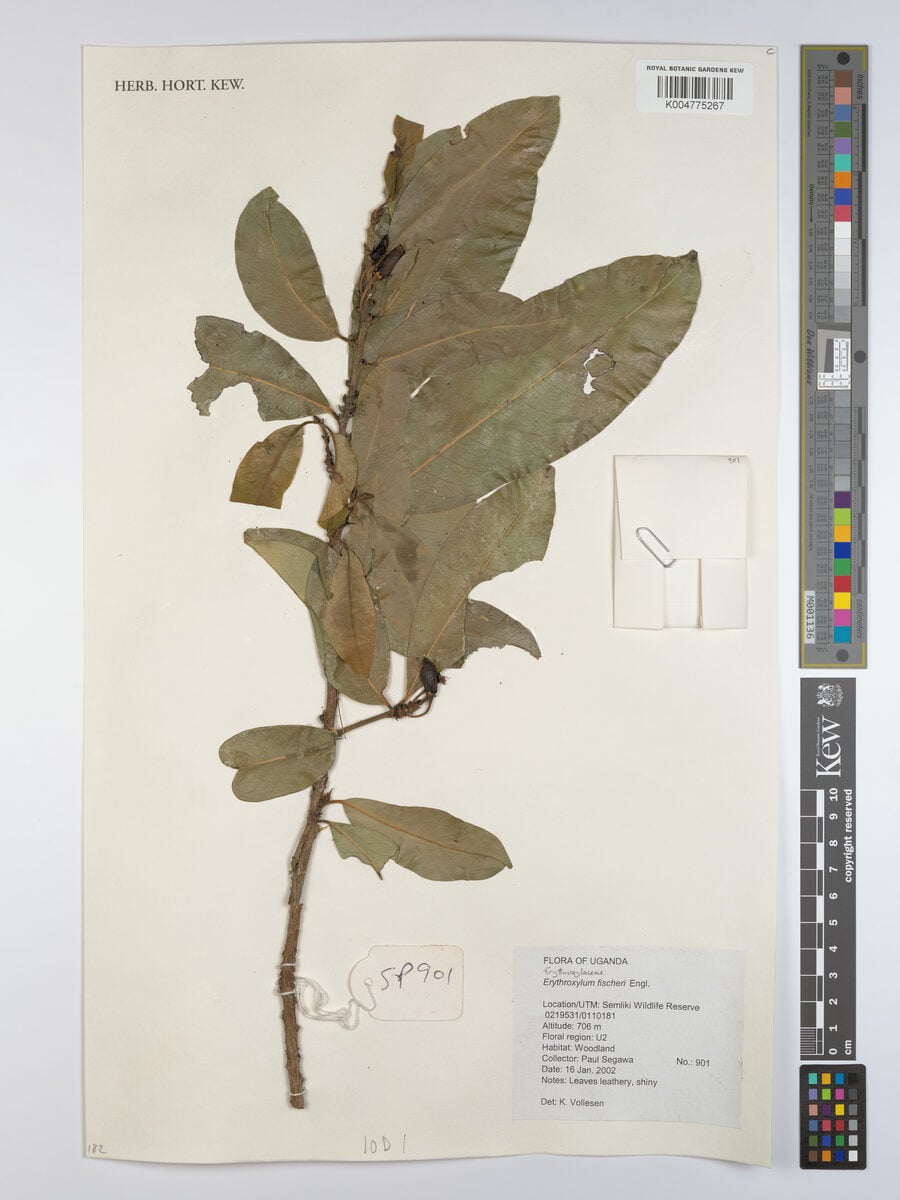
Erythroxylum delagoense
Schinz
Small leaved coca tree
iNaturalist· cc-by-nc
(c) graham_g, some rights reserved (CC BY-NC)
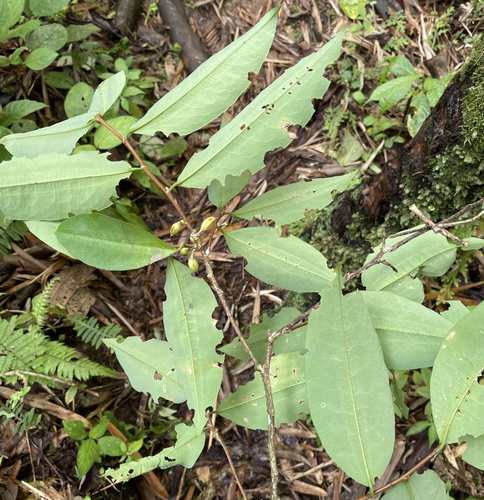
iNaturalist· cc-by-nc
(c) Troos van der Merwe, some rights reserved (CC BY-NC)
Description
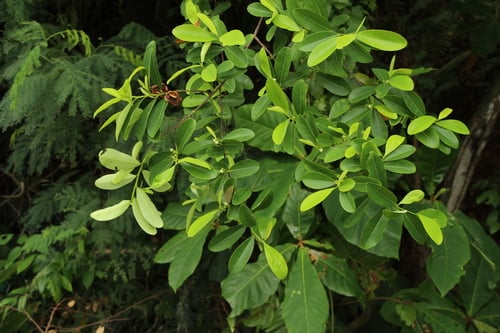
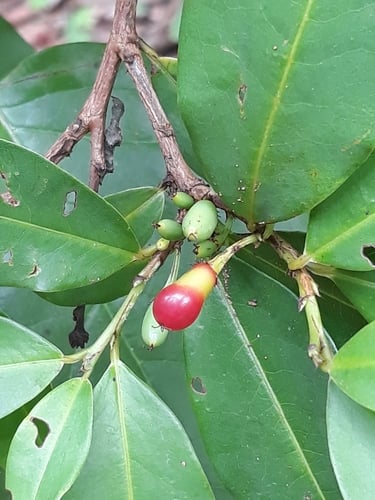
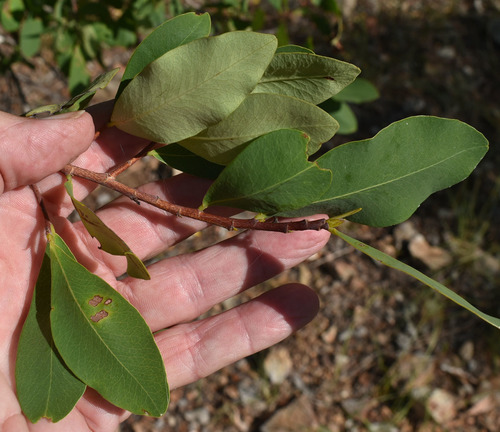
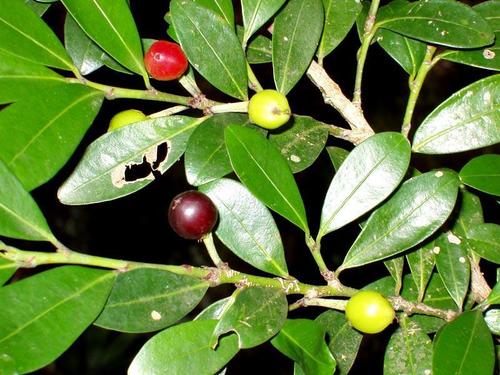
An erect shrub or tree. It grows 2-6 m high. The bark is grey and rough. The branches are flattened near the tips. The leaves are alternate and the leaflets are small. They are broadly sword shaped. They are 1-3 cm long by about 1.5 cm wide. The leaf tips are rounded and they taper to the base. The flowers are white to yellow-green. The fruit are bright red and fleshy. They are about 1 cm long. They are edible.
Edible Uses
The bright red fleshy fruit are eaten fresh as a snack.
Traditional Uses
The fruit are eaten as a snack.
This uses section is brief — help expand it
Distribution
It is a subtropical plant. It grows in dry soils. It grows below 1,350 m above sea level. It can grow in arid places.
Where It Grows
Africa, East Africa, Eswatini, Mozambique, South Africa, Southern Africa, Swaziland,
Synonyms
Also Known As
Ijobe, Izaza, Lijobe, Likhikhu, Luphehlwane, Umbanatsheni, Umneyana
References (7)
- Fox, F. W. & Young, M. E. N., 1982, Food from the Veld. Delta Books. p 188
- Long, C., 2005, Swaziland's Flora - siSwati names and Uses http://www.sntc.org.sz/flora/
- Royal Botanic Gardens, Kew (1999). Survey of Economic Plants for Arid and Semi-Arid Lands (SEPASAL) database. Published on the Internet; http://www.rbgkew.org.uk/ceb/sepasal/internet [Accessed 16th April 2011]
- Ruiters-Welcome, A. K., 2019, Food plants of southern Africa. Ph.D. thesis. Univ. of Johannesburg p 53
- Schmidt, E., Lotter, M., & McCleland, W., 2007, Trees and shrubs of Mpumalanga and Kruger National Park. Jacana Media p 228
Show all 7 references Hide references
- Welcome, A. K. & Van Wyk, B.-E., 2019, An inventory and analysis of the food plants of southern Africa. South African Journal of Botany 122 (2019) 136–179
- World Checklist of Useful Plant Species 2020. Royal Botanic Gardens, Kew