Conopodium majus
(Gouan) Loret & Barrandon
Pignut
iNaturalist· cc-by
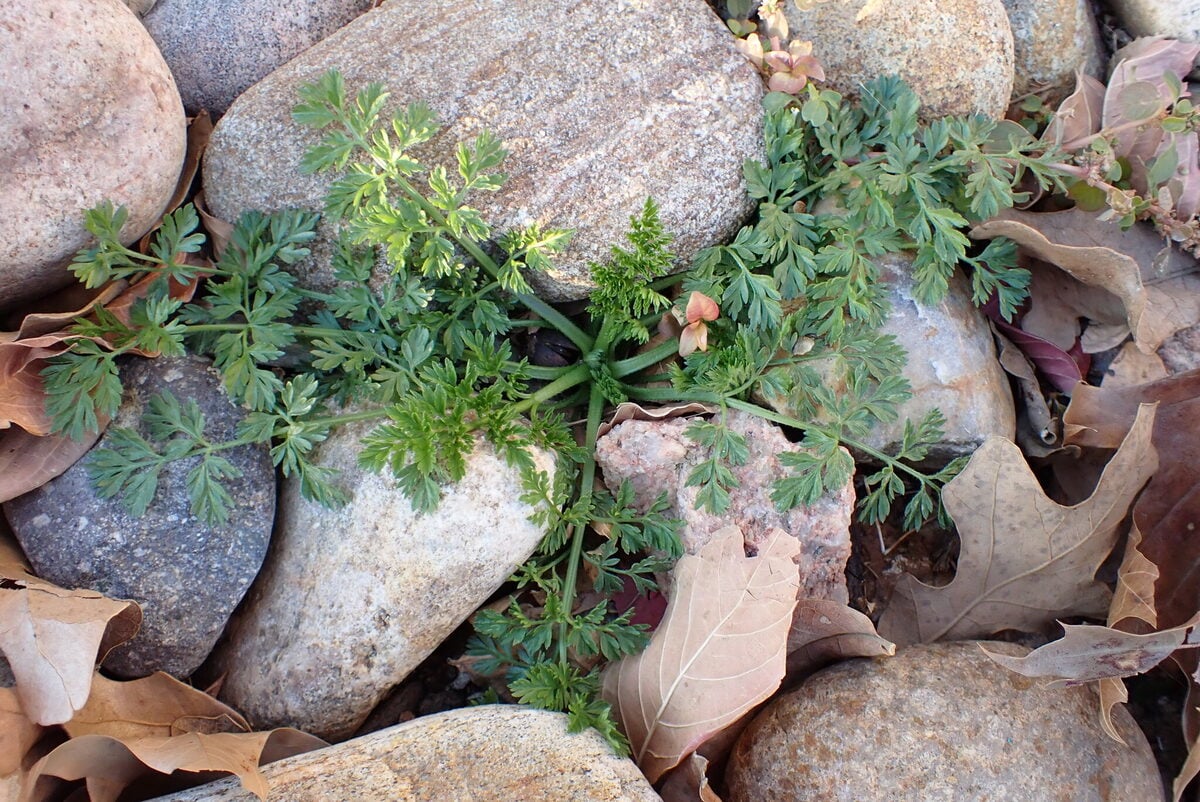
(c) Terry Instone, some rights reserved (CC BY), uploaded by Terry Instone
iNaturalist· cc-by-nc
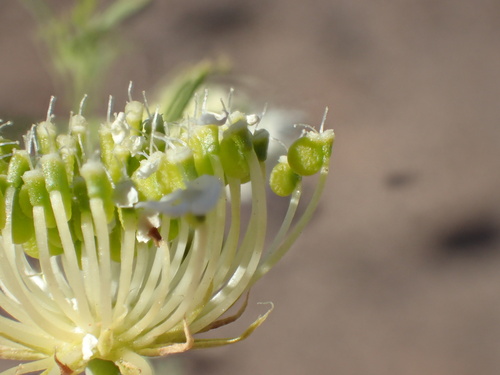
(c) Kélian Gautier, some rights reserved (CC BY-NC), uploaded by Kélian Gautier
iNaturalist· cc-by-nc
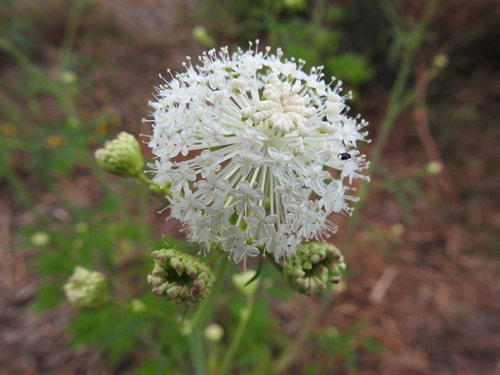
(c) David Earl, some rights reserved (CC BY-NC), uploaded by David Earl
Summary
Source: WikipediaConopodium majus is a perennial herbaceous flowering plant in the celery family, Apiaceae. Its underground part resembles a chestnut and is sometimes eaten as a wild or cultivated root vegetable. The plant has many English names (many of them shared with Bunium bulbocastanum, a related plant with similar appearance and uses) variously including kippernut, cipernut, arnut, jarnut, hawknut, earth chestnut, groundnut, and earthnut. From its popularity with pigs come the names pignut, hognut, and more indirectly Saint Anthony's nut, for Anthony the Great or Anthony of Padua, both patron saints of swineherds. (Other plants sharing these names include groundnut, earthnut, and hognut.)
Description
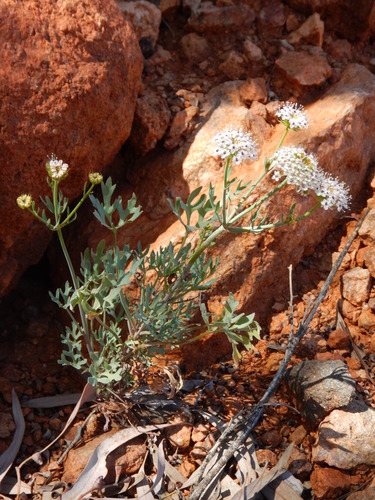
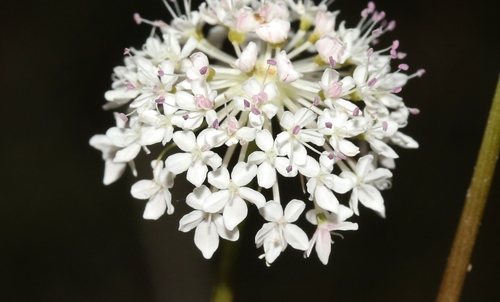
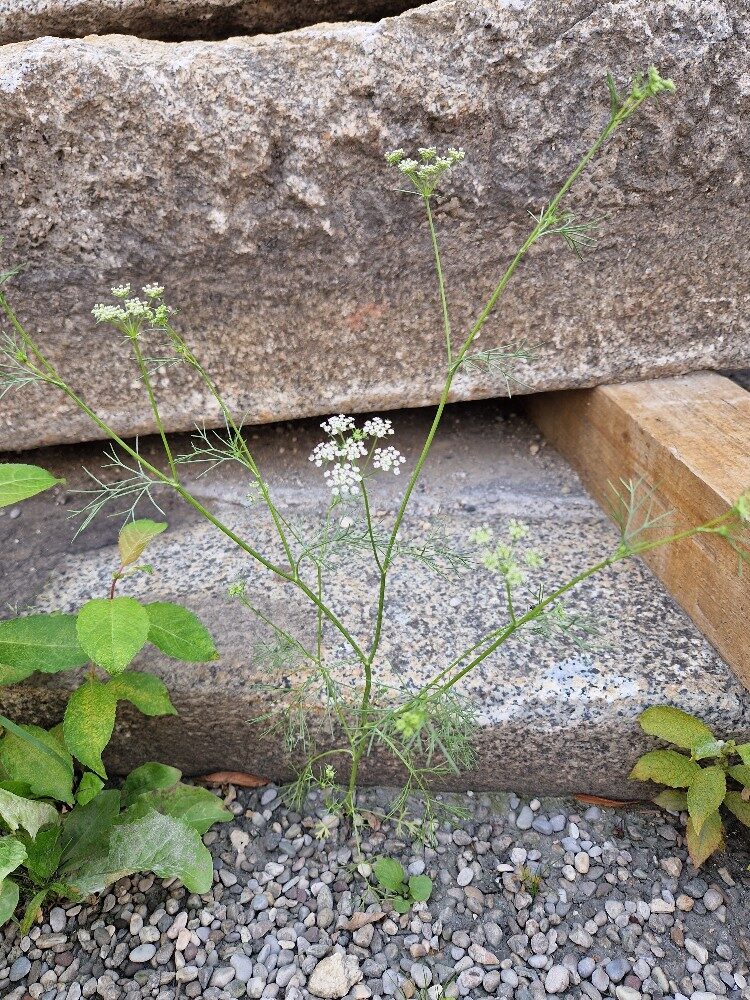
A herb. It keeps growing from year to year. The stem is smooth and slender curving. It grows 1 m tall. The leaves are much divided. The flowers are small and white. They are in flat topped groups at the top of the stem. It has a rounded 'nut' or tuberous root under the ground. It can be 2.5 cm across.
Edible Uses
The tubers can be eaten raw or cooked. They have a pleasant flavour described as somewhere between sweet potato and hazelnuts, with a hot radish-like aftertaste, though some find the flavour more reminiscent of brazil nuts. Each plant produces only a single tuber, which tends to be small and difficult to harvest, though cultivation could likely improve the yield and size.
Traditional Uses
The tubers are sliced and lightly fried and added to salads. They can also be boiled or roasted.
This uses section is brief — help expand it
Medicinal Uses
No medicinal uses are known for this plant.
Distribution
It is a temperate plant. It grows in fields and woodlands. It grows in hardiness zone 6.
Where It Grows
Africa, Britain, Europe, France, Ireland, Luxembourg, North Africa, Norway, Portugal, Scandinavia, Spain, USA,
Propagation
Sow seed in spring in a cold frame; germination is usually quick and good. Prick seedlings into individual pots as soon as they are large enough to handle and plant out in early summer. Sowing in situ is also possible but requires considerably more seed to match the plant numbers achieved from protected sowings. Alternatively, divide plants in late summer as the foliage dies down.
Other Uses
No other uses are known. Suitable for food forest applications.
Other Information
They are especially eaten by children.
Synonyms
Also Known As
Arnut, Earth chestnut, Earth nut, Frexo, Hawknut, Jarnut, Jordnott, Kippernut, Macuca
References (15)
- Fl. Montpellier ed. 2, 214. 1892
- Girard, N. J., 2020, Sustainable Foraging of Wild Edible Plants in Norway. A Bioculutral Approach. M. Sc. thesis Norwegian University. p 127
- Hedrick, U.P., 1919, (Ed.), Sturtevant's edible plants of the world. p 214 (As Conopodium denudatum)
- Heywood, V.H., Brummitt, R.K., Culham, A., and Seberg, O. 2007, Flowering Plant Families of the World. Royal Botanical Gardens, Kew. p 37
- Irving, M., 2009, The Forager Handbook, A Guide to the Edible Plants of Britain. Ebury Press p 111
Show all 15 references Hide references
- Jackes, D. A., Edible Forest Gardens
- Kiple, K.F. & Ornelas, K.C., (eds), 2000, The Cambridge World History of Food. CUP p 1770 (As Conopodium denudatum)
- Lim, T. K., 2015, Edible Medicinal and Non Medicinal Plants. Volume 9, Modified Stems, Roots, Bulbs. Springer p 27
- Mabey, R., 1973, Food for Free. A Guide to the edible wild plants of Britain, Collins. p 70
- Michael, P., 2007, Edible Wild Plants and Herbs. Grub Street. London. p 169
- Pardo-de-Santayana, M., et al, 2007, Traditional knowledge of wild edible plants used in the northwest of the Iberian Peninsula (Spain and Portugal): a comparative study. Journal of Ethnobiology and Ethnomedicine 2007, 3:27
- Plants for a Future database, The Field, Penpol, Lostwithiel, Cornwall, PL22 0NG, UK. http://www.scs.leeds.ac.uk/pfaf/
- Tardio, J., et al, 2006, Ethnobotanical review of wild edible plants in Spain. Botanical J. Linnean Soc. 152, 27-71
- Wickens, G.E., 1995, Edible Nuts. FAO Non-wood forest products. FAO, Rome. p158
- World Checklist of Useful Plant Species 2020. Royal Botanic Gardens, Kew