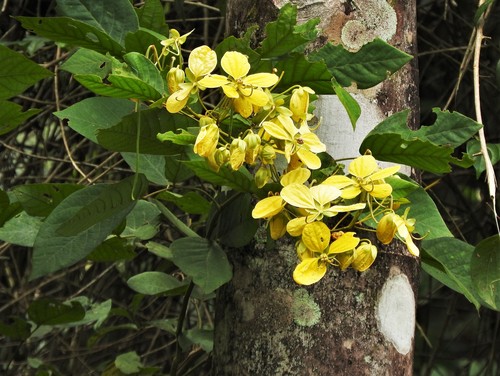
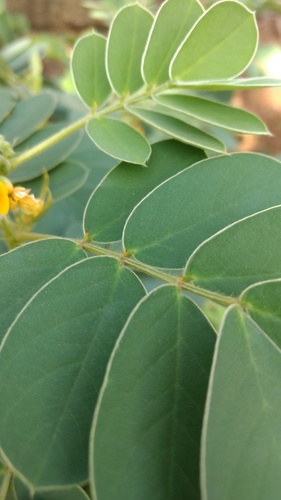
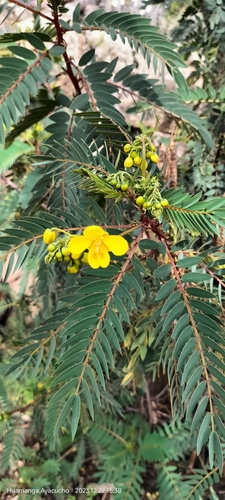
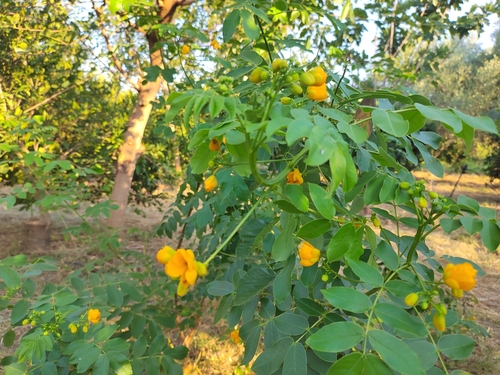
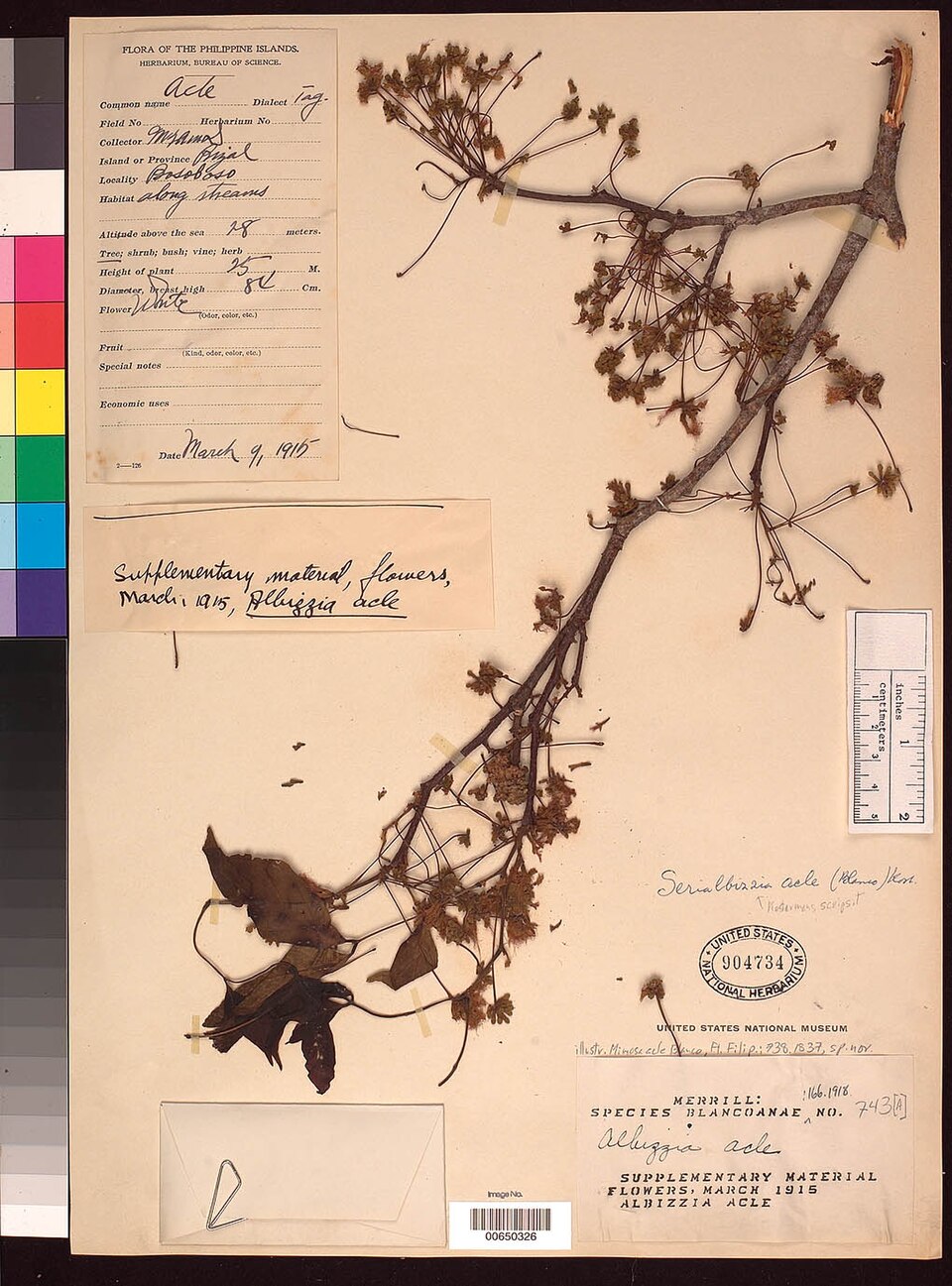
Campsiandra angustifolia
Benth.
Narrow leaf campsiandra
gbif· cc-by-nc
C. Dennis : Field Museum of Natural History - Botany Department
gbif· cc-by-nc
C. Dennis : Field Museum of Natural History - Botany Department
gbif· cc-by-nc
C. Dennis : Field Museum of Natural History - Botany Department
Description
A tropical tree in the Fabaceae family with edible seeds.
This description is brief — help expand it
Edible Uses
The seeds are commonly removed from the pod, dried, and then ground into a flour or meal. This flour is commonly referred to as 'chiga flour'. The dried seed is ground into a flour, known as 'chigo flour' and used to make a range of foods. The mature seeds are taken out of their seedpods and then buried for some time in damp soil. After a certain degree of fermentation has set in, they are dug up, washed and then pounded into a flour. The flour (which is rich in starch) is used for making bread and other foods.
Traditional Uses
The seeds are cooked and eaten.
This uses section is brief — help expand it
Medicinal Uses
The Peruvian common name, huacapurana, can apply to three different closely related species of Amazonian trees that are used interchangeably by local inhabitants: Campsiandra angustifolia, Campsiandra comosa, and Campsiandra laurifolia. (Campsiandra laurifolia is now viewed as a sub-species of Campsiandra comosa, as Campsiandra comosa laurifolia (Benth.)R.S.Cowan. When used in Peruvian herbal medicine, the 'authentic huacapurana' is considered to be Campsiandra angustifolia. No medical research has been published on this plant, but the bark is believed to contain anthocyanins, cyanogenic glucosides, heterosides, saponins, and tannins. Huacapurana is a common remedy for malarial fever in the Peruvian Amazon. In the Iquitos region, local herbalists and curanderos recommend a decoction or a tincture of the bark to be taken twice daily in order to reduce the fever related to malaria. The bark is also recommended for treating other feverish conditions; arthritis and rheumatism; diarrhoea, and as a tonic. Externally, the pulverized bark is used to treat wounds and to clean sores and ulcers. The bark is being widely touted as a treatment for Lyme's Disease as well as a host of other microbial issues and diseases. None of these claims can be substantiated by independent third-party documentation or published research, nor even by traditional use.
Distribution
It is a tropical plant.
Where It Grows
Amazon, Bolivia, Brazil, Colombia, Peru, South America, Venezuela,
Cultivation
The seed has a circular, spongy wing encircling it that enables it to float on the surface of the water.
Also Known As
Acupurana, Huacapurana, Pimakaru'ywa
References (3)
- Grandtner, M. M. & Chevrette, J., 2013, Dictionary of Trees, Volume 2: South America: Nomenclature, Taxonomy and Ecology. Academic Press p 97
- Kermath, B. M., et al, 2014, Food Plants in the Americas: A survey of the domesticated, cultivated and wild plants used for Human food in North, Central and South America and the Caribbean. On line draft. p 172
- Roa, J. A. G. & Boada, D. S. G., 2018, Fundación para el Fortalecimiento de la Fruticultura y Plantas Alimenticias no Convencionales en Colombia.