Vigna marina
(Burm.) Merr.
Dune bean, Marine vine, Beach bean
iNaturalist· cc0
no rights reserved, uploaded by 葉子
iNaturalist· cc0
no rights reserved
iNaturalist· cc0
no rights reserved
Summary
Source: WikipediaVigna marina is a prostrate, creeping vine and a perennial plant. Also known as the beach pea, nanea, and notched cowpea, it is a species of legume in the family Fabaceae.
Description
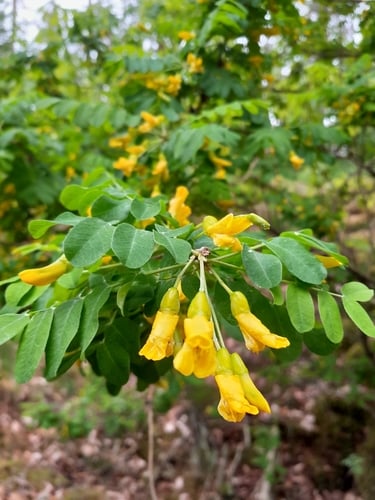
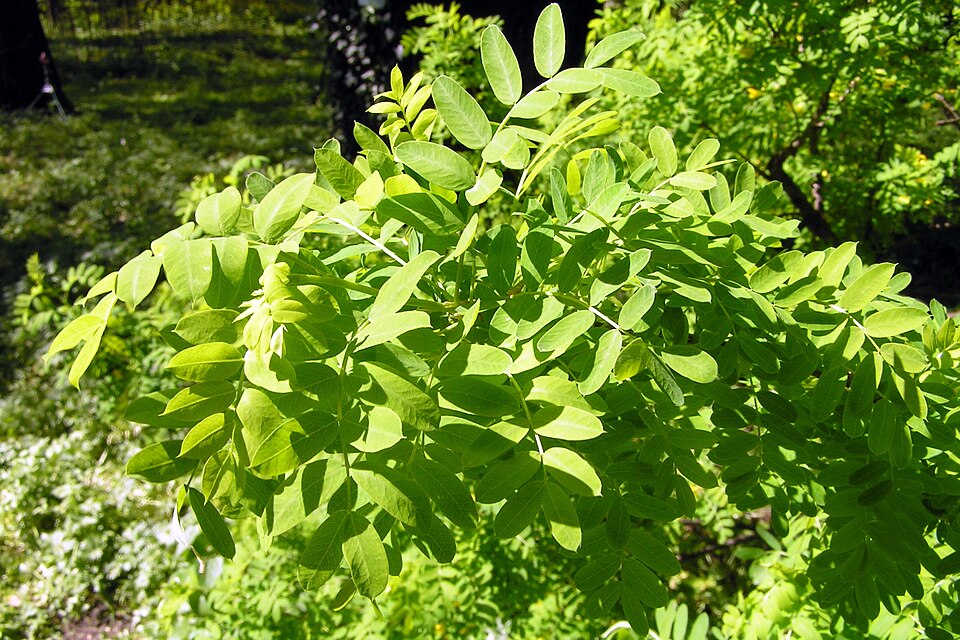
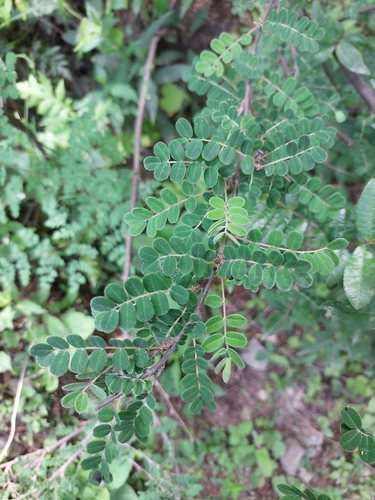
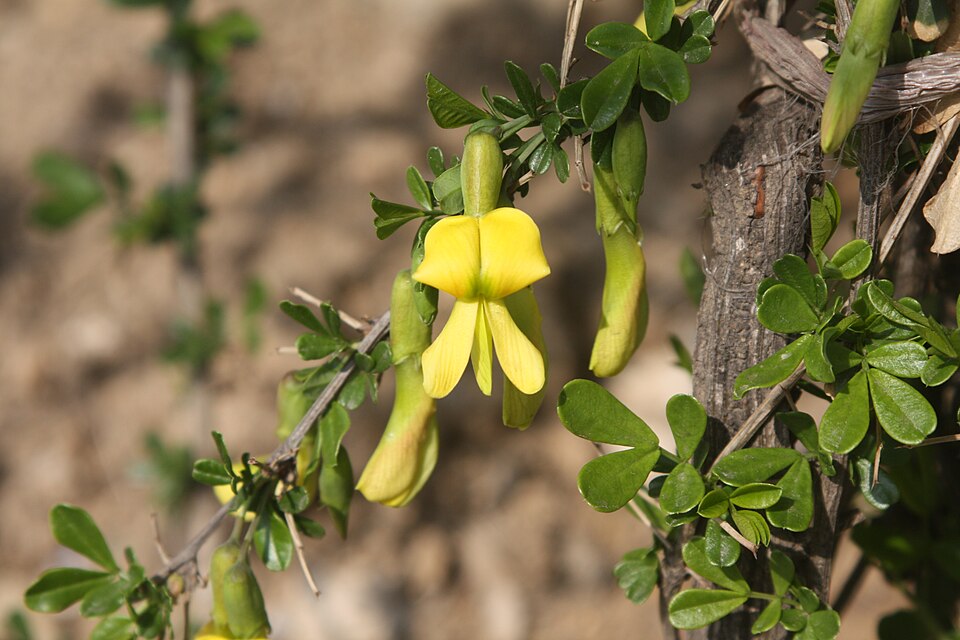
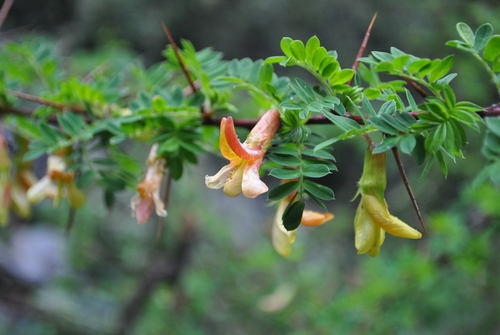
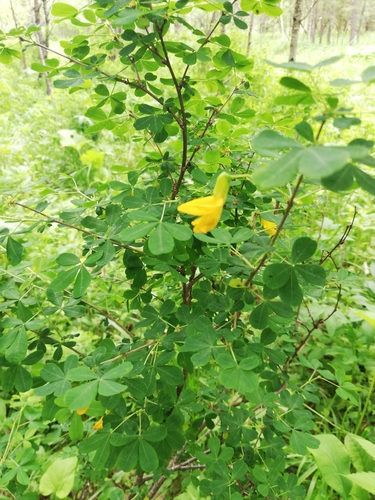
A climbing or scrambling herb. It can grow to several metres long. The stems can be hairy. The leaflets are rounded. They are 3.5-9.5 cm long by 2.5-7.5 cm wide. The leaf stalks are 2-11 cm long. The flowering stems are erect. They can be 4-10 cm long. The flower is yellow but often green when young. The flowers are 1.2 cm long. The fruit are narrow pods which are slightly curved. They are 4-6 cm long and 8-9 mm wide. They are constricted between the seeds. There are 2-6 seeds. The seeds are brown or red. They are oblong and 6-7 mm long by 5-6 mm wide.
Edible Uses
The roots are eaten cooked and probably raw. Young leaves are sometimes cooked with other foods. Young pods are cooked as a vegetable. Seeds are boiled and eaten.
Traditional Uses
The roots can be eaten cooked and probably raw. The young leaves are sometimes eaten cooked with other food. The young pods are cooked as a vegetable. The seeds are boiled and eaten.
Medicinal Uses
The plant is used medicinally. The fresh leaves are crushed with lime and water, squeezed and the juice drunk as a remedy for stomach aches. The juice extracted from freshly crushed young leaves is given to children as a treatment for asthma. The leaves are heated over a fire and then used as a poultice on sores.
Distribution
A tropical plant. It occurs just above high tide mark on sandy beaches. It occurs throughout the tropics. It is salt tolerant. It grows on atolls.
Where It Grows
Africa, American Samoa, Asia, Australia, British Indian Ocean Terr., BIOT, Cameroon, Caroline islands, Central Africa, China, Chuuk, East Africa, East Timor, Equatorial Guinea, Fiji, FSM, Gabon, India, Indochina, Indonesia, Hawaii, Japan, Kiribati, Liberia, Maldives, Mariana Islands, Marshall Islands, Mauritius, Micronesia, Mozambique, Myanmar, Nauru, Niue, Norfolk Island, Pacific, Palau, Papua New Guinea, PNG, Philippines, Pohnpei, Puerto Rico, Reunion, Rotuma, Samoa, Sao Tome and Principe, SE Asia, Seychelles, Solomon Islands, South Africa, Southern Africa, Sri Lanka, Taiwan, Tanzania, Timor-Leste, Tonga, Tuvalu, USA, Vietnam, West Africa, West Indies, Yap,
Cultivation
Found in coastal areas through much of the tropics, it requires an annual rainfall of at least 500mm annual to survive. The plant is very frost-sensitive. Grows well on wet and poorly drained soils. The plant is obviously salt-tolerant. Plants can flower and produce fruit all year round. This species has a symbiotic relationship with certain soil bacteria; these bacteria form nodules on the roots and fix atmospheric nitrogen. Some of this nitrogen is utilized by the growing plant but some can also be used by other plants growing nearby.
Other Uses
Vigna marina occurs as a natural sand binder on sea shores and coastal sand dunes. It is also cultivated as a cover crop.
Notes
There are about 150 Vigna species. They are mostly in the tropics.
Nutrition
| Part | Moisture | kJ | kcal | Protein | Vit A | Vit C | Iron | Zinc |
|---|---|---|---|---|---|---|---|---|
| Seeds | 12 | 1363 | 326 | 20 | — | — | 6 | — |
Synonyms
Also Known As
Beach cowpea, Erekogo, Fue sina, Kachang laut, Kodeppayam, Lau fue fue, Lima karal, Markinenjojo, Mekaral, Notched cowpea, Pe-dalet-yaing, Pudalangai, Taut-tul, Te kitoko
References (34)
- Ambasta, S.P. (Ed.), 2000, The Useful Plants of India. CSIR India. p 677
- Borrell, O.W., 1989, An Annotated Checklist of the Flora of Kairiru Island, New Guinea. Marcellin College, Victoria Australia. p 92
- Burkill, H. M., 1985, The useful plants of west tropical Africa, Vol. 3. Kew.
- Burkill, I.H., 1966, A Dictionary of the Economic Products of the Malay Peninsula. Ministry of Agriculture and Cooperatives, Kuala Lumpur, Malaysia. Vol 2 (I-Z) p 2271
- Cooper, W. and Cooper, W., 2004, Fruits of the Australian Tropical Rainforest. Nokomis Editions, Victoria, Australia. p 218
Show all 34 references Hide references
- Cowie, I, 2006, A Survey of Flora and vegetation of the proposed Jaco-Tutuala-Lore National Park. Timor-Lests (East Timor) www.territorystories.nt/gov.au p 48
- Cribb, A.B. & J.W., 1976, Wild Food in Australia, Fontana. p 144
- Dakora, F. D., 2013, Biogeographic Distribution, Nodulation and Nutritional Attributes of Underutilized Indigenous Agrican Legumes. Acta Horticulturae Number 979 Vol. 1. p 53
- Flora of Australia Volume 49, Oceanic Islands 1, Australian Government Publishing Service, Canberra. (1994) p 185
- Flora of Solomon Islands
- Franklin, J., Keppel, G., & Whistler, W., 2008, The vegetation and flora of Lakeba, Nayau and Aiwa Islands, Central Lau Group, Fiji. Micronesica 40(1/2): 169–225, 2008
- Grubben, G. J. H. and Denton, O. A. (eds), 2004, Plant Resources of Tropical Africa 2. Vegetables. PROTA, Wageningen, Netherlands. p 565
- Haslam, S., 2004, Noosa's Native Plants. Noosa Integrated Catchment Assn. Inc. p 37
- Hinton, B & B., 1982, A Wilderness in Bloom. Wildflowers of tropical Australia. p 9
- Jones, D.L. & Gray, B., 1977, Australian Climbing Plants. Reed. p 61, 152
- Lazarides, M. & Hince, B., 1993, Handbook of Economic Plants of Australia, CSIRO. p 247
- Liefting, A., et al, Samoan plant names. http://en.wikipedia.org
- Lim, T. K., 2015, Edible Medicinal and Non Medicinal Plants. Volume 9, Modified Stems, Roots, Bulbs. Springer p 85
- Low, T., 1991, Wild Food Plants of Australia. Australian Nature FieldGuide, Angus & Robertson. p 162
- Low, T., 1992, Bush Tucker. Australia’s Wild Food Harvest. Angus & Robertson. p 99
- Massal, E. and Barrau, J., 1973, Food Plants of the South Sea Islands. SPC Technical Paper No 94. Nounea, New Caledonia. p 30 (As Vigna lutea)
- Melzer, R. & Plumb, J., 2011, Plants of Capricornia. Belgamba, Rockhampton. p 373
- Peekel, P.G., 1984, (Translation E.E.Henty), Flora of the Bismarck Archipelago for Naturalists, Division of Botany, Lae, PNG. p 259, 260
- Pham-Hoang Ho, 1999, An Illustrated Flora of Vietnam. Nha Xuat Ban Tre. p 961
- Rajapaksha, U., 1998, Traditional Food Plants in Sri Lanka. HARTI, Sri Lanka. p 262
- Sprent, J. I., et al, 2009, African legumes: a vital but under-utilized resource. Journal of Experimental Botany.
- Staples, G.W. and Herbst, D.R., 2005, A tropical Garden Flora. Bishop Museum Press, Honolulu, Hawaii. p 330
- Terra, G.J.A., 1973, Tropical Vegetables. Communication 54e Royal Tropical Institute, Amsterdam, p 80
- Thaman, R. R., 1987, Plants of Kiribati: A listing and analysis of vernacular names. Atoll Research Bulletin No. 296
- Thaman, R. R, 2016, The flora of Tuvalu. Atoll Research Bulletin No. 611. Smithsonian Institute p 93
- Topp, J. M. W., 1988, An Annotated Check List of the Flora of Diego Garcia, British Ocean Territory. Atoll Research Bulletin No. 313
- Verdcourt, B., 1979, Manual of New Guinea Legumes. Botany Bulletin No 11, Division of Botany, Lae, Papua New Guinea. p 520
- World Checklist of Useful Plant Species 2020. Royal Botanic Gardens, Kew
- Yuncker, T.G., 1959, Plants of Tonga, Bernice P. Bishop Museum, Hawaii, Bulletin 220. p 150