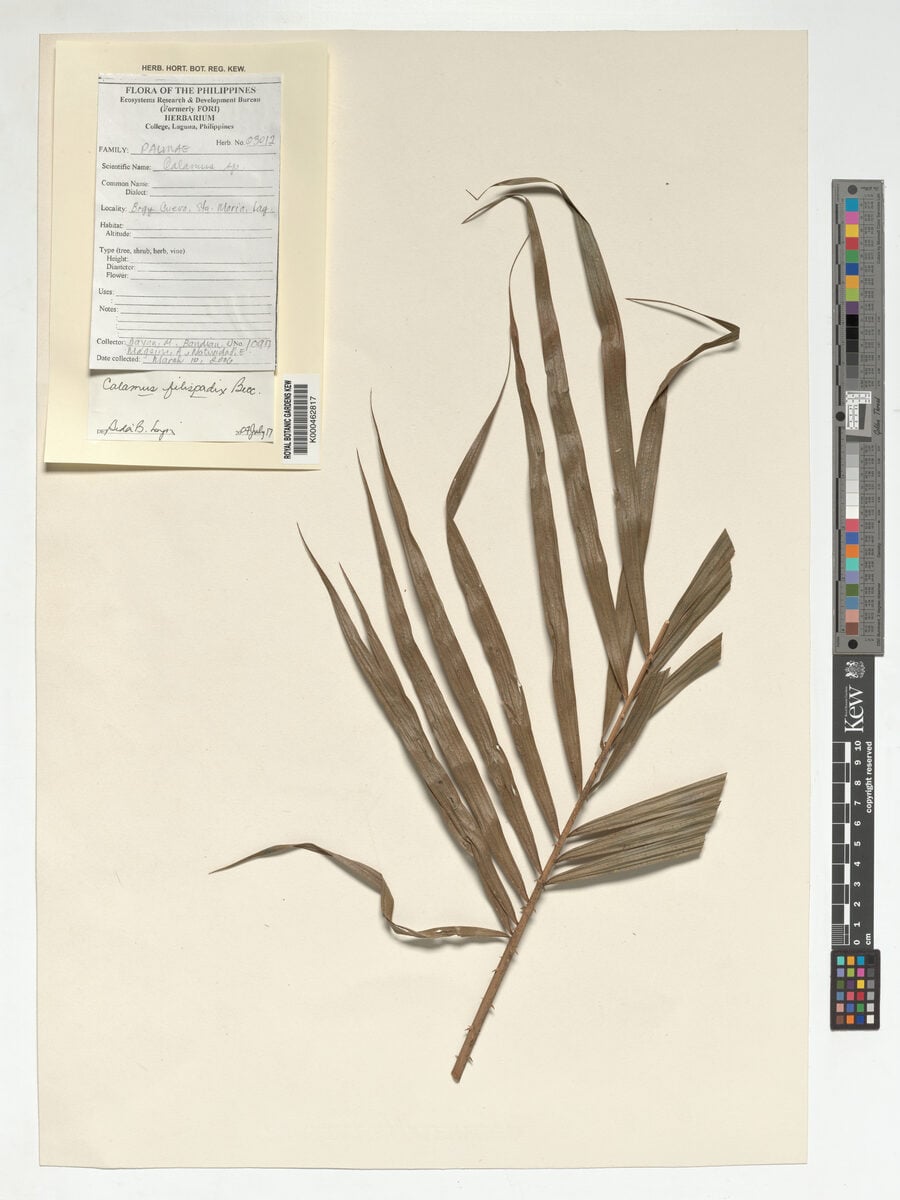
Bactris fissifrons
Mart.
iNaturalist· cc-by-nc
(c) Juan Alvaro, some rights reserved (CC BY-NC), uploaded by Juan Alvaro
iNaturalist· cc-by-nc
(c) Juan Alvaro, some rights reserved (CC BY-NC), uploaded by Juan Alvaro
iNaturalist· cc-by-nc
(c) Juan Alvaro, some rights reserved (CC BY-NC), uploaded by Juan Alvaro
Description
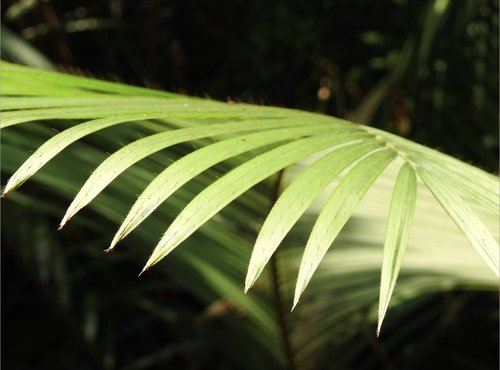
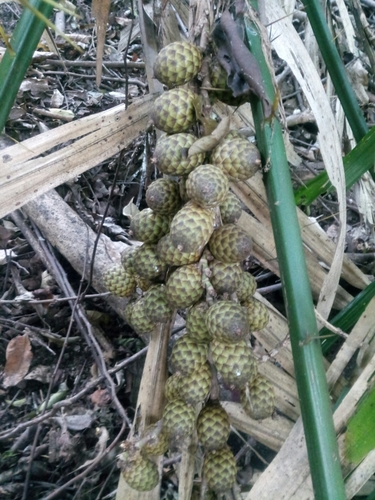
A palm. It forms clumps and can have 10 stems. It grows 2-3 m tall and they stems are 1-3 cm across. There are 4-12 leaves. The leaves have spines in clusters. They are 4 cm long. The leaves are up to 1 m long and there are 2-3 leafs on each side. The flowers are between the leaves on stalks 10-25 cm long. The fruit are 2-3 cm long by 1.5-2 cm wide. They are yellow and turn purple-black.
Edible Uses
The stems are burned to produce vegetable salt, and the fruit is eaten.
Traditional Uses
The stems are burnt for vegetable salt.
This uses section is brief — help expand it
Distribution
It is a tropical plant. It grows in lowland rainforest in well drained soils. It grows between 100-265 m above sea level.
Where It Grows
Amazon, Brazil, Colombia, Ecuador, Peru, South America,
Other Information
It is cultivated.
Synonyms
Also Known As
Chontilla de selva, Coquito, Huati huii, Zitori
References (5)
- Kermath, B. M., et al, 2014, Food Plants in the Americas: A survey of the domesticated, cultivated and wild plants used for Human food in North, Central and South America and the Caribbean. On line draft. p 115
- Kew Plants of the World onLine
- Lopez-Diago, D. & Garcia, N., 2021, Wild edible fruits of Colombia. Biota ColomBiana 22 (2) p 31
- Roa, J. A. G. & Boada, D. S. G., 2018, Fundación para el Fortalecimiento de la Fruticultura y Plantas Alimenticias no Convencionales en Colombia.
- Torre, de la L., et al, 2008, Enciclopedia de las Plantas Útiles del Ecuador. Herbario QCA. Pontificia Universidad Católica del Ecuador. p 196