Sisymbrium loeselii
L.
False London rocket, Tumbleweed mustard
iNaturalist· cc-by
(c) Юрий Данилевский (Yuriy Danilevsky), some rights reserved (CC BY), uploaded by Юрий Данилевский (Yuriy Danilevsky)
iNaturalist· cc-by-nc
(c) lelya2210, some rights reserved (CC BY-NC)
iNaturalist· cc-by-nc
(c) lelya2210, some rights reserved (CC BY-NC)
Summary
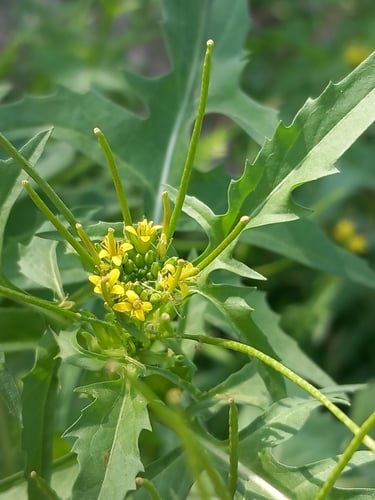
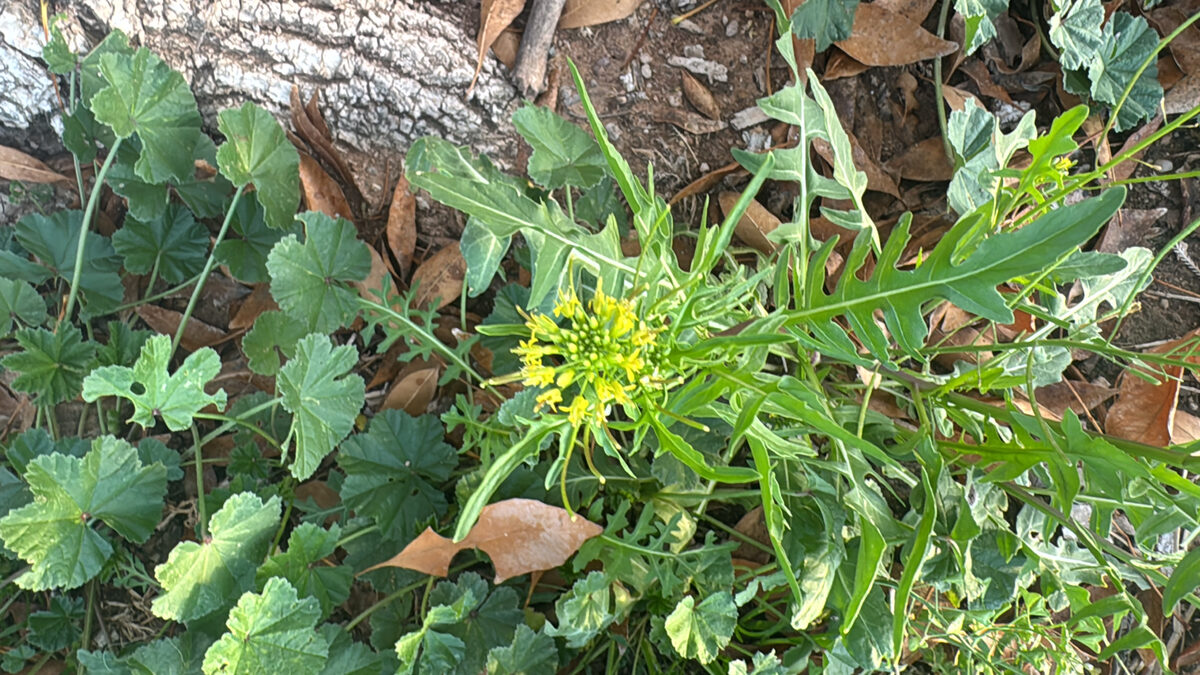
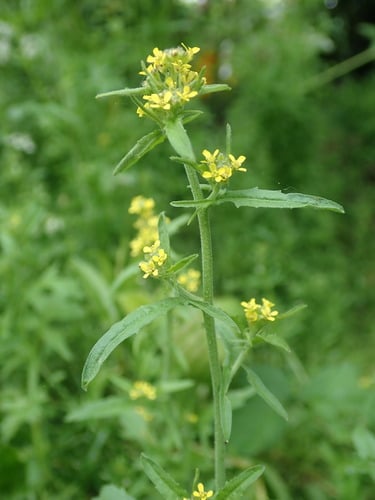
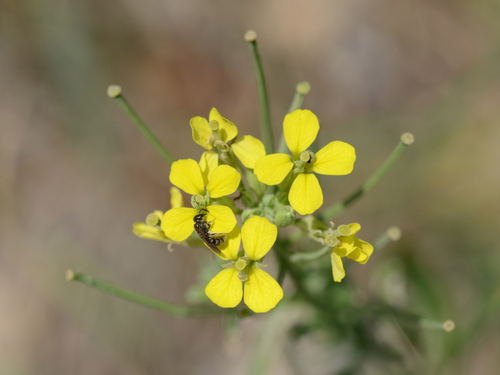
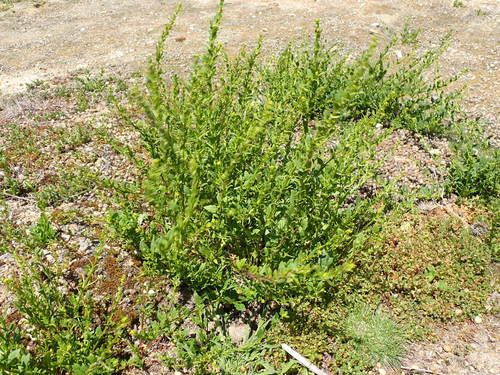
Source: WikipediaSisymbrium loeselii is a species of flowering plant in the family Brassicaceae known by several common names, including small tumbleweed mustard, false London-rocket, and tall hedge mustard. It is native to Eurasia, and it is known on other continents as an introduced species and in some areas a common roadside weed. It is an annual herb producing a hairy, erect stem which can exceed a meter in height. The leaf blades are divided into triangular, lance-shaped, and toothed linear lobes, and are borne on petioles. The top of the stem is occupied by a raceme of flowers with bright yellow petals each measuring just under a centimeter long. The fruit is a silique up to 3.5 centimeters in length containing tiny seeds. This plant is allelopathic against other species growing around it. It produces chemicals that inhibit the germination of seeds of other species, including bluebunch wheatgrass (Pseudoroegneria spicata) and Idaho fescue (Festuca idahoensis). It also inhibits arbuscular mycorrhizal fungus species, such as Glomus intraradices. The species is named for German botanist Johannes Loesel.
Description
A cabbage family herb. It grows each year from seed. The stem is erect and 1 m tall. The leaves are divided into triangle shaped lobes. These have teeth along the edge. The flowers are bright yellow and at the top of the plant. The pod is 3.5 cm long and contains small seeds.
Edible Uses
None known.
Traditional Uses
The leaves are used in salads. They are also cooked as a vegetable.
This uses section is brief — help expand it
Medicinal Uses
The leaves and flowers are used in the treatment of scurvy and scrofula.
Distribution
It is a temperate plant. In NW India it grows between 2,200-2,800 m above sea level.
Where It Grows
Asia, Britain, Central Asia, Europe, Finland, India, Mongolia, North America, NW India, Scandinavia, Tajikistan, Turkey, Türkiye, USA,
Cultivation
Succeeds in most soils. This species is closely related to S. irio.
Propagation
Seed - sow spring or autumn in situ.
Other Uses
None known Special Uses
Notes
It produces chemicals that stop seeds near it from growing.
Synonyms
Also Known As
Chhuchh, Dan hakh, Xerdel
References (5)
- Irving, M., 2009, The Forager Handbook, A Guide to the Edible Plants of Britain. Ebury Press p 100
- Mir, M. Y., 2014, Documentation and ethnobotanical survey of wild edible plants used by the tribals of Kupwara, J & K, India. International Journal of Herbal Medicine. 2(4): 11-18
- Urgamal, M., Oyuntsetseg, B., Nyambayar, D. & Dulamsuren, Ch. 2014. Conspectus of the vascular plants of Mongolia. (Editors: Sanchir, Ch. & Jamsran, Ts.). Ulaanbaatar, Mongolia. “Admon“ Press. 334pp. (p. 79-90).
- Wild edible plants of Himachal Pradesh
- Yesil, Y., et al, 2019, Traditional knowledge of wild edible plants in Hasankeyf (Batman Province, Turkey). Acta Societatis Botanicorum Poloniae. 88(3):3633