Saussurea tridactyla
Sch.Bio ex Hook.f.
iNaturalist· cc-by-nc
(c) dbfromm, some rights reserved (CC BY-NC)
iNaturalist· cc-by-nc-sa
(c) Cyril Gros, some rights reserved (CC BY-NC-SA)
iNaturalist· cc-by-nc-sa
(c) Cyril Gros, some rights reserved (CC BY-NC-SA)
Description
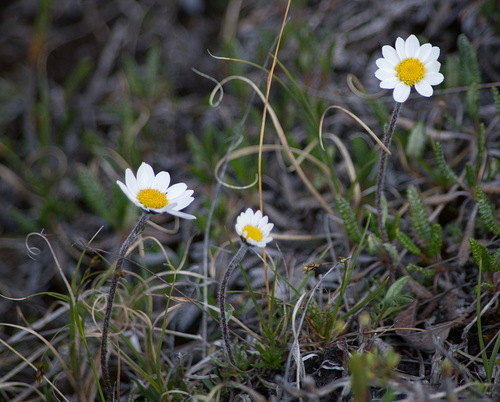
A herb. It grows 8-15 cm tall. It keeps growing from year to year. The rootstock is usually branched and there is a single erect stem. There are a ring of leaves at the base and leaves on the stem. The lower ones have leaf stalks. The leaves are spoon shaped and 5-25 mm long by 2-6 mm wide. There are 3-6 lobes along the edge. There are several flower heads in a half round arrangement 2-3 cm across,
Edible Uses
The flowers are eaten raw and the young shoots are eaten as a vegetable.
Traditional Uses
The flowers are eaten raw. The young shoots are eaten as a vegetable.
This uses section is brief — help expand it
Distribution
It is a temperate plant. It grows on alpine scree slopes between 4,300-5,300 m above sea level in Tibet. In Yunnan.
Where It Grows
Asia, Bhutan, China, Himalayas, India, Nepal, Northeastern India, Sikkim, Tibet,
Also Known As
Mahaguru, Mathok-khangla
References (2)
- Liu, Yi-tao, & Long, Chun-Lin, 2002, Studies on Edible Flowers Consumed by Ethnic Groups in Yunnan. Acta Botanica Yunnanica. 24(1):41-56
- Savita, et al, 2006, Studies on wild edible plants of ethnic people in east Sikkim. Asian J. of Bio Sci. (2006) Vol. 1 No. 2 : 117-125