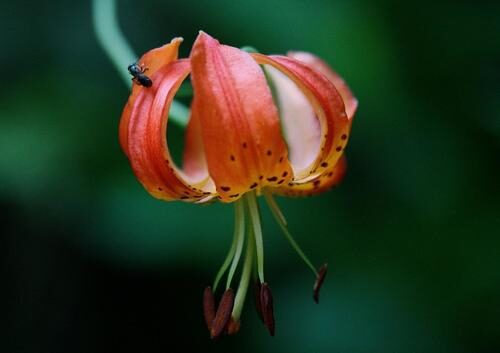
Lilium taliense
Franch.
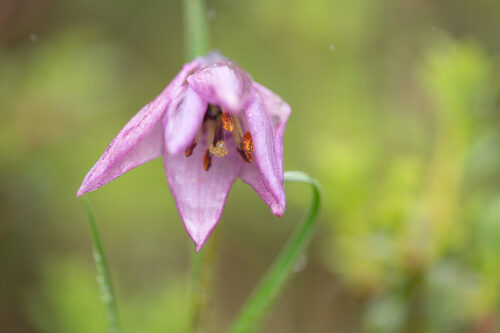
iNaturalist· cc-by-nc
(c) Lukasz Madrzynski 孟巨石, some rights reserved (CC BY-NC), uploaded by Lukasz Madrzynski 孟巨石
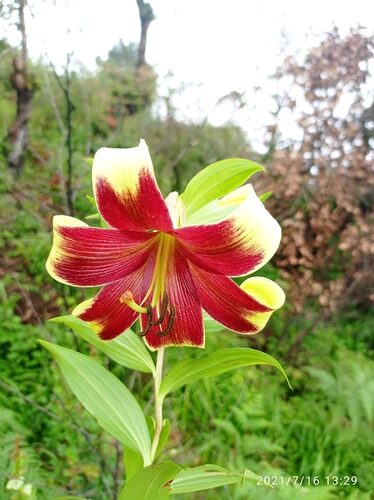
iNaturalist· cc-by-nc
(c) ed_shaw, some rights reserved (CC BY-NC)
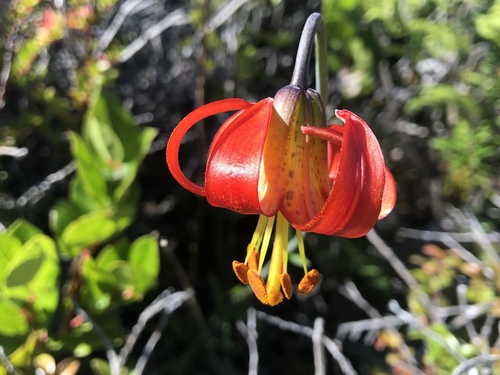
iNaturalist· cc-by-nc
(c) ed_shaw, some rights reserved (CC BY-NC)
Description
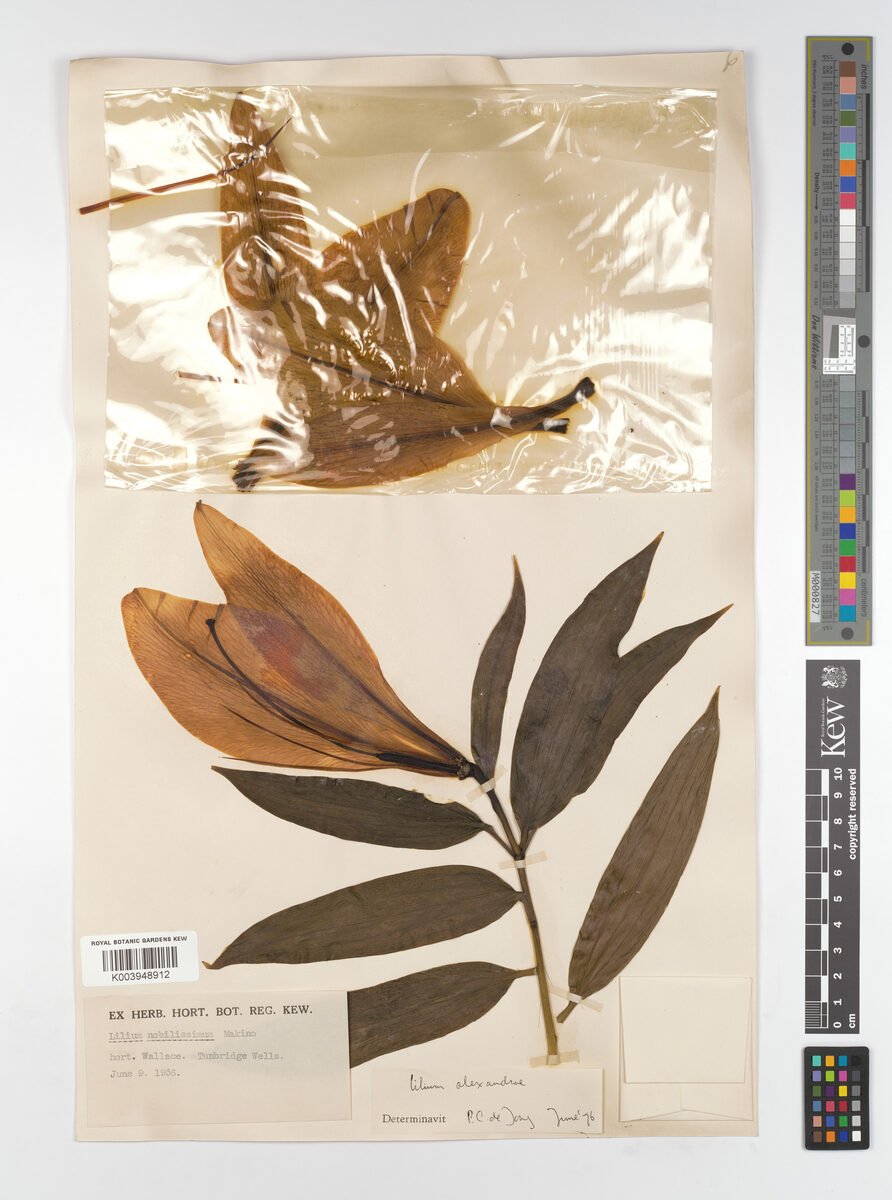
A lily bulb plant. The bulb is 2.5 cm across. The stem is 70-150 cm tall. It can have purple spots. The leaves are scattered and narrow They are 8-10 cm long by 6-8 mm wide. There are 2-5 flowers in a group. They are white with purple spots.
Edible Uses
Lily bulbs are starchy and edible as root vegetables, though bulbs of some species may be too bitter to eat. Lilium brownii var. viridulum, known as 百合 (pak hop; pinyin: bǎi hé; Cantonese Yale: baak hap; lit. 'hundred united'), is one of the most prominent edible lilies in China. Its bulbs are large in size and not bitter. They were even exported and sold in the San Francisco Chinatown in the 19th century, available both fresh and dry. A landrace called 龍牙百合 (pinyin: lóng yá bǎi hé; lit. 'dragon-tooth lily') mainly cultivated in Hunan and Jiangxi is especially renowned for its good-quality bulbs. L. lancifolium (Chinese: 卷丹; pinyin: juǎn dān; lit. 'reflexed red') is widely cultivated in China, especially in Yixing, Huzhou and Longshan. Its bulbs are slightly bitter. L. davidii var. unicolor (Chinese: 蘭州百合; lit. 'Lanzhou lily') is mainly cultivated in Lanzhou and its bulbs are valued for sweetness. Other edible Chinese lilies include L. brownii var. brownii, L. davidii var. davidii, L. concolor, L. pensylvanicum, L. distichum, L. martagon var. pilosiusculum, L. pumilum, L. rosthornii and L. speciosum var. gloriosoides. Researchers have also explored the possibility of using ornamental cultivars as edible lilies. The dried bulbs are commonly used in the south to flavor soup. They may be reconstituted and stir-fried, grated and used to thicken soup, or processed to extract starch. Their texture and taste draw comparisons with the potato, although the individual bulb scales are much smaller. The commonly marketed "lily" flower buds, called kam cham tsoi (Chinese: 金针菜; pinyin: jīnzhēncài; Cantonese Yale: gāmjām choi; lit. 'gold needle vegetable') in Chinese cuisine, are actually from daylilies, Hemerocallis citrina, or possibly H. fulva. Flowers of the H. graminea and Lilium bulbiferum were reported to have been eaten as well, but samples provided by the informant were strictly daylilies and did not include L. bulbiferum. Lily flowers and bulbs are eaten especially in the summer, for their perceived ability to reduce internal heat. A 19th century English source reported that "Lily flowers are also said to be efficacious in pulmonary affections, and to have tonic properties". Asiatic lily cultivars are also imported from the Netherlands; the seedling bulbs must be imported from the Netherlands every year. The parts of Lilium species which are officially listed as food material in Taiwan are the flower and bulbs of Lilium lancifolium, Lilium brownii var. viridulum, Lilium pumilum and Lilium candidum. The lily bulb or yuri-ne is sometimes used in Japanese cuisine. It may be most familiar in the present day as an occasional ingredient (具, gu) in the chawan-mushi (savoury egg custard), where a few loosened scales of this optional ingredient are found embedded in the "hot pudding" of each serving. It could also be used as an ingredient in a clear soup or suimono. The boiled bulb may also be strained into purée for use, as in the sweetened kinton, or chakin-shibori.
Medicinal Uses
Traditional Chinese medicine list the use of the following: 野百合 Lilium brownii, 百合 Lilium brownii var. viridulum, 渥丹 Lilium concolor, 毛百合 Lilium dauricum, 卷丹 Lilium lancifolium, 山丹 Lilium pumilum, 南川百合 Lilium rosthornii, 药百合Lilium speciosum var. gloriosoides, 淡黄花百合 Lilium sulphureum. In Taiwan, governmental publications list Lilium lancifolium Thunb., Lilium brownii var. viridulum Baker, Lilium pumilum DC. In the kanpō or Chinese medicine as practiced in Japan, the official Japanese governmental pharmacopeia Nihon yakkyokuhō (日本薬局方) includes the use of lily bulb (known as byakugō (ビャクゴウ 百合) in traditional pharmacological circles), listing the use of the following species: Lilium lancifolium, Lilium brownii, Lilium brownii var. colchesteri, Lilium pumilum The scales flaked off from the bulbs are used, usually steamed. In South Korea, the lilium species which are officially listed for medicinal use are 참나리 Lilium lancifolium Thunberg; 당나리 Lilium brownii var. viridulun Baker.
Known Hazards
Some Lilium species are toxic to cats. This is known to be especially so for Lilium longiflorum, though other Lilium and the unrelated Hemerocallis can also cause the same symptoms with equal lethality. The true mechanism of toxicity is undetermined, but it involves damage to the renal tubular epithelium (composing the substance of the kidney and secreting, collecting, and conducting urine), which can cause acute kidney failure. Veterinary help should be sought, as a matter of urgency, for any cat that is suspected of eating any part of a lily – including licking pollen that may have brushed onto its coat. Due to the high mortality rate, medical care should be sought immediately once it is known a cat came into contact with lilies, ideally before any symptoms develop.
Distribution
It is a temperate plant. It grows in forests ad on grassy slopes between 2,600-3,600 m above sea level in southern China. In Sichuan and Yunnan.
Where It Grows
Asia, China, Tibet,
References (1)
- Liu, Yi-tao, & Long, Chun-Lin, 2002, Studies on Edible Flowers Consumed by Ethnic Groups in Yunnan. Acta Botanica Yunnanica. 24(1):41-56 (As taliensis)