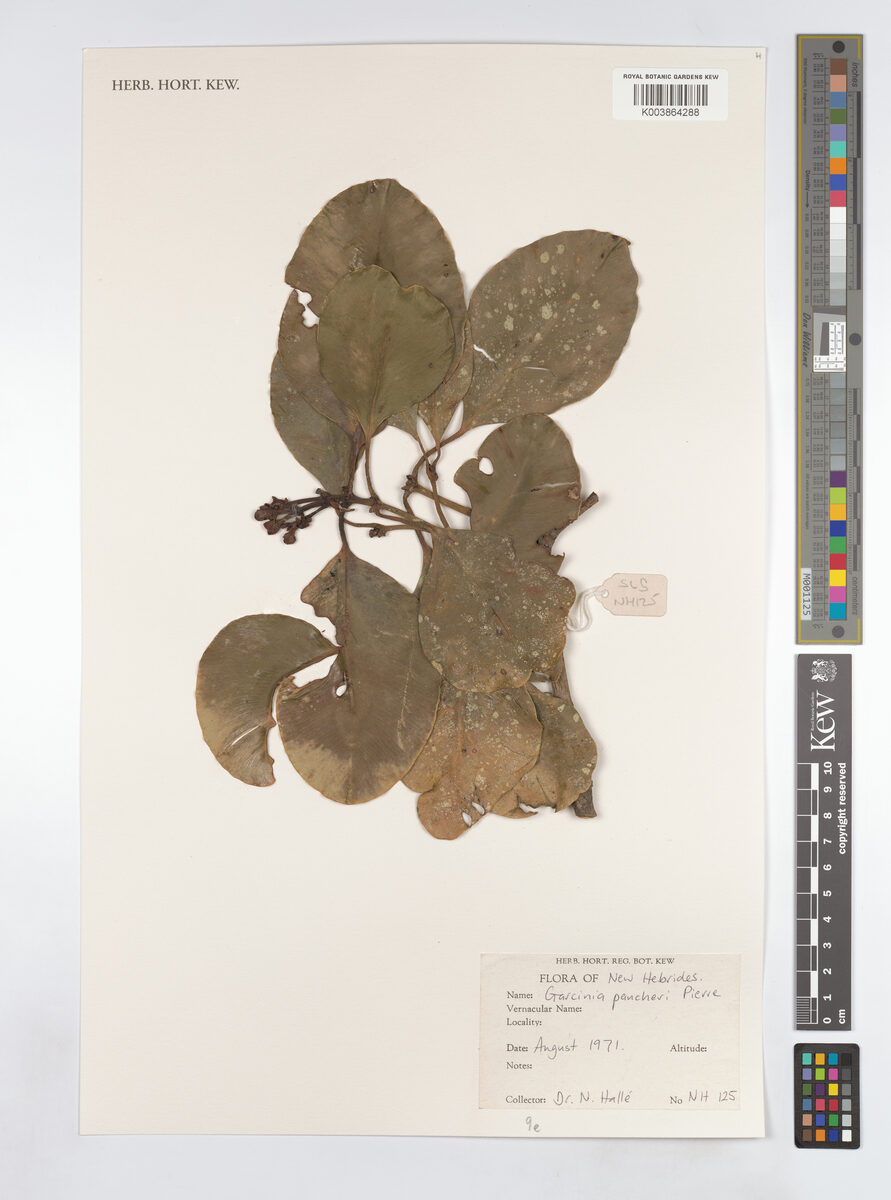
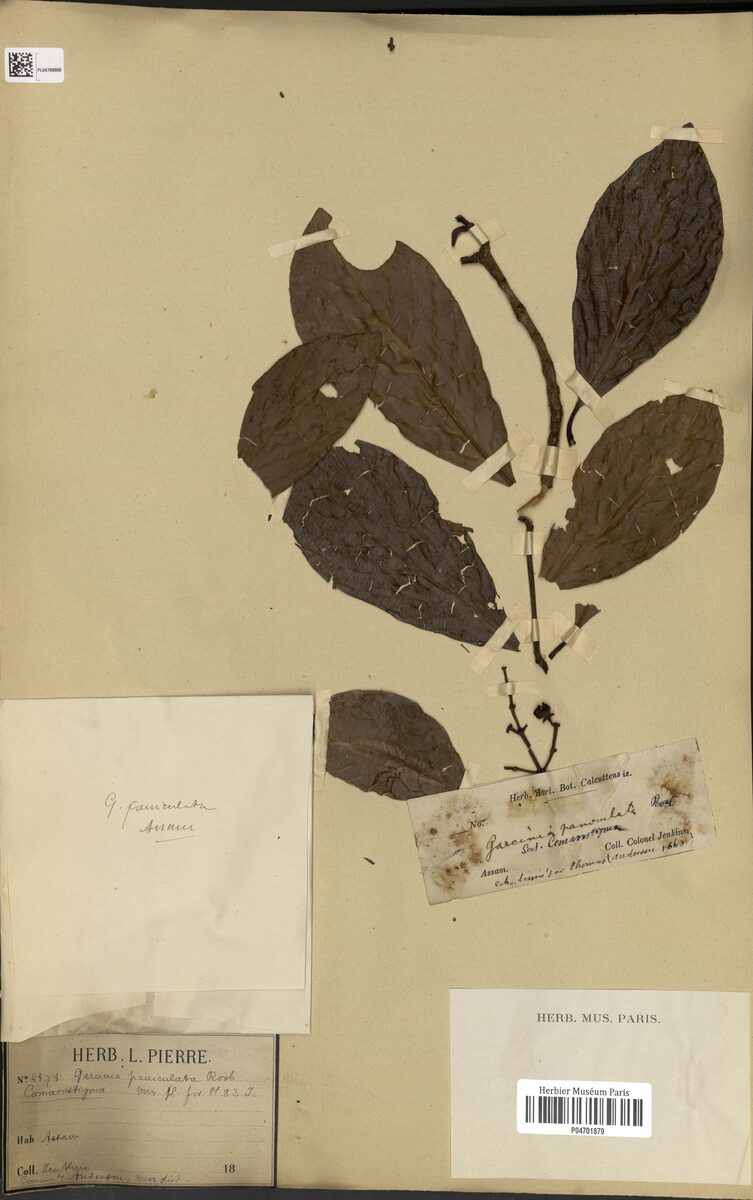
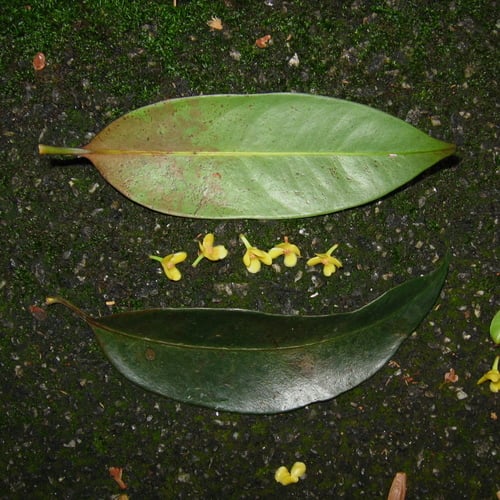
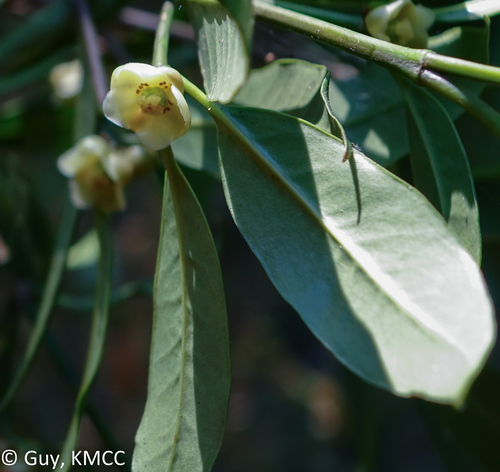
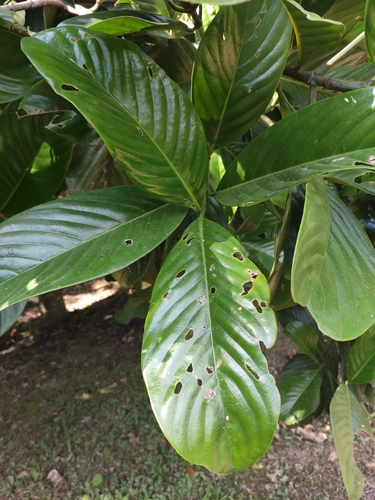
Clusia grandiflora
Splitg.
iNaturalist· cc-by-nc
(c) botanymiguelnino, some rights reserved (CC BY-NC)
iNaturalist· cc-by-nc
(c) Raiana, some rights reserved (CC BY-NC), uploaded by Raiana
iNaturalist· cc-by-nc
(c) Raiana, some rights reserved (CC BY-NC), uploaded by Raiana
Description
A tropical shrub growing to 7 m tall, characteristically growing as an epiphyte attached to other plants.
This description is brief — help expand it
Edible Uses
The bark is boiled to make a chocolate-like drink.
Traditional Uses
The bark is boiled to make a chocolate like drink.
This uses section is brief — help expand it
Medicinal Uses
The whole plant:, decocted with species of Smilax, Strychnos, Doliocarpus, Philodendron and Bauhinia scala-simiae, is made into a tonic. The liquid from the cut liana is used as a wash to relieve aching bones and as a treatment for botfly larvae. Cut pieces of the aerial roots are soaked in water or wine to make an infusion which is used as tonic for relieving back pain. The latex from the stem is used effectively in a plaster to treat body aches. Latex from the bark is antiseptic and vulnerary. It is applied, usually mixed with water, to wounds for healing The root is used to treat back pain. The wood is boiled, and the water used as an antiseptic agent, for treating sores or as a treatment for cuts and wounds. The leaves are rich in flavonoids.
Distribution
It is a tropical plant.
Where It Grows
Guyana, South America, Suriname, Venezuela,
Cultivation
This species is unique in that it belongs to the only genus of plants capable of absorbing carbon dioxide during the night.
Synonyms
References (2)
- Maas, P.J. M., Useful plants of Guyana. Non-Timber Forest Products of the North-West District of Guyana Part 1. p 103
- Maas, P.J. M., Non-Timber Forest Products of the North-West District of Guyana Part 2. The 85 most important NTFP species. p 64